How to decompose ozone(O3)
First, let's understand what ozone is.
Ozone (O₃) is a pale blue gas composed of three oxygen atoms with a distinctive, pungent odor. It is an allotrope of oxygen (O₂) (a substance composed of the same element but with a different structure). It is widely distributed in nature and has both important and potentially harmful effects on Earth's ecology and human health, depending on its environmental location.
The ozone layer in the stratosphere acts as Earth's "protective umbrella." It strongly absorbs ultraviolet radiation (especially UV-B and UV-C) from the sun, preventing excessive UV rays from reaching the ground, reducing the risk of skin cancer and cataracts in humans, while also protecting plants and marine life.
Ozone in the troposphere, often referred to as ground-level ozone, does not occur naturally in large quantities. It is primarily produced by photochemical reactions of pollutants emitted by human activities (such as nitrogen oxides (NOₓ) from vehicle exhaust and volatile organic compounds (VOCs) from industrial waste gases) under sunlight. It is a secondary pollutant.

Why destroy and decompose ozone? The ozone we aim to destroy refers to ground-level ozone, as it can be harmful to the environment, humans, and equipment.
Human Harm: High concentrations of ozone can irritate the respiratory tract, causing coughing and wheezing, and exacerbating conditions like asthma and bronchitis. Long-term exposure can damage lung function and increase the risk of cardiovascular disease.
Environmental Harm: Ozone inhibits plant photosynthesis, impacting crop yields and forest growth. It participates in atmospheric chemical reactions, exacerbating environmental problems such as smog and acid rain.
How to deal with excess ozone?
Natural Decomposition: Ozone is inherently unstable and decomposes spontaneously over time, making it the least efficient. At room temperature, the decomposition rate for high ozone concentrations (e.g., >10 ppm) is less than 10%/hour, and complete decomposition takes several days. This method is not feasible for high-concentration ozone treatment where urgent treatment is needed.
Chemical Decomposition: Moderate to high efficiency. With sufficient decomposition agent, a decomposition rate of 80%-95% can be achieved within a short period of minutes, but this is limited by the rate at which the agent is consumed. Secondary substances may also be produced, such as SO₂ reacting with ozone to form sulfuric acid (requiring acidic wastewater treatment); activated carbon reactions may produce CO₂, requiring carbon emissions control.
Catalytic decomposition: The most efficient method. For example, copper-manganese composite catalysts can decompose high-concentration ozone at a rate exceeding 99%, with a contact time of only 0.1-1 second. With no secondary pollution and the sole product being oxygen, it is the most environmentally friendly decomposition method.

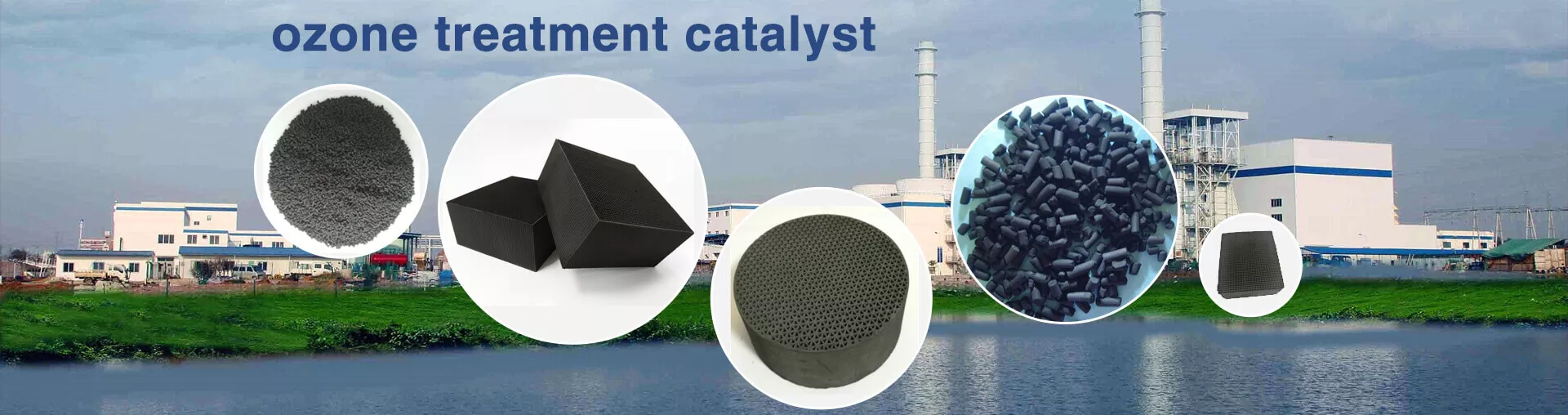
In summary, the three methods are not independent and each has its own advantages for different scenarios. For industrial needs involving medium- to high-concentration ozone, catalytic decomposition is recommended. Minstrong Technology's copper-manganese composite catalyst (also known as an
ozone decomposition catalyst) is highly efficient in decomposing ozone. The MINSLITE-B model is available in various sizes, including irregular granules, columns, and honeycombs, to meet diverse application scenarios.
 ∷
∷

 minstrong