Welcome: Hunan Minstrong Technology Co., Ltd
Language: Chinese ∷  English

News

How Copper-Manganese Composite Catalysts Destruction Ozone

Ozone (O₃) is a powerful oxidant widely used in water treatment, air purification, and industrial disinfection. However, residual ozone can be harmful to the environment and human health, necessitating efficient methods for its decomposition into harmless oxygen (O₂). Traditional thermal decomposition methods are highly effective but energy-intensive and inefficient. In contrast, catalytic decomposition has emerged as a mainstream solution due to its high efficiency and energy conservation.


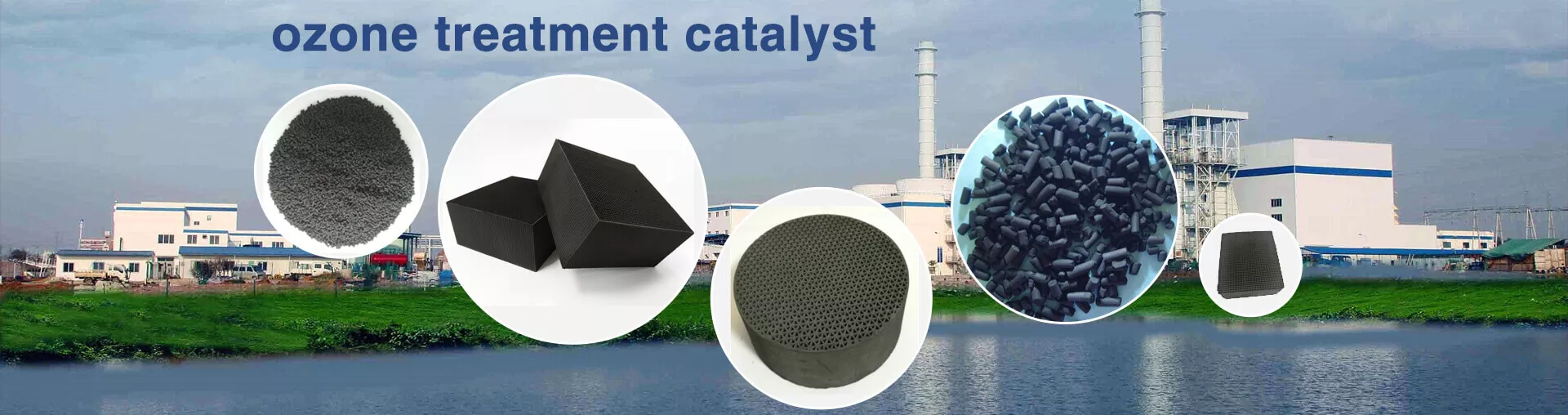
Copper-Manganese composite catalysts are highly effective catalysts composed primarily of highly active manganese dioxide (MnO₂) and copper oxide (CuO). These two components work synergistically to enhance the catalyst's activity and stability. Manganese dioxide provides abundant active sites, while copper oxide enhances electron transfer, accelerating ozone decomposition.


The ozone decomposition process on the surface of a copper-manganese composite catalyst involves the following steps:

Adsorption: Ozone molecules (O₃) adsorb onto active sites on the catalyst surface, such as manganese ions (Mn⁴⁺) and copper ions (Cu²⁺). Electron transfer: The active sites transfer electrons to ozone molecules, causing them to decompose into oxygen atoms (O) and oxygen molecules (O₂).
Recombination: Oxygen atoms combine with other ozone molecules or oxygen atoms to form more oxygen molecules.

Compared to thermal destruction, copper-manganese catalyst catalytic decomposition offers the following advantages:
High efficiency: The catalyst can efficiently decompose ozone at room temperature, requiring no additional energy input.
Energy-saving and environmentally friendly: The catalytic process does not produce secondary pollution and consumes extremely low energy.
Stability: The copper-manganese composite catalyst has a long service life and is suitable for large-scale application.

Catalyst quality directly affects ozone decomposition efficiency. High-quality copper-manganese composite catalysts should possess the following properties:
High surface area: Provides more active sites for enhanced adsorption.
Uniform distribution of active components: Ensures consistent and efficient catalytic reaction.
Excellent stability: Maintains high activity even after extended use.


This copper-manganese composite catalyst is highly efficient, energy-saving, and environmentally friendly, making it an ideal choice for ozone decomposition. Minstrog s ozone destruction catalyst further improves the efficiency of ozone decomposition by optimizing the quality of the catalyst and process parameters, thereby contributing to environmental protection.

CONTACT US

Contact: Candyly

Phone: +8618142685208

Tel: 0086-0731-84115166

Email: sales@minstrong.com

Add: E2 Building, Kinglory Science And Technology Industrial Park, Wangcheng Area, Changsha, Hunan, China.

Scan the qr codeClose
the qr code