News
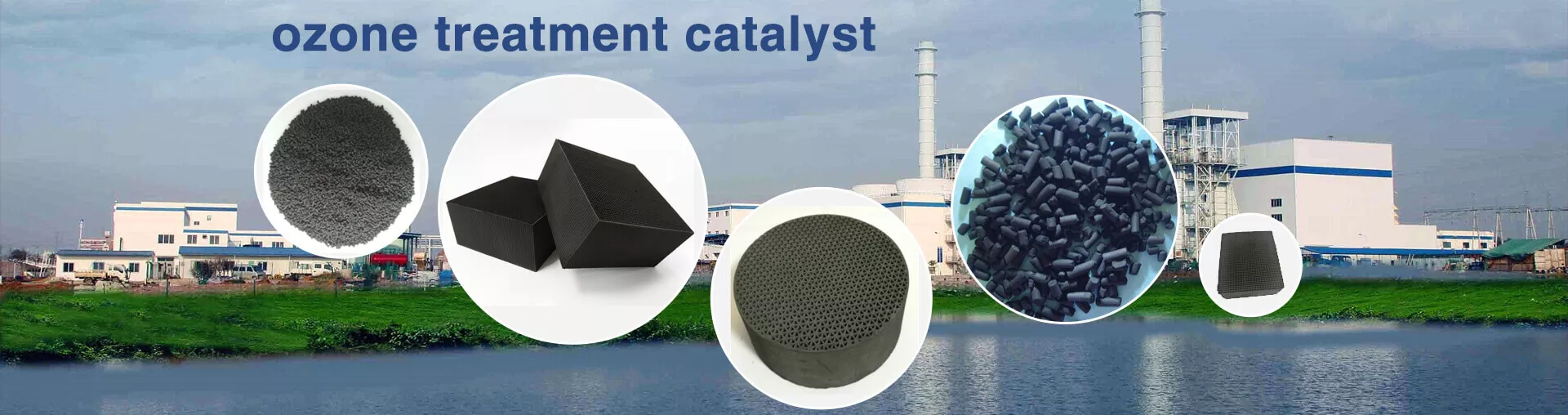
How do ozone decomposition catalysts decompose ozone?
The decomposition of ozone by ozone decomposition catalysts is a complex, multi-step process involving interactions between the catalyst surface and ozone molecules. First, ozone molecules are adsorbed by active sites on the catalyst surface. These active sites are typically composed of metal elements (such as manganese, cobalt, palladium, and others) or their oxides within the catalyst. These sites possess a suitable electronic structure, capable of forming temporary chemical bonds with ozone molecules, allowing ozone molecules to accumulate on the catalyst surface and maintain a relatively stable adsorption state.
Next, the active sites weaken the chemical bonds within the ozone molecules. Ozone molecules inherently have an asymmetric structure, with relatively low oxygen-oxygen bonds. These bonds are more susceptible to breaking under the electron transfer or energy transfer provided by the catalyst. At this point, the catalyst may act as an electron donor or acceptor, participating in the redox reaction of the ozone molecules. For example, certain metal ions may undergo a valence change (such as accepting electrons from a high valence state to be reduced, or losing electrons from a low valence state to be oxidized), promoting the decomposition of ozone molecules into oxygen molecules and reactive oxygen species (such as oxygen atoms and superoxide ions).
These reactive oxygen species are highly reactive on the catalyst surface and will react further. Some will combine with each other, reforming into stable oxygen molecules and detaching from the catalyst surface; others may react with other adsorbed species on the catalyst surface (such as water and pollutants). Ideally, however, oxygen remains the primary product. Furthermore, the catalyst is not consumed during the reaction; its active sites recover after completing a catalytic cycle, continuing to adsorb and decompose new ozone molecules, thereby achieving a continuous catalytic decomposition process.
 ∷
∷

 minstrong