Welcome: Hunan Minstrong Technology Co., Ltd
Language:
 ∷

∷
∷
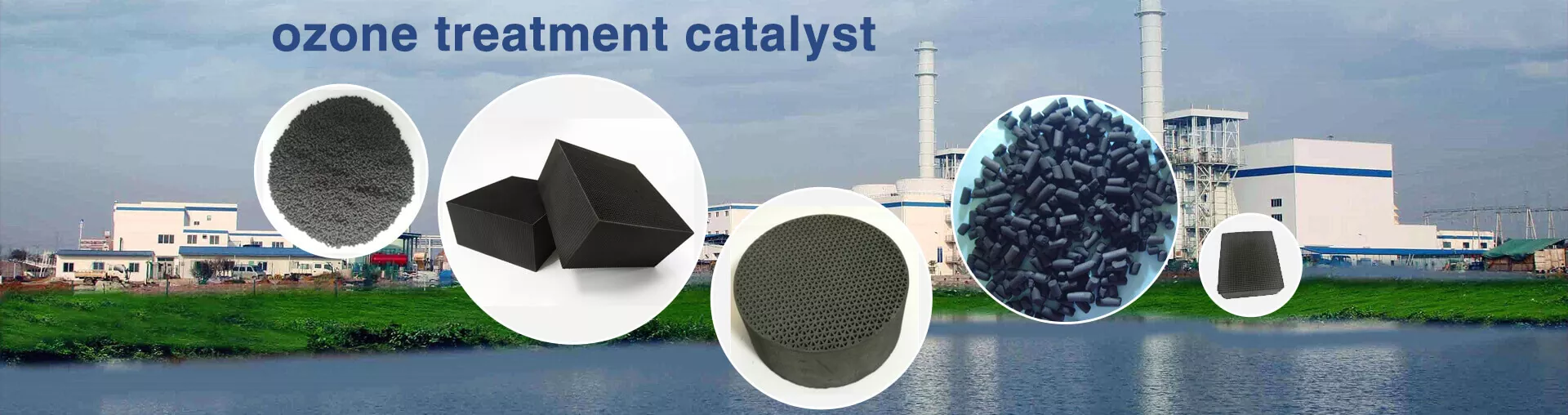
There is no universal replacement interval for ozone decomposition catalysts across all industrial applications. Their actual service life depends on inlet ozone concentration, gas flow rate, temperature, humidity, contaminant composition, pretreatment efficiency, and operating duration. Replacement decisions should be based primarily on whether the catalyst continues to meet the required ozone removal performance, supported by activity testing, bed pressure drop measurements, and an assessment of the cause of deactivation, rather than service time alone.
A higher inlet ozone concentration generally increases the ozone load processed by the catalyst per unit time. An increase in gas flow rate or excessive space velocity may reduce effective gas-solid contact time, resulting in a higher outlet ozone concentration.
However, a higher processing load does not necessarily mean that the catalyst has become deactivated. The actual operating conditions, catalyst loading, and conversion efficiency must be evaluated to determine whether the system remains within its design limits.
Water vapor may compete with ozone for active surface sites and temporarily inhibit the reaction. Condensed water, dust, and oil mist may block pores or cover active surfaces. Certain sulfur-, halogen-, and phosphorus-containing compounds may also cause more persistent chemical poisoning.
Effective upstream dust and oil removal, together with condensation control, can help maintain stable operation and extend catalyst service life.
The active components, pore structure, physical form, and mechanical strength of a catalyst all influence its service life. Continuous operation, frequent start-stop cycles, and repeated temperature or humidity fluctuations may also contribute to performance instability or mechanical deterioration.
Outlet ozone concentration is an important indicator of treatment performance. If the inlet conditions and gas flow rate remain relatively stable while the outlet ozone concentration continues to rise, the system's ozone decomposition capacity may have declined.
Before attributing the change to catalyst deactivation, check for fluctuations in inlet load, uneven gas distribution, bypass leakage, and measurement instrument errors.
Ozone decomposition efficiency can be calculated using the following equation:
η = [(Cin − Cout) / Cin] × 100%
Where Cin is the inlet ozone concentration and Cout is the outlet ozone concentration.
Measurements should be compared under equivalent inlet concentration, flow rate, temperature, and humidity conditions. If the decomposition efficiency remains below the system's design requirement after operating conditions have been checked and corrected, further catalyst activity testing is necessary to determine whether maintenance or replacement is appropriate.
A sustained increase in bed pressure drop may indicate dust accumulation, pore blockage, particle breakage, or changes in bed structure. Visible powdering, agglomeration, and abnormal contamination should also be investigated.
However, a normal pressure drop does not necessarily indicate that the catalyst remains active. Chemical poisoning may reduce catalytic activity without significantly affecting gas flow resistance. Multiple indicators should therefore be considered together.
Not necessarily. When performance declines, the cause should first be identified before selecting a treatment method.
Cleaning or regeneration does not guarantee full recovery of the original activity. After treatment, ozone decomposition efficiency, pressure drop, and other critical performance indicators should be retested to confirm that the catalyst meets operating requirements before returning it to service.
A practical replacement assessment can follow these steps:
For industrial systems with strict outlet ozone limits, replacement planning should also consider operational safety, shutdown costs, and the risk of non-compliant emissions. Maintenance decisions should not be based solely on reducing short-term operating expenses.
Extending catalyst service life requires effective control of operating conditions rather than simply extending the replacement interval. Keep gas flow rate and space velocity within the design range, minimize the entry of dust, oil mist, and harmful chemical contaminants, prevent unsuitable condensation and excessive temperature fluctuations, and maintain traceable operating records.
Ultimately, the replacement interval should be determined by actual operating conditions, performance degradation trends, and system treatment requirements. Continuous monitoring, timely troubleshooting, and targeted maintenance can help avoid premature replacement while reducing the risk of inadequate ozone treatment following catalyst deactivation.
author:kaka
date:2026/10/19
Contact: Candyly
Phone: +8618142685208
Tel: 0086-0731-84115166
Email: sales@minstrong.com
Add: E2 Building, Kinglory Science And Technology Industrial Park, Wangcheng Area, Changsha, Hunan, China.
 minstrong