Welcome: Hunan Minstrong Technology Co., Ltd
Language:
 ∷
∷

∷
∷
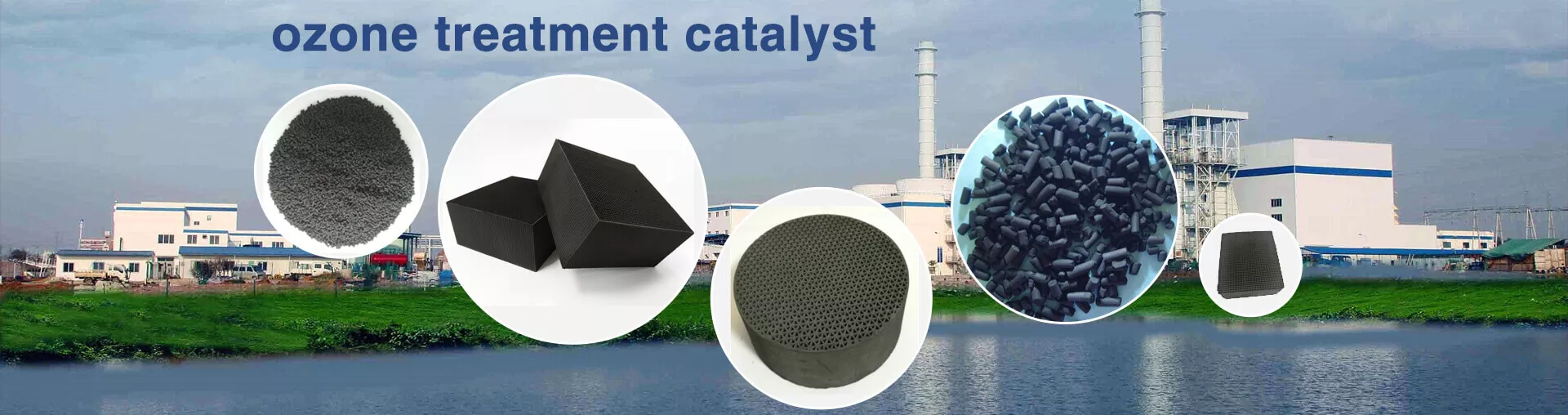
Ozone (O₃) consists of three oxygen atoms and is a strong oxidizing agent. It is thermodynamically less stable than molecular oxygen (O₂) and can undergo decomposition under suitable conditions, ultimately producing oxygen.
The overall decomposition reaction can be expressed as follows:
2O₃ → 3O₂
Natural ozone decomposition does not require an externally added solid catalyst. However, its rate depends on factors such as temperature, gas composition, pressure, and contact surfaces. Ozone decay rates can vary significantly between different environments. Therefore, the fact that ozone can decompose naturally does not mean that its concentration will decrease to the required level within the available process time.
An ozone decomposition catalyst primarily accelerates the reaction by lowering the kinetic barrier associated with ozone decomposition. Compared with relying solely on natural decomposition, catalytic treatment is often more suitable for industrial applications that require continuous treatment and rapid reduction of residual ozone concentrations.
For metal oxide catalysts, ozone molecules can adsorb onto the catalyst surface and undergo conversion at active sites. Surface oxygen-containing intermediates may participate in subsequent reaction steps, ultimately releasing molecular oxygen while regenerating the catalytic active sites. The specific reaction pathway depends on the catalyst composition, surface structure, and operating conditions.
A catalyst does not simply capture ozone for permanent storage. Instead, it promotes the chemical reaction that converts ozone into oxygen. Actual treatment performance still depends on catalytic activity, gas-solid contact efficiency, and whether the operating environment supports sustained reaction.
When ozone in process exhaust gas must be reduced to a specified concentration within a limited equipment volume and residence time, natural decomposition may be insufficient. A catalytic treatment system can then be evaluated, with its actual performance verified by measuring ozone concentrations at the inlet and outlet.
In corona discharge processes, industrial oxidation, and other applications involving ozone generation or use, exhaust flow rates and ozone concentrations may fluctuate with operating conditions. A catalytic treatment unit provides a defined reaction zone, but appropriate catalyst loading, gas distribution, and residence time must be considered during system design.
Thermal decomposition can accelerate ozone destruction by increasing the temperature, but it requires additional energy for heating. Some catalysts can operate effectively at temperatures close to ambient conditions, potentially reducing the need for thermal treatment. However, actual energy savings should be evaluated by considering catalyst performance, fan power, auxiliary equipment, and overall operating conditions.
The performance of an ozone decomposition catalyst cannot be determined solely by its material name or initial activity. The inlet ozone concentration determines the reaction load, while the gas flow rate affects contact time. Temperature influences reaction kinetics, and relative humidity may affect active surface sites through mechanisms such as competitive adsorption by water molecules.
Dust, oil mist, and other contaminants may also cover active surfaces or block pores, reducing treatment efficiency. During long-term operation, changes in surface chemistry or contaminant accumulation can lead to catalyst deactivation. For gas streams with high humidity, oil, or particulate matter, pretreatment requirements, moisture tolerance, and maintenance needs should therefore be evaluated.
Engineering assessment should begin with the inlet ozone concentration, maximum gas flow rate, target outlet concentration, operating temperature, humidity, and gas impurities. These parameters can then be used to evaluate the feasibility of natural decay, catalytic decomposition, or other suitable treatment technologies.
If catalytic decomposition is selected, catalyst activity, gas-solid contact conditions, pressure drop across the catalyst bed, and long-term operating stability should be verified under representative operating conditions. Outlet ozone measurements are necessary to confirm treatment results. For projects with fluctuating operating conditions, the design should also account for peak loads and the potential decline in catalyst performance over time.
In summary, ozone decomposition does not inherently require a catalyst, but the need for catalytic treatment in industrial applications depends on whether natural decomposition can meet the required treatment objectives. When rapid reaction rates, stable outlet concentrations, and continuous operation are important, catalytic decomposition is worth evaluating. The final treatment method should be selected based on actual operating conditions, technical validation, and process requirements.
author:kaka
date:2026/10/9
Contact: Candyly
Phone: +8618142685208
Tel: 0086-0731-84115166
Email: sales@minstrong.com
Add: E2 Building, Kinglory Science And Technology Industrial Park, Wangcheng Area, Changsha, Hunan, China.
 minstrong