Welcome: Hunan Minstrong Technology Co., Ltd
Language:
 ∷
∷

∷
∷
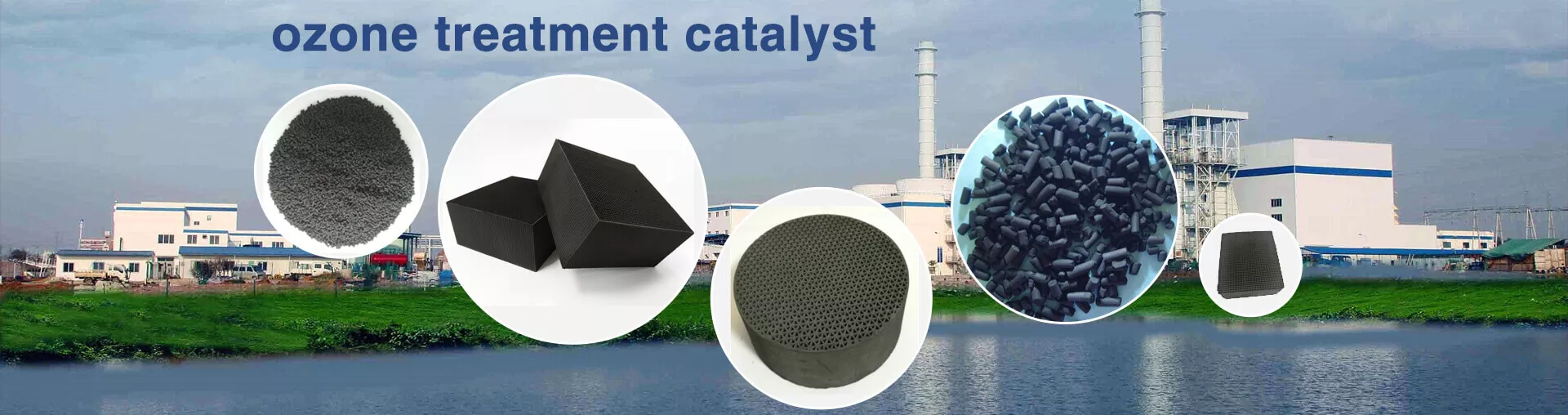
The objective of ozone destruction is generally not simply to temporarily retain ozone within a treatment medium, but to promote the decomposition of gaseous O3 and ultimately convert it into oxygen. As a catalytic ozone decomposition material, MINSLITE-B promotes ozone decomposition through active sites on its surface. Under appropriate operating conditions, the catalyst participates in the reaction process rather than functioning simply as a consumable medium that captures ozone.
Activated carbon, by contrast, contains a highly developed porous structure and a large surface area. Ozone can interact with the carbon surface through adsorption and surface oxidation reactions. As ozone continues to react with the carbon surface, the chemical characteristics of the carbon may change. Consequently, its ozone removal capacity over time depends not only on its initial surface area, but also on ozone loading, surface reactions, and operating duration.
Therefore, although both materials can reduce ozone concentrations, their engineering performance should not be compared solely on the basis of short-term removal efficiency. For continuous industrial operation, long-term stability under the expected ozone load is equally important.
Inlet ozone concentration is one of the key parameters in an ozone destruction system. As ozone concentration increases, the ozone load entering the treatment unit per unit of time generally increases as well. This places a greater oxidative load on the treatment medium. A material that performs well at a relatively low ozone concentration may not necessarily maintain the same operating life under a substantially higher ozone load.
For activated carbon, a higher ozone load may accelerate surface oxidation and alter the chemical properties of the carbon surface, potentially causing its ozone removal performance to decline over time. Therefore, when activated carbon is used for ozone removal, it is not sufficient to evaluate the outlet concentration immediately after system startup. The remaining treatment capacity at the end of the intended operating period should also be considered.
MINSLITE-B and other catalytic ozone decomposition materials are also affected by operating conditions. The appropriate catalyst loading, gas velocity, and contact time should be determined according to the inlet ozone concentration and total gas flow. Catalytic materials are not completely independent of operating conditions; excessive ozone loading, excessively high gas velocity, or unsuitable humidity can affect actual decomposition performance.
During laboratory testing or initial equipment commissioning, the initial ozone removal efficiency is a convenient performance indicator. For industrial applications, however, the more important question is whether the treatment medium can maintain the required outlet concentration throughout the designed operating period. In other words, long-term stability can be more important than achieving the highest initial removal rate.
When activated carbon is exposed to ozone, ozone removal occurs together with oxidation of the carbon surface. As operating time increases, surface functional groups, active sites, and pore characteristics may change, potentially reducing the material's ozone removal capacity. Therefore, the service life of activated carbon should be evaluated according to the actual ozone loading rather than estimated solely from its initial surface area.
Catalytic materials can also experience deactivation. The actual service life of MINSLITE-B is influenced by factors such as ozone concentration, humidity, gas velocity, coexisting gas components, and operating temperature. Therefore, engineering evaluation should focus on performance changes during continuous operation rather than assuming that a catalyst will maintain constant activity indefinitely.
Relative humidity is an important parameter that can easily be overlooked in ozone treatment systems. Water molecules can affect the adsorption state and surface reaction environment of a treatment material, which may influence the actual ozone decomposition rate. Therefore, ozone removal data obtained under dry laboratory conditions cannot automatically be applied to industrial gas streams with high humidity.
Gas flow rate and space velocity also directly affect the contact time between ozone and the treatment medium. If gas flow increases while the amount of treatment medium remains unchanged, the ozone load per unit volume of material may increase while the effective contact time decreases. For high-flow applications, catalyst or media loading, bed dimensions, gas distribution, and pressure drop should therefore be evaluated together.
Coexisting gas components can also affect ozone destruction. Industrial gas streams may contain water vapor, volatile organic compounds, particulate matter, or other reactive components in addition to ozone. These substances may occupy surface active sites or alter the surface properties of the treatment material. Consequently, actual material selection should be based on the complete gas composition rather than ozone concentration alone.
A practical comparison between MINSLITE-B and activated carbon should use a multi-parameter evaluation framework rather than relying on a single ozone removal efficiency value.
| Evaluation Factor | Engineering Considerations |
|---|---|
| Inlet ozone concentration | Determines the ozone load and the oxidative load imposed on the treatment medium. |
| Target outlet concentration | Defines the required ozone control level of the treatment system. |
| Gas flow rate | Affects contact time, space velocity, bed dimensions, and media loading. |
| Relative humidity | Helps determine the potential effect of moisture on surface conditions and ozone decomposition. |
| Continuous operating time | Determines whether the treatment medium can maintain the required performance throughout the design period. |
| Coexisting contaminants | Indicates whether other gas components may cause competitive reactions or material deactivation. |
| Pressure drop | Evaluates the effect of particle size, bed structure, and packing configuration on system resistance. |
| Maintenance interval | Compares the frequency and complexity of media replacement, replenishment, and equipment maintenance. |
If a system primarily requires catalytic ozone decomposition and stable continuous operation, the actual suitability of MINSLITE-B under the target operating conditions should be evaluated. If activated carbon is selected, particular attention should be given to ozone loading, performance degradation, and replacement intervals. The final decision should be based on actual operating data and the required design life rather than on a single material parameter.
Before system design, the first step is to determine the inlet ozone concentration and maximum gas flow rate. The required outlet ozone concentration and continuous operating period should then be defined. Based on these parameters, the ozone load entering the treatment unit can be estimated, followed by an evaluation of the treatment medium under the expected temperature, humidity, and gas composition.
For MINSLITE-B, the actual gas conditions should be used to evaluate catalyst loading, bed height, gas velocity, and contact time. For activated carbon, the relationship between ozone loading and performance degradation should be evaluated, and the media replacement strategy should be determined according to the expected operating period.
For any ozone treatment medium, laboratory data cannot completely replace engineering validation. A more reliable approach is to conduct testing under conditions that closely represent the actual application, including ozone concentration, humidity, gas flow rate, and relevant coexisting gases. Changes in inlet and outlet ozone concentrations should then be monitored over an extended operating period. Only by considering initial performance, long-term stability, and maintenance requirements together can the suitability of a treatment medium for a specific ozone destruction system be properly assessed.
There is no absolute, operating-condition-independent winner between MINSLITE-B and activated carbon. Activated carbon can remove ozone through its porous structure and surface reactions, but its surface characteristics and performance degradation under continuous ozone loading need to be considered. MINSLITE-B uses catalytic ozone decomposition as its primary treatment mechanism, while its actual performance still depends on ozone concentration, gas flow rate, humidity, temperature, and coexisting gas components.
Therefore, the most important consideration when selecting an ozone destruction medium is not the initial removal efficiency of a material under a single test condition. Instead, the key question is whether the material can continuously meet the required outlet ozone concentration under the combined conditions of target ozone concentration, actual gas flow rate, humidity, operating temperature, and required service life. For industrial ozone destruction systems, this operating-condition-based and lifecycle-oriented approach provides a more reliable basis for material selection than simply comparing material names or individual performance parameters.
author:kaka
date:2026/9/30
Contact: Candyly
Phone: +8618142685208
Tel: 0086-0731-84115166
Email: sales@minstrong.com
Add: E2 Building, Kinglory Science And Technology Industrial Park, Wangcheng Area, Changsha, Hunan, China.
 minstrong