News
What is an ozone destruction catalyst?
"Ozone destruction catalyst" is a type of substance that can accelerate the decomposition of ozone (O₃) or participate in the process of destroying ozone molecules. Its core function is to reduce the activation energy of ozone decomposition through catalytic reactions, and promote the faster conversion of ozone into oxygen (O₂) or other products. This type of catalyst has important applications in environmental governance, industrial waste gas treatment and other fields, and its potential impact in specific scenarios also needs attention.
From the perspective of the working principle, ozone molecules themselves are unstable and will slowly decompose into oxygen under natural conditions, but the reaction rate is low. Catalysts can accelerate this process in many ways: on the one hand, the catalyst surface can adsorb ozone molecules to weaken their chemical bonds, such as breaking O-O bonds, thereby reducing the energy required for decomposition; on the other hand, the catalyst will exchange electrons with ozone, prompting ozone molecules to undergo redox reactions, and eventually decompose into O₂ or other intermediates, such as hydroxyl radicals ・OH that may be generated under certain conditions; and the catalyst itself will not be consumed in the reaction, and can repeatedly participate in the reaction to continuously promote ozone decomposition.
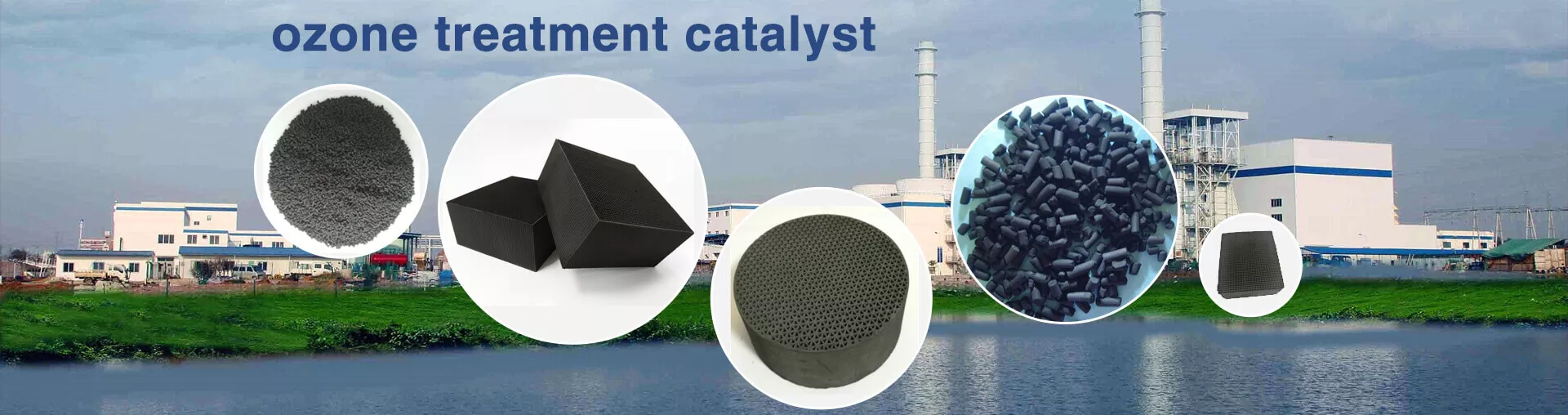
Common ozone destruction catalysts can be divided into several categories according to their composition and application scenarios: metal and metal oxide catalysts are the most commonly used, such as manganese dioxide (MnO₂), copper oxide (CuO), iron oxide (Fe₂O₃), titanium dioxide (TiO₂) and other transition metal oxides. Among them, manganese dioxide has a high efficiency in decomposing ozone and is often used in air purifiers to remove ozone residues; precious metal catalysts such as platinum (Pt) and palladium (Pd) have high catalytic activity, but are expensive and are mostly used in high-precision industrial scenarios. In addition, there are composite oxide catalysts, which are composed of a variety of metal oxides, such as MnO₂-CuO, TiO₂-SiO₂, etc., which improve catalytic efficiency and stability through synergistic effects to adapt to higher temperature, high humidity and other complex environments; and supported catalysts, which load active ingredients such as metal oxides on carriers such as activated carbon, alumina, and molecular sieves, which can increase the specific surface area, improve the contact efficiency between the catalyst and ozone, and enhance mechanical strength and service life.
In terms of application scenarios, this type of catalyst has a wide range of uses. In terms of removing excess ozone from the air, during industrial production, some industrial links such as printing, welding, and ozone disinfection will emit excessive ozone. At this time, it is necessary to use a catalyst to decompose ozone to meet environmental protection standards, because ozone is one of the atmospheric pollutants, and high concentrations are harmful to humans and plants; some air purifiers produce ozone, such as electrostatic air purifiers, so built-in ozone destruction catalysts, such as MnO₂ filters, are required to decompose ozone into harmless oxygen. In laboratories and medical scenarios, after using ozone for disinfection, such as operating rooms and laboratories, it is necessary to use a catalyst to quickly remove residual ozone to avoid irritation to personnel, because ozone concentrations exceeding 0.1ppm may cause respiratory discomfort. In the ozone generator supporting equipment, when the ozone generator is preparing ozone, if it produces excessive amounts or needs to control emissions, it will be equipped with a catalytic decomposition device to decompose unused ozone through a catalyst to reduce the impact on the environment.
However, there are some precautions for using ozone destruction catalysts. First of all, the selectivity of the catalyst. Most ozone destruction catalysts are only effective for ozone and have no obvious effect on other gases such as formaldehyde and VOCs. Therefore, other purification technologies need to be used according to specific scenarios. Secondly, environmental adaptability. The activity of the catalyst is greatly affected by temperature and humidity. For example, high temperature exceeding 100°C may cause the catalyst to be deactivated, and high humidity may reduce the adsorption efficiency. Therefore, it is necessary to select the appropriate catalyst type according to the use environment. In addition, safety is also very important. High-quality ozone destruction catalysts should have no secondary pollution after the reaction, such as no release of heavy metals or toxic gases, especially in indoor scenes. Strict screening is required.
In general, ozone destruction catalysts are key materials for controlling ozone pollution and ensuring the safety of ozone applications. Their research and development and application are of great significance for balancing the "beneficiality" (such as disinfection and oxidation) and "harmfulness" (such as excessive pollution) of ozone.
 ∷
∷

 minstrong