Welcome: Hunan Minstrong Technology Co., Ltd
Language:
 ∷
∷

∷
∷
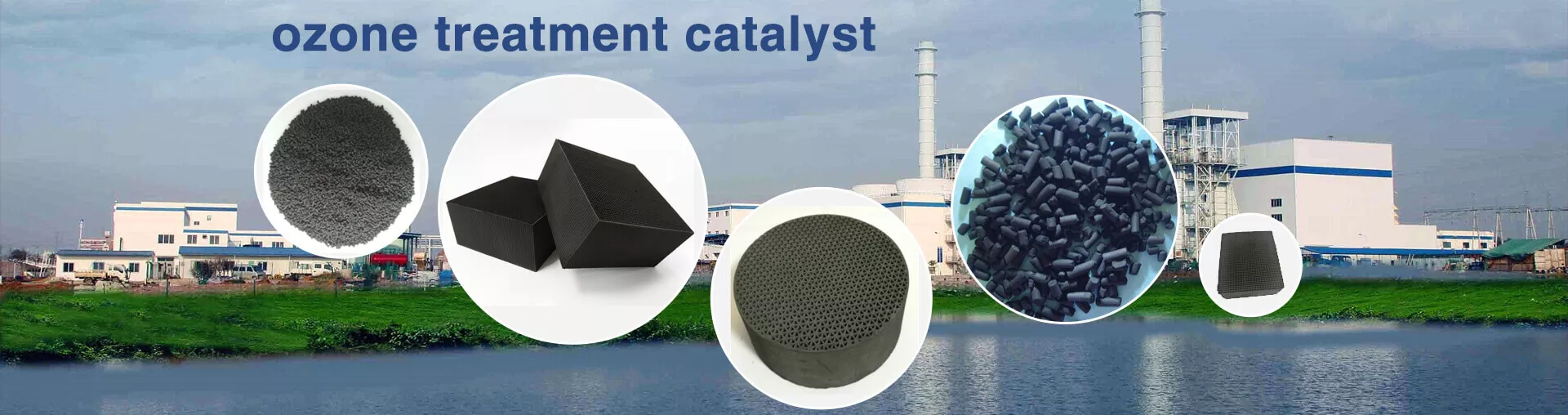
Copper-manganese based ozone decomposition catalysts are functional catalytic materials that accelerate ozone (O₃) decomposition through the synergistic interaction between copper and manganese oxides. Their core advantage lies in promoting the conversion of ozone into oxygen (O₂) under relatively low-temperature conditions while maintaining high catalytic activity, stability, and adaptability for industrial applications. Compared with conventional ozone treatment methods, copper-manganese catalysts can improve ozone removal efficiency and reduce energy consumption, making them widely applicable in ozone off-gas treatment, air purification, water treatment, and industrial ozone control systems.

Ozone is a highly oxidative gas widely used in water treatment, disinfection, air purification, and industrial oxidation processes. However, due to its unstable molecular structure, residual ozone that remains after the reaction process may cause environmental concerns, affect human health, and accelerate the oxidation of equipment materials.
Traditional ozone treatment methods mainly include natural decomposition, thermal decomposition, and adsorption treatment. Natural decomposition has a relatively slow reaction rate and cannot meet the requirements of continuous industrial operation. Thermal decomposition can effectively destroy ozone but usually requires elevated temperatures, resulting in higher energy consumption. Adsorption methods rely on the surface adsorption capacity of materials, but long-term exposure to ozone may lead to oxidation degradation and reduced performance.
Ozone decomposition catalysts accelerate the conversion of ozone into oxygen by reducing the activation energy of the decomposition reaction. This enables efficient ozone removal under low-temperature or ambient-temperature conditions and makes catalytic decomposition an important technology for industrial ozone treatment.
The fundamental mechanism of copper-manganese based ozone decomposition catalysts relies on the redox cycling capability of metal oxides. Through continuous oxidation-reduction reactions, these catalysts accelerate the breaking of ozone molecules and promote the recombination of oxygen atoms. The catalytic process mainly includes three stages: ozone adsorption, redox reaction, and oxygen release.
When ozone enters the catalyst bed, ozone molecules first interact with active sites on the catalyst surface. The developed pore structure and high surface area of the catalyst provide more adsorption sites, allowing ozone molecules to concentrate around active reaction areas.
The adsorption process increases the contact probability between ozone molecules and active components, creating favorable conditions for subsequent catalytic reactions.
The key performance advantage of copper-manganese catalysts comes from the synergistic effect between copper and manganese elements.
Manganese oxides provide strong redox capabilities and participate in oxygen migration processes, while copper oxides facilitate electron transfer and improve the efficiency of redox cycles within the catalytic system. When ozone contacts the catalyst surface, copper-manganese active sites promote the formation of reactive oxygen species and facilitate the recombination of oxygen atoms.
During this process, the catalyst itself is not significantly consumed but continuously participates in the reaction cycle through changes in metal oxidation states.
After catalytic reaction, the unstable oxygen structure in ozone molecules is broken down, producing stable oxygen molecules:
O₃ → O₂
The role of the catalyst is to reduce the energy barrier of the reaction and accelerate ozone conversion rather than being consumed as a reactant.
Compared with single metal oxide catalysts, copper-manganese composite catalysts generally demonstrate improved ozone decomposition performance due to the synergistic interaction between different metal components.
First, copper and manganese oxides promote electron transfer, making oxidation-reduction processes on the catalyst surface easier to occur. Since ozone decomposition involves continuous oxygen adsorption, migration, and release, efficient electron transfer can accelerate the overall reaction rate.
Second, copper-manganese systems can generate more surface active sites, including oxygen vacancies, structural defects, and active oxygen species. These sites enhance ozone adsorption and improve catalytic reaction efficiency.
In addition, properly designed copper-manganese catalysts usually possess suitable pore structures, increasing the contact area between ozone molecules and catalytic surfaces and allowing more complete reactions.
One of the most important advantages of copper-manganese ozone decomposition catalysts is their ability to maintain catalytic activity under relatively low-temperature conditions. Compared with thermal ozone decomposition technologies that require additional heating, catalytic decomposition reduces energy consumption and is more suitable for continuous industrial operation.
Industrial ozone treatment systems require long-term operational stability. By continuously providing active reaction sites, catalysts can maintain stable ozone decomposition performance and reduce risks associated with insufficient ozone removal efficiency.
Copper-manganese ozone decomposition catalysts can be manufactured in different structural forms, including pellets, columns, and other shaped configurations, to meet different requirements related to gas distribution, pressure drop, and equipment installation.
Because catalytic ozone decomposition does not require continuous high-temperature operation, it can reduce energy consumption. Meanwhile, stable catalytic performance helps decrease maintenance requirements caused by frequent catalyst replacement.
Although copper-manganese catalysts demonstrate excellent ozone decomposition capability, their actual performance depends on several operating and material factors.
The ratio of copper and manganese components influences the redox capability of the catalyst. Proper composition is essential to achieve effective synergistic catalytic performance.
The specific surface area and pore structure directly affect the contact efficiency between ozone molecules and active sites. A well-designed pore structure improves gas diffusion and promotes more complete catalytic reactions.
Actual operating conditions, including humidity, temperature, ozone concentration, and gas flow rate, can influence catalytic performance. Therefore, catalyst selection should be based on specific application requirements and operating environments.
The particle size and physical structure of catalysts influence gas resistance, mass transfer efficiency, and system stability. Selecting an appropriate catalyst structure according to equipment conditions is essential for long-term operation.
In ozone generation systems, some ozone may remain unreacted after the treatment process. Copper-manganese ozone decomposition catalysts can effectively reduce ozone concentration at the outlet and enable safer discharge.
Ozone is widely used in water treatment for oxidation and disinfection. However, residual ozone in exhaust gas requires further treatment. Catalytic decomposition technology provides an effective solution for ozone removal and improves system safety.
In some industrial processes, ozone may be generated as part of oxidation operations. Installing ozone decomposition catalysts helps control residual ozone concentration and reduce potential secondary pollution risks.
Copper-manganese based ozone decomposition catalysts accelerate ozone decomposition through the synergistic redox interaction between copper and manganese oxides, enabling efficient conversion of ozone into oxygen. Their advantages, including low-temperature catalytic activity, high ozone removal efficiency, operational stability, and broad industrial adaptability, make them an important technical solution for ozone off-gas treatment and industrial ozone control.
In practical applications, catalyst performance depends not only on active component composition but also on surface area, pore structure, gas conditions, and equipment design. Proper catalyst selection and system optimization according to specific operating conditions are essential for achieving stable and long-term ozone removal performance.
author:kaka
date:2026/7/13
Contact: Candyly
Phone: +8618142685208
Tel: 0086-0731-84115166
Email: sales@minstrong.com
Add: E2 Building, Kinglory Science And Technology Industrial Park, Wangcheng Area, Changsha, Hunan, China.
 minstrong