Welcome: Hunan Minstrong Technology Co., Ltd
Language:
 ∷
∷

∷
∷
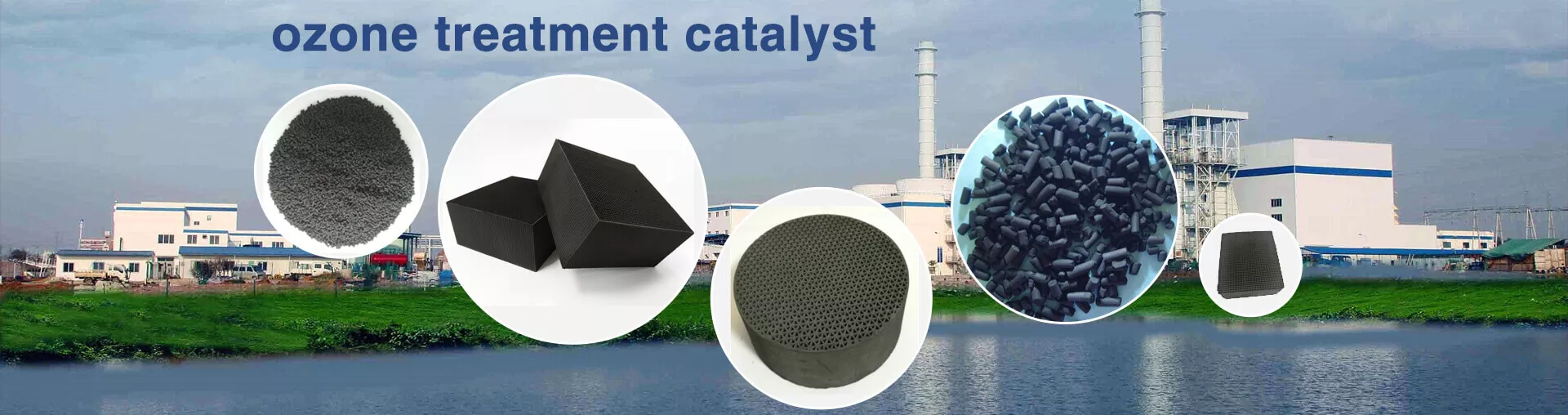
The semiconductor industry must remove ozone because ozone is a highly reactive oxidizing gas that can negatively affect materials, equipment reliability, and process stability in precision manufacturing environments. As semiconductor technologies continue to advance toward smaller feature sizes and higher manufacturing accuracy, controlling chemical contaminants in production environments has become increasingly important. Catalytic ozone decomposition technology provides an efficient method to convert ozone into stable oxygen, enabling continuous and reliable ozone control in industrial applications.
Ozone (O₃) is a gas composed of three oxygen atoms and has strong oxidation capabilities. Although ozone exists at very low concentrations in natural environments, it can be generated during various semiconductor manufacturing processes.
In semiconductor production, ozone mainly originates from ultraviolet processing equipment, plasma treatment systems, corona discharge equipment, and certain processes that use ozone oxidation technology. When oxygen molecules in the air are exposed to ultraviolet radiation, high-energy electrons, or electrical discharge, they can be dissociated and subsequently form ozone.
In addition, some semiconductor processes use ozone intentionally because of its strong oxidation ability for removing organic contaminants and improving surface cleanliness. However, residual ozone that is not consumed during the process must be effectively removed to prevent accumulation in production areas and exhaust systems.
Therefore, ozone control is not intended to restrict the use of ozone in semiconductor processes, but rather to safely manage excess ozone generated during manufacturing.
Ozone has a much stronger oxidation capability than ordinary oxygen, allowing it to react rapidly with various materials. In semiconductor manufacturing environments, many equipment components, sealing materials, and precision structures require extremely high chemical stability due to strict cleanliness requirements.
Long-term exposure to excessive ozone concentrations may result in:
For semiconductor equipment, even minor changes in material properties may affect operational reliability. Therefore, maintaining proper ozone concentration control is an important part of equipment protection.
Semiconductor manufacturing relies on highly controlled production conditions, including cleanliness levels, temperature, humidity, and chemical contamination control.
As an active oxidizing compound, ozone may alter surface characteristics of materials and influence certain manufacturing processes. For example, during precision surface treatment, thin-film processes, and chemical reactions, additional ozone present in the environment may change reaction conditions and reduce process stability.
For advanced semiconductor manufacturing, even small variations in chemical conditions can increase process control challenges. Reducing ozone concentration helps maintain stable manufacturing conditions and improve production reliability.
Ozone is naturally unstable and can gradually decompose into oxygen. However, in industrial production environments, natural decomposition is usually too slow to meet the requirements of continuous manufacturing operations.
Because ozone generation during semiconductor processes can be continuous, relying only on natural decomposition may result in insufficient removal efficiency and local ozone accumulation.
Therefore, active ozone removal technologies are required to rapidly and efficiently convert ozone into harmless oxygen.
Some ozone treatment systems use adsorption or thermal decomposition methods. However, these approaches may have limitations in continuous industrial operation.
Adsorption-based materials mainly capture and react with ozone on their surfaces. During long-term operation, their performance may be affected by humidity, temperature, and ozone concentration, resulting in maintenance requirements or material replacement.
Thermal decomposition can effectively destroy ozone molecules, but it generally requires higher energy consumption and more complex operating conditions. For semiconductor manufacturing environments that require stable and energy-efficient operation, low-temperature catalytic decomposition technology provides a more suitable approach.
The core function of an ozone decomposition catalyst is to reduce the activation energy required for ozone decomposition, allowing ozone molecules to be converted efficiently at relatively low temperatures.
The main reaction process can be described as:
O₃ → O₂ + O
The generated active oxygen species further react with ozone:
O₃ + O → 2O₂
Through catalytic reactions, ozone is ultimately converted into stable oxygen without generating harmful secondary pollutants.
Compared with traditional treatment methods, catalytic ozone decomposition technology offers several advantages:
In industrial ozone treatment applications, manganese oxide-based catalytic materials have attracted significant attention due to their excellent oxidation-reduction properties and ozone decomposition performance.
Manganese dioxide catalytic materials provide abundant active sites on their surfaces, which can promote ozone adsorption, molecular decomposition, and oxygen species transfer processes. These characteristics help improve ozone removal efficiency and maintain stable catalytic performance during long-term operation.
The performance of ozone decomposition catalysts is influenced by several key factors, including:
For semiconductor applications, catalyst selection should be based on actual operating conditions to ensure stable ozone removal performance under continuous production environments.
Different semiconductor manufacturing processes generate different ozone concentrations, gas flow rates, and environmental conditions. Therefore, ozone removal systems need to be designed according to specific application requirements.
The main factors that should be considered include:
Proper matching between catalyst characteristics and system design can improve overall ozone removal efficiency and ensure stable operation.
Semiconductor manufacturing processes typically require continuous operation with strict reliability requirements. Therefore, an ozone removal system should not only provide high initial removal efficiency but also maintain stable performance over extended operating periods.
High-performance ozone decomposition catalysts generally require:
These factors directly influence system reliability, operating costs, and overall production stability.
As semiconductor manufacturing technology continues to advance, environmental control requirements are becoming increasingly strict. Ozone, as a common by-product of several industrial processes, has become an important factor that must be managed in clean manufacturing environments.
Compared with conventional ozone treatment approaches, catalytic ozone decomposition technology achieves efficient ozone conversion through chemical catalysis at relatively low temperatures. This makes it suitable for semiconductor production environments that require stable, continuous, and energy-efficient operation.
In the future, ozone removal technologies with higher catalytic activity, stronger stability, and longer service life will continue to play an important role in semiconductor manufacturing and other high-precision industrial applications.
author :kaka
date:2026/7/20
Contact: Candyly
Phone: +8618142685208
Tel: 0086-0731-84115166
Email: sales@minstrong.com
Add: E2 Building, Kinglory Science And Technology Industrial Park, Wangcheng Area, Changsha, Hunan, China.
 minstrong