Welcome: Hunan Minstrong Technology Co., Ltd
Language:
 ∷
∷

∷
∷
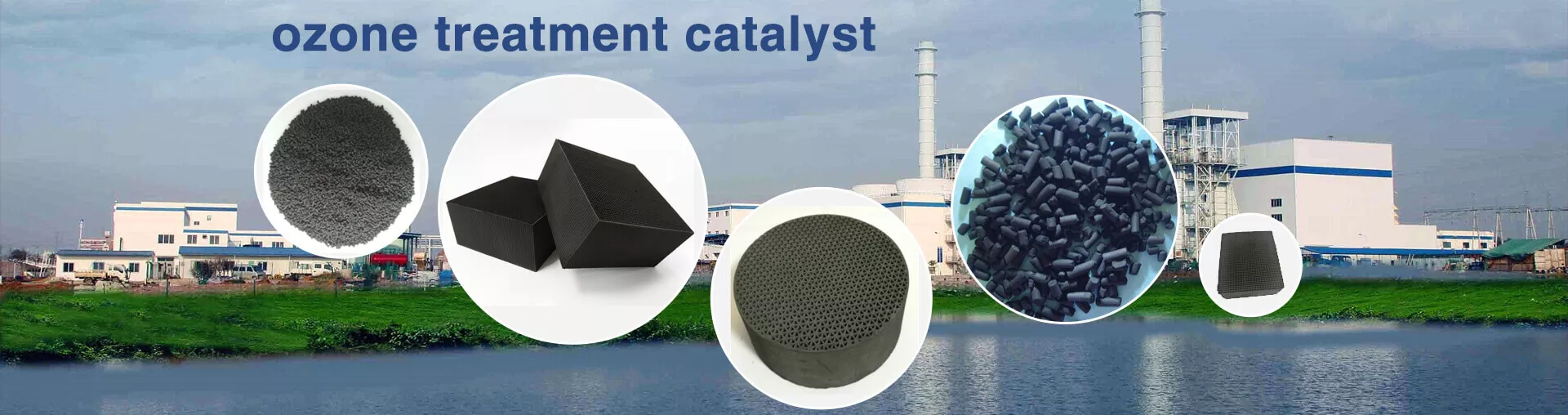
The efficiency of an ozone decomposition catalyst can decline for several reasons, and catalyst aging is not always the only cause. Surface contamination, humidity, temperature, inlet ozone concentration, gas flow rate, gas composition, and long-term operating conditions can all affect ozone decomposition performance. When the ozone concentration at the outlet begins to increase, the catalyst should not immediately be considered deactivated. A systematic evaluation of both the catalyst and operating conditions is needed to identify the actual cause.
Ozone decomposition catalysts promote the conversion of ozone (O3) through active sites on their surfaces. During long-term operation, contaminants may accumulate on the catalyst surface and cover some of these active sites. This reduces the number of sites available for ozone decomposition and can gradually lower the overall ozone removal efficiency.
Long-term operation may also cause physical changes, such as particle abrasion, powdering, pore structure changes, or a reduction in mechanical strength. These changes can affect both the available reaction surface and gas flow through the catalyst bed. Therefore, catalyst performance should be evaluated from both chemical activity and physical condition.
Water vapor can interact with the catalyst surface and influence the adsorption behavior of surface species. Under high-humidity conditions, water molecules may compete with ozone for adsorption sites, potentially affecting the interaction between ozone and the catalyst surface.
However, it is not scientifically accurate to assume that higher humidity will always result in lower ozone decomposition efficiency. The actual effect depends on factors such as catalyst composition, pore structure, operating temperature, and humidity level. Therefore, humidity should be evaluated together with temperature and inlet and outlet ozone concentrations rather than being treated as an independent indicator of catalyst deactivation.
The quality of the inlet gas has a direct impact on the long-term stability of an ozone decomposition catalyst. Dust, oil mist, and certain organic contaminants can accumulate on the catalyst surface or enter its pore structure. This may block active sites, reduce accessible surface area, and interfere with gas-solid contact.
When ozone decomposition efficiency gradually declines, the condition of the gas entering the catalyst bed should therefore be checked. If the gas contains significant particulate matter or oil mist, appropriate pre-filtration, dust removal, or other pretreatment measures can help reduce the contaminant load on the catalyst and improve long-term operating stability.
Changes in operating parameters can also cause a reduction in ozone decomposition efficiency, even when the catalyst itself has not undergone significant deactivation. Temperature affects the rate of surface reactions, while a higher inlet ozone concentration increases the treatment load placed on the catalyst.
Gas flow rate is another important factor. Increasing the flow rate can reduce the effective contact time between ozone and the catalyst. If the gas distribution inside the catalyst bed is uneven, some areas may experience excessive gas velocity while other areas remain underutilized. As a result, overall ozone removal performance can decline even when the catalyst still retains considerable activity.
For this reason, evaluating ozone decomposition efficiency requires consideration of inlet ozone concentration, gas flow rate, temperature, humidity, catalyst loading, and gas distribution rather than focusing only on catalyst composition.
A systematic troubleshooting process can help distinguish catalyst deactivation from changes in operating conditions.
First, measure the ozone concentration at both the inlet and outlet of the catalyst bed to confirm whether the removal efficiency has actually changed.
Second, check operating parameters such as temperature, relative humidity, and gas flow rate to determine whether the process conditions have changed.
Third, examine the inlet gas for dust, oil mist, organic contaminants, or other substances that could accumulate on the catalyst.
Finally, inspect the physical condition of the catalyst, including its appearance, particle integrity, mechanical strength, pressure drop, and loading condition.
If the operating conditions remain relatively stable while ozone removal efficiency continues to decline, and the catalyst shows obvious contamination or physical deterioration, catalyst performance degradation becomes a more likely explanation.
Maintaining stable ozone decomposition performance requires more than selecting a catalyst with high initial activity. The catalyst must also operate under conditions that are appropriate for its material characteristics and application environment.
In practical systems, the catalyst should be selected according to the gas composition, humidity, ozone concentration, temperature, and flow conditions. Gas velocity and catalyst loading should also be properly designed to provide sufficient gas-solid contact.
At the same time, reducing the amount of dust, oil mist, and other contaminants entering the catalyst bed can help prevent premature surface fouling. Proper gas distribution is also important because uneven flow can reduce the effective utilization of the catalyst bed.
Regular monitoring of inlet ozone concentration, outlet ozone concentration, temperature, humidity, gas flow rate, and pressure drop provides useful information for identifying changes in system performance. Using operating data to determine the cause of efficiency loss is generally more reliable than judging catalyst deactivation solely from the outlet ozone concentration.
In summary, declining ozone decomposition catalyst efficiency is often the result of changes in both catalyst condition and operating environment. A comprehensive assessment of the catalyst, gas composition, and system operating parameters can help identify the actual cause of performance loss and provide a sound basis for maintenance, process optimization, and catalyst replacement decisions.
author:kaka
date:2026/8/31
Contact: Candyly
Phone: +8618142685208
Tel: 0086-0731-84115166
Email: sales@minstrong.com
Add: E2 Building, Kinglory Science And Technology Industrial Park, Wangcheng Area, Changsha, Hunan, China.
 minstrong