Welcome: Hunan Minstrong Technology Co., Ltd
Language:
 ∷
∷

∷
∷
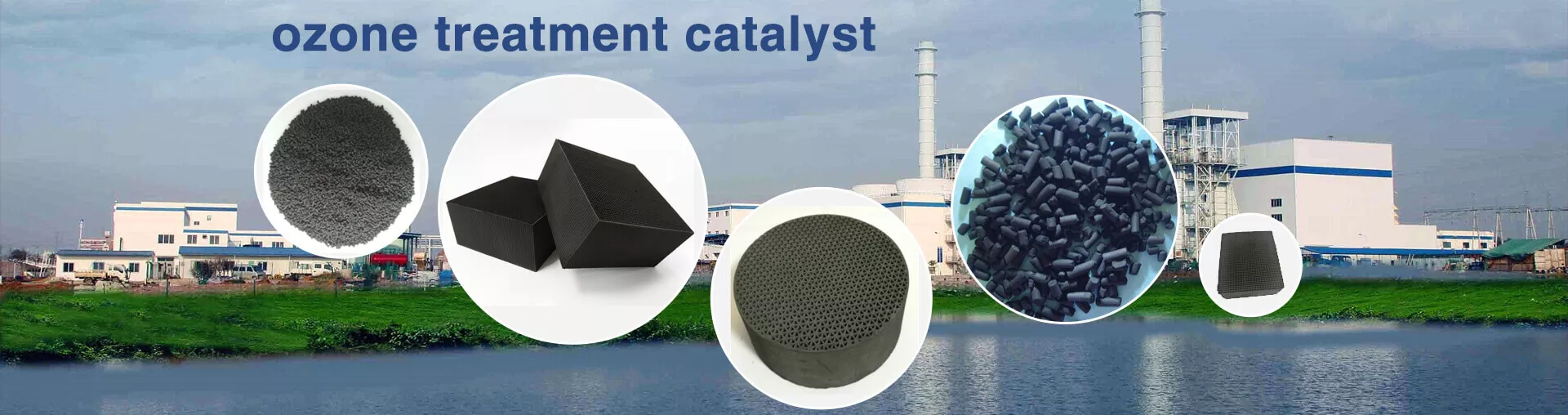
Ozone is a highly reactive oxidizing agent and is widely used in water treatment, disinfection, industrial oxidation, and air purification. However, when residual ozone remains in an off-gas stream after ozone generation or application, it must be effectively decomposed to prevent secondary environmental and occupational concerns.
Compared with thermal decomposition and absorption methods, catalytic decomposition can promote the conversion of ozone into oxygen at relatively low temperatures. This makes catalytic processes attractive for continuous operation because they can provide efficient ozone removal with relatively low energy consumption.
As a result, the development of ozone decomposition catalysts is gradually shifting from the question of “Can the catalyst decompose ozone?” to a more practical question: “Can it continuously decompose ozone under complex industrial operating conditions?”
Earlier catalyst development often placed significant emphasis on initial ozone decomposition efficiency. However, industrial catalysts may need to operate continuously for months or even longer. High initial activity does not necessarily translate into good long-term performance.
In humid gas streams, water molecules can compete for active sites on the catalyst surface and interfere with ozone adsorption and decomposition. Humidity-induced activity loss is therefore an important factor affecting the practical application of manganese oxide-based ozone decomposition catalysts.
Future catalyst development is expected to place greater emphasis on:
This means that high activity alone will increasingly be replaced by the combined requirement of high activity and high stability.
Manganese oxides remain one of the important material systems for ozone decomposition catalysts. Manganese dioxide (MnO2) has demonstrated good ozone decomposition activity, while subsequent research has shown that crystal structure, surface defects, oxygen vacancies, and redox properties can all influence catalytic performance.
Future development will not simply focus on increasing the MnO2 content. Instead, greater attention will be paid to precise control of material structure and catalytic active sites.
For example, adjusting crystal structure, surface defects, oxygen vacancy concentration, particle size, and pore structure can influence ozone adsorption and decomposition on the catalyst surface.
As a result, manganese-based ozone decomposition catalysts are likely to evolve from conventional formulation optimization toward a more systematic relationship between microstructure, active sites, and macroscopic catalytic performance.
Although individual metal oxides can provide good ozone decomposition performance, they may have limitations under high humidity, high space velocity, or complex gas compositions.
For this reason, composite metal oxides, supported catalysts, and heterostructured materials are expected to remain important development directions.
The purpose of composite catalyst design is not simply to add another active component. Instead, different components can interact synergistically to improve:
Therefore, future catalyst development is likely to place increasing emphasis on multi-component synergistic effects rather than relying on a single active material.
A catalyst that performs well under laboratory conditions is not necessarily suitable for industrial systems.
Industrial ozone off-gas streams may involve high gas flow rates, while temperature, humidity, ozone concentration, and coexisting contaminants can vary continuously. Future catalysts therefore need to maintain stable performance under increasingly demanding operating conditions.
This means that catalyst evaluation should not rely solely on ozone removal efficiency measured under a single experimental condition. Instead, greater attention should be paid to the combined effects of:
Temperature × Humidity × Space Velocity × Ozone Concentration × Operating Time
This multi-dimensional evaluation is more meaningful for industrial applications than comparing ozone removal efficiency under only one set of laboratory conditions.
The catalyst material itself is only one part of an industrial treatment system. Pressure drop, mass transfer, installation requirements, and mechanical strength are also critical considerations.
As a result, ozone decomposition catalysts are expected to develop further toward honeycomb, monolithic, and other structured catalyst configurations.
For practical industrial systems, the ideal catalyst is not necessarily the material with the highest specific surface area. Instead, an appropriate balance needs to be achieved among:
Catalytic activity, mass transfer, pressure drop, mechanical strength, and catalyst loading density.
Future catalyst research will therefore increasingly integrate material design with reactor and process engineering.
The evaluation criteria for ozone decomposition catalysts are also expected to become broader.
In addition to initial activity and stability, factors such as manufacturing cost, mechanical strength, transportation and loading characteristics, service life, deactivation behavior, and regeneration or disposal requirements should also be considered.
For industrial users, a catalyst with extremely high initial activity may not be economically attractive if it rapidly loses performance under humid operating conditions.
A more practical evaluation framework should therefore consider:
Catalyst cost per unit + service life + ozone treatment capacity + replacement and maintenance cost + system operating cost
This represents an important transition from laboratory material development toward industrial functional catalyst engineering.
Another potential development direction is the integration of ozone decomposition with the control of other pollutants.
Ozone catalytic decomposition may have synergistic potential with VOC treatment processes, while catalyst deactivation and regeneration remain important technical challenges.
This suggests that future catalytic materials may perform more than one function depending on the process conditions, potentially combining ozone removal with the treatment of other contaminants.
However, multifunctionality does not simply mean combining multiple functions into one material. Different pollutants may compete for adsorption sites, occupy active sites, or even cause catalyst poisoning. Therefore, catalyst design still needs to be based on the actual composition and operating conditions of the gas stream.
Based on current research and industrial application requirements, the future development of ozone decomposition catalysts can be summarized into six major directions:
1. Low-temperature operation. Maintaining high ozone decomposition efficiency at room temperature or below can reduce system energy consumption.
2. Improved humidity resistance. Reducing the impact of water vapor on active sites will help catalysts operate reliably under real industrial humidity conditions.
3. High-space-velocity operation. Catalysts need to maintain stable ozone removal performance while processing large gas volumes.
4. Structural engineering. Catalyst development will increasingly move from powders and conventional pellets toward honeycomb, monolithic, and other structured configurations.
5. Composite catalyst systems. Manganese, copper, and other transition metal oxides, together with supports and heterostructures, can be used to create synergistic catalytic properties.
6. Extended service life. Catalyst development will shift from short-term high activity toward long-term stability, resistance to deactivation, and lower life-cycle costs.
The development of ozone decomposition catalysts is undergoing a clear transition. The catalysts with the greatest industrial value in the future will not simply be those with the highest ozone decomposition efficiency, but those capable of maintaining stable performance under low-temperature, high-humidity, high-space-velocity, and complex gas conditions.
Manganese-based materials, particularly MnO2-based systems, will continue to play an important role. However, research will increasingly move from simple material screening toward active-site engineering, composite structure design, humidity-resistant modification, and industrial shaping. Copper-based materials, composite metal oxides, and monolithic catalysts are also expected to expand their application potential.
For industrial projects, ozone decomposition catalysts should therefore not be selected solely according to the highest ozone removal efficiency measured under laboratory conditions. Instead, selection should consider ozone concentration, gas flow rate, temperature, humidity, space velocity, allowable pressure drop, catalyst lifetime, replacement frequency, and maintenance costs.
Ultimately, competition in the ozone decomposition catalyst market will increasingly shift from “catalytic activity” to “overall performance and engineering adaptability.”
author:kaka
date:2026/8/24
Contact: Candyly
Phone: +8618142685208
Tel: 0086-0731-84115166
Email: sales@minstrong.com
Add: E2 Building, Kinglory Science And Technology Industrial Park, Wangcheng Area, Changsha, Hunan, China.
 minstrong