Welcome: Hunan Minstrong Technology Co., Ltd
Language:
 ∷
∷

∷
∷
Ozone is a highly reactive gas composed of three oxygen atoms. Due to its strong oxidation capability, ozone is widely used in disinfection, oxidation processes, and pollutant degradation applications. However, excessive residual ozone after industrial processes may cause safety and environmental concerns due to its strong oxidizing properties.
In practical applications, such as ozone generation systems, water treatment processes, and air purification equipment, the remaining ozone in exhaust gas needs to be removed before discharge. Converting residual ozone into harmless oxygen is an important step to ensure safe and stable operation of industrial systems.
Ozone decomposition catalysts provide an efficient solution for this purpose. Instead of simply capturing ozone physically, these catalysts promote chemical reactions on their surfaces, allowing ozone molecules to break down and recombine into oxygen molecules.
The materials used to convert ozone into oxygen are commonly known as ozone decomposition catalysts. Industrial ozone decomposition catalysts are mainly based on metal oxide catalytic materials, among which manganese dioxide (MnO₂) and composite metal oxide systems are widely studied and applied due to their excellent catalytic activity.
These catalysts contain abundant surface active sites that can adsorb ozone molecules and promote the breakage of oxygen-oxygen bonds within ozone. Through catalytic action, ozone can be rapidly converted into oxygen without being consumed by the catalyst itself.
Compared with direct thermal decomposition, catalytic decomposition does not require extremely high temperatures. It can achieve efficient ozone removal under relatively mild operating conditions, making it suitable for continuous industrial applications.
The core function of an ozone decomposition catalyst is to reduce the energy barrier of ozone decomposition and accelerate the reaction process. The catalytic reaction mainly occurs on the catalyst surface and generally includes several key steps:
When ozone-containing gas passes through the catalyst bed, ozone molecules first contact and adsorb onto active sites on the catalyst surface. The surface structure and active components of the catalyst determine its ozone adsorption capacity.
After adsorption, ozone molecules are activated by the catalyst surface. The ozone molecule undergoes decomposition, releasing oxygen atoms and forming oxygen molecules during the reaction process.
The active oxygen species generated during decomposition further combine with other oxygen atoms, eventually forming stable oxygen molecules. Through this catalytic cycle, ozone is continuously converted into oxygen.
The overall reaction can be represented as:
2O₃ → 3O₂
During this process, the catalyst itself is not significantly consumed. Instead, it continuously provides active sites and participates in repeated catalytic cycles.
Although ozone decomposition catalysts can effectively promote ozone conversion, their actual performance depends on various operating conditions. Understanding these factors is essential for catalyst selection and system design.
The active components determine the ability of the catalyst to adsorb ozone molecules and accelerate decomposition reactions. Metal oxides with suitable redox properties can provide effective active sites and improve ozone removal efficiency.
A larger specific surface area generally provides more contact area between ozone molecules and catalytic active sites. A well-designed pore structure also improves gas diffusion and enhances overall reaction efficiency.
Temperature affects ozone reaction kinetics, while humidity influences the adsorption behavior on the catalyst surface. Under high humidity conditions, water molecules may occupy some active sites and reduce the contact between ozone and the catalyst.
The gas residence time, inlet ozone concentration, and operating load directly influence catalyst performance. Therefore, industrial systems need to select appropriate catalyst loading and structure based on actual operating conditions.
Ozone decomposition catalysts are widely used in industrial processes where residual ozone needs to be removed. Their primary function is to safely convert ozone into oxygen before gas discharge.
Ozone Generator Off-Gas Treatment: Ozone generation systems usually produce residual ozone after the oxidation process. Catalytic decomposition helps reduce ozone concentration in exhaust gas.
Ozone-Based Water Treatment: In drinking water treatment and industrial wastewater treatment, ozone is used as an oxidizing agent, and remaining ozone needs to be removed after treatment.
Air Purification Systems: Industrial air treatment equipment may require ozone concentration control to ensure safe and stable operation.
Industrial Oxidation Processes: Production processes involving ozone oxidation can use catalysts to treat residual ozone in exhaust streams.
In practical engineering applications, selecting an ozone decomposition catalyst requires more than considering catalytic activity alone. Operating conditions and system requirements must also be evaluated.
| Selection Factor | Considerations |
|---|---|
| Ozone Concentration | Select catalyst capacity according to the inlet ozone concentration and treatment requirements. |
| Gas Flow Rate | Determines catalyst loading amount and reactor bed design. |
| Humidity Conditions | High humidity environments require catalysts with suitable water resistance. |
| Operating Temperature | Different catalytic systems have different suitable temperature ranges. |
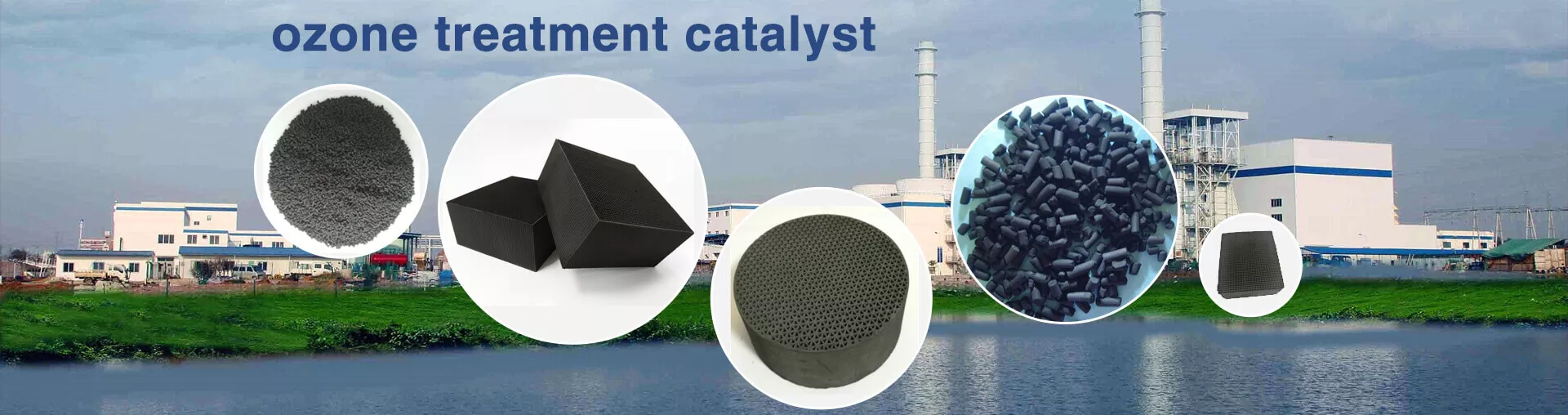
| Catalyst Structure | Pellet, granular, and honeycomb structures are selected according to equipment design and application conditions. |
Ozone decomposition catalysts are essential materials for converting ozone into oxygen efficiently. Through active sites on the catalyst surface, ozone molecules can be rapidly decomposed under relatively mild conditions according to the reaction pathway of 2O₃ → 3O₂.
The actual performance of ozone decomposition catalysts depends not only on catalyst composition and structure but also on operating factors such as temperature, humidity, ozone concentration, and gas flow rate. Therefore, selecting a suitable ozone decomposition catalyst requires comprehensive evaluation of specific application conditions to achieve efficient ozone removal, stable operation, and long service life.
author:kaka
date:2026/9/8
Contact: Candyly
Phone: +8618142685208
Tel: 0086-0731-84115166
Email: sales@minstrong.com
Add: E2 Building, Kinglory Science And Technology Industrial Park, Wangcheng Area, Changsha, Hunan, China.
 minstrong