Welcome: Hunan Minstrong Technology Co., Ltd
Language:
 ∷
∷

∷
∷
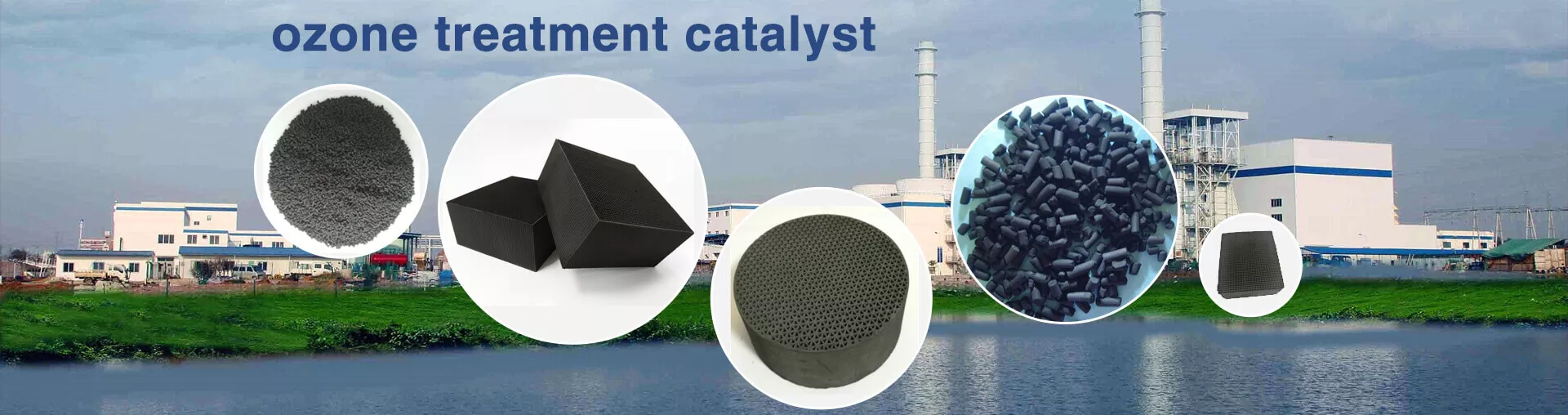
The key to improving ozone destruction efficiency is not simply selecting a catalyst with the highest measured activity. Instead, the catalyst must enable ozone molecules to reach active sites efficiently and undergo continuous decomposition on the catalyst surface. Catalyst activity determines how effectively the surface promotes ozone decomposition, while specific surface area, pore structure, particle size, and catalyst geometry influence the actual gas-solid contact efficiency.
Under the same operating conditions, a catalyst may contain a large number of active sites but still deliver limited practical performance if its internal pore structure restricts gas diffusion. Therefore, industrial ozone decomposition performance should be understood as the combined result of intrinsic catalytic activity and structural mass-transfer characteristics.
Ozone is a highly reactive oxidizing gas. Its catalytic decomposition generally involves adsorption of ozone on the catalyst surface, activation of the adsorbed species, and subsequent transformation of oxygen-containing intermediates. Active sites on the catalyst surface can facilitate these processes and promote ozone decomposition.
The redox properties, surface defects, reactive oxygen species, and electronic structure of metal oxides can all affect ozone decomposition performance. A catalyst with high effective activity can generally maintain good ozone removal performance at relatively low temperatures or short contact times.
However, high activity measured under laboratory conditions does not necessarily guarantee the same performance in an industrial system. Practical applications must also consider humidity, ozone concentration, gas hourly space velocity, temperature, and other gas components.
Specific surface area is an important parameter for porous catalytic materials. A larger accessible surface area generally provides more gas-solid contact interfaces and more potential active sites for ozone adsorption and decomposition.
However, a larger specific surface area is not always sufficient. Pore size distribution is equally important. If pores are too small, ozone molecules and reaction products may experience greater diffusion resistance. If the pore structure is poorly distributed, the catalyst may not effectively balance surface reaction and internal mass transfer.
For industrial ozone decomposition catalysts, it is therefore more important to consider the combination of accessible surface area, appropriate pore size distribution, and interconnected diffusion channels. An effective catalyst structure should allow ozone to enter the catalyst efficiently while allowing the oxygen generated during decomposition to leave the catalyst without excessive diffusion resistance.
The physical form of a catalyst directly affects gas flow, contact time, and pressure drop. Pellet catalysts provide flexibility in bed design, allowing engineers to adjust particle size and bed height according to the required contact conditions. However, excessively large particles can increase external mass-transfer resistance, while excessively small particles may increase pressure drop.
Honeycomb catalysts have regularly arranged open channels that allow gas to flow through the catalyst structure with relatively low pressure loss. They are therefore often suitable for high-flow-rate ozone off-gas treatment systems where pressure drop is an important design constraint.
It is therefore not appropriate to simply conclude that pellet or honeycomb catalysts have inherently higher activity. The appropriate catalyst geometry should be selected according to gas flow rate, ozone concentration, allowable pressure drop, equipment dimensions, contact time, and required outlet ozone concentration.
In industrial ozone decomposition, relative humidity is an important factor affecting catalyst performance. Water molecules can compete for adsorption sites on the catalyst surface and alter the surface reaction environment, potentially reducing the effective contact between ozone and active sites.
Gas hourly space velocity is another important factor. Excessively high gas flow can shorten the contact time between ozone and the catalyst. If catalyst activity and structural design are not properly matched to the operating conditions, the outlet ozone concentration may increase even when the catalyst itself has high intrinsic activity.
For this reason, ozone catalyst evaluation should consider at least ozone concentration, gas flow rate, space velocity, temperature, and humidity. Comparing a single laboratory activity value is insufficient for determining actual industrial performance.
When selecting a catalyst for an industrial project, performance can be evaluated from three complementary perspectives.
Intrinsic activity should focus on parameters such as ozone decomposition rate, operating temperature, and ozone removal performance under the target concentration and contact conditions.
Structural performance includes specific surface area, pore structure, particle size, mechanical strength, catalyst geometry, and pressure-drop characteristics. These parameters determine how effectively the catalyst can be used in a real reactor.
Industrial catalysts should also be evaluated under representative conditions, including high humidity, high space velocity, fluctuating ozone concentrations, and long-term continuous operation. Stability under realistic conditions is often more meaningful than short-term activity data alone.
Only when these three aspects are properly matched can a catalyst provide stable ozone destruction efficiency in an actual treatment system.
Improving ozone destruction efficiency is essentially a matter of coordinating catalyst activity, structural design, and operating conditions. High intrinsic activity determines the reaction potential of the material, an appropriate pore structure improves active-site utilization, and suitable catalyst geometry improves gas distribution and mass transfer. Proper operating parameters then allow the catalyst to maintain its performance over time.
Therefore, industrial ozone off-gas treatment should not evaluate a catalyst based on a single activity indicator. Gas flow rate, ozone concentration, humidity, space velocity, pressure drop, target outlet concentration, and long-term stability should all be considered during catalyst selection and system design.
Ultimately, the most effective approach is to match catalyst activity with structural characteristics and actual operating conditions. This integrated approach can improve ozone decomposition efficiency while supporting stable system operation and extending catalyst service life.
AUTHOR:KAKA
DATE:2026/8/17
Contact: Candyly
Phone: +8618142685208
Tel: 0086-0731-84115166
Email: sales@minstrong.com
Add: E2 Building, Kinglory Science And Technology Industrial Park, Wangcheng Area, Changsha, Hunan, China.
 minstrong