Welcome: Hunan Minstrong Technology Co., Ltd
Language:
 ∷
∷

∷
∷
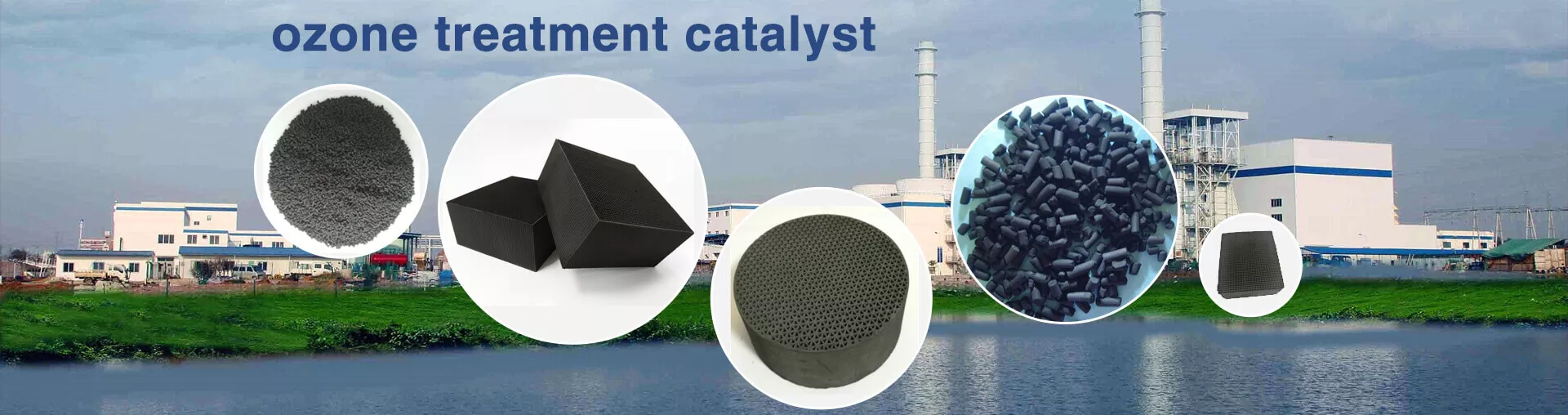
Copper-manganese based ozone decomposition catalysts are composite catalytic materials mainly composed of copper oxides and manganese oxides. Through the synergistic interaction between different metal oxides, these catalysts promote the rapid decomposition of ozone molecules.
Ozone (O₃) has strong oxidation properties and is widely used in industrial processes such as water treatment, air sterilization, and oxidation reactions. However, residual ozone after treatment may cause safety and environmental concerns if it is discharged directly. Therefore, ozone decomposition catalysts are required to convert excess ozone into stable oxygen.
Compared with single metal oxide catalysts, copper-manganese oxide systems provide more active sites and enhanced redox capability, resulting in improved ozone decomposition efficiency.
The ozone decomposition process over copper-manganese catalysts mainly follows a surface oxidation-reduction reaction mechanism.
During the catalytic process, ozone molecules are first adsorbed onto active sites on the catalyst surface. Under the influence of copper and manganese oxides, electron transfer occurs, weakening and breaking the oxygen-oxygen bond in ozone molecules and forming active oxygen intermediates. These oxygen species then combine to generate oxygen molecules, while the active sites on the catalyst surface are regenerated for continuous catalytic cycles.
Manganese oxides usually contain multiple oxidation states, such as Mn³⁺ and Mn⁴⁺, which enable electron transfer and oxygen mobility during the reaction. Copper oxides can adjust the electronic structure of the catalyst surface and improve oxygen activation capability. When copper and manganese oxides are combined, their interaction enhances the oxidation-reduction cycle and improves catalytic performance.
In simple terms, copper-manganese based ozone decomposition catalysts do not consume ozone directly. Instead, they accelerate the conversion process by reducing the reaction energy barrier and promoting the transformation of ozone into oxygen.
Ozone can naturally decompose into oxygen, but the reaction rate is relatively slow without catalytic assistance. Copper-manganese catalysts reduce the required reaction energy, allowing ozone decomposition to occur efficiently under relatively low-temperature conditions.
This characteristic makes them suitable for applications operating at ambient or low temperatures, including ozone generator off-gas treatment, air purification systems, and industrial gas purification processes.
During long-term operation, catalysts must continuously generate and release oxygen species while maintaining active sites. If the catalyst cannot recover its active structure efficiently, ozone removal performance may gradually decline.
Copper-manganese oxide materials provide strong electron transfer capability and promote oxygen vacancy formation and recovery, improving catalytic stability during continuous operation.
Ozone decomposition efficiency is closely related to catalyst surface area, pore structure, and the number of exposed active centers.
By optimizing material structure, copper-manganese catalysts can provide more accessible active sites, improving ozone adsorption and reaction efficiency.
Although copper-manganese catalysts demonstrate excellent ozone decomposition capability, their actual industrial performance is affected by several operating factors.
First, catalyst composition plays an important role. The ratio and interaction between copper and manganese components influence electronic structure, oxygen mobility, and catalytic activity.
Second, operating conditions affect catalytic efficiency. Under high humidity conditions, water molecules may compete with ozone for adsorption sites on the catalyst surface, reducing contact efficiency between ozone and active centers.
In addition, ozone concentration, gas flow rate, impurities, and catalyst structure also influence overall treatment performance. Therefore, catalyst selection should consider the complete operating environment rather than only initial catalytic activity.
Copper-manganese based ozone decomposition catalysts are mainly used in industrial applications where residual ozone needs to be removed or controlled.
In ozone generation systems, these catalysts can treat unreacted ozone in the exhaust gas and reduce ozone concentration before discharge, improving system safety.
In water treatment processes using ozone oxidation technology, ozone decomposition catalysts are commonly used in tail gas treatment units to remove remaining ozone effectively.
In air purification and industrial gas treatment systems, copper-manganese catalytic materials can help reduce excessive ozone concentration and improve the stability of purification processes.
For industrial applications, catalyst selection should not only focus on initial ozone removal efficiency but also consider long-term operational stability.
Important evaluation factors include:
For continuous operation systems, catalysts with stable oxidation-reduction performance, strong mechanical properties, and good adaptability to complex gas environments are preferred.
Copper-manganese based ozone decomposition catalysts achieve efficient ozone conversion through the synergistic catalytic effect of copper and manganese oxides. Their main advantages include strong redox capability, abundant surface active sites, and excellent low-temperature catalytic performance.
In industrial ozone off-gas treatment and gas purification applications, catalyst performance depends not only on material properties but also on operating conditions, structural design, and maintenance management. Understanding the working mechanism and performance characteristics of copper-manganese ozone decomposition catalysts helps engineers select appropriate solutions for different ozone control applications.
author:kaka
date:2026/8/11
Contact: Candyly
Phone: +8618142685208
Tel: 0086-0731-84115166
Email: sales@minstrong.com
Add: E2 Building, Kinglory Science And Technology Industrial Park, Wangcheng Area, Changsha, Hunan, China.
 minstrong