Welcome: Hunan Minstrong Technology Co., Ltd
Language:
 ∷
∷

∷
∷
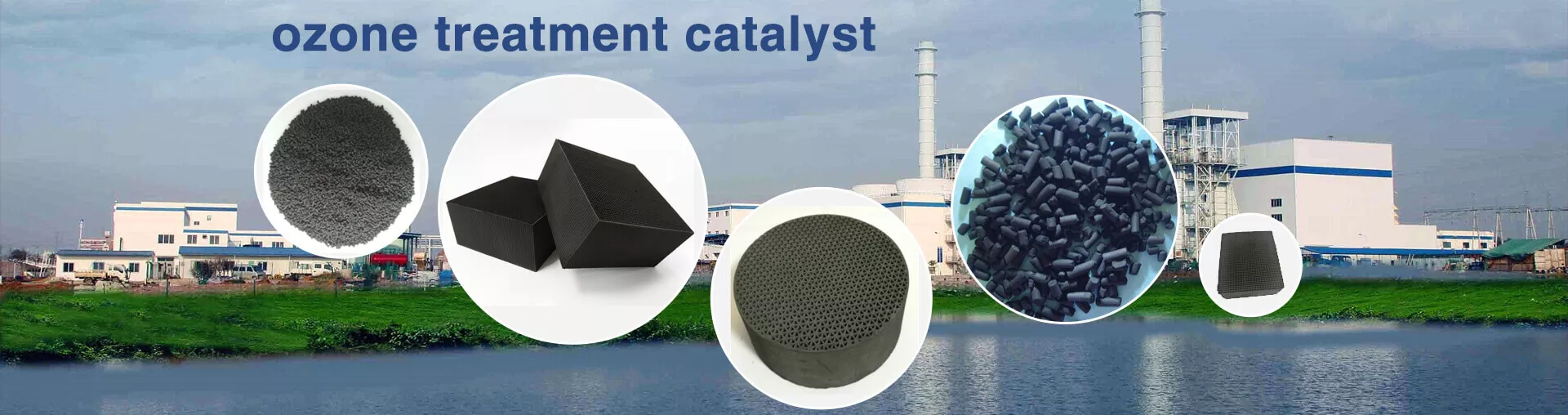
Ozone decomposition catalysts are an important technology for removing residual ozone from industrial oxidation process exhaust streams. Compared with natural ozone decomposition, catalytic decomposition significantly accelerates the conversion of ozone (O₃) into oxygen (O₂) under relatively mild operating conditions, reducing ozone emissions and improving the safety and stability of industrial systems.
Therefore, in industrial processes involving ozone oxidation, ozone sterilization, and advanced oxidation treatment, selecting an appropriate ozone decomposition catalyst according to actual operating conditions is essential for improving exhaust treatment efficiency and ensuring long-term system reliability.
Ozone has strong oxidation properties and is widely used in industrial oxidation reactions, pollutant degradation, sterilization processes, and surface treatment applications. During actual operation, however, not all ozone participates completely in the reaction. Due to limitations in reaction efficiency, gas-liquid transfer, and process control, a certain amount of unreacted ozone remains in the exhaust gas.
Untreated ozone exhaust can cause several operational issues. Because ozone is highly oxidative, excessive ozone concentration may accelerate material oxidation and affect the long-term stability of equipment. In addition, ozone leakage into the working environment may create safety concerns for operators.
For this reason, industrial ozone systems generally require an effective exhaust treatment unit to remove residual ozone before discharge. Traditional methods rely on the natural decomposition of ozone, which is relatively slow and often requires extended residence time. This approach may not meet the requirements of continuous industrial operation.
Ozone decomposition catalysts reduce the activation energy of the ozone decomposition reaction and significantly increase the reaction rate, allowing more compact and efficient exhaust purification systems.
Ozone decomposition catalysts promote ozone breakdown through active sites on the catalyst surface. During the catalytic process, ozone molecules are first adsorbed onto the catalyst surface, where they undergo structural transformation and generate active oxygen species. These intermediate species eventually recombine to form stable oxygen molecules.
The overall reaction can be expressed as:
2O₃ → 3O₂
The catalyst itself is not consumed during the reaction. Instead, it provides an active surface that continuously facilitates ozone decomposition, allowing long-term operation.
The catalytic performance is closely related to several material properties, including active components, specific surface area, pore structure, and surface chemical characteristics. Catalysts with suitable surface structures can provide more active sites for ozone adsorption and reaction, improving ozone removal efficiency per unit volume.
Ozone decomposition catalysts are mainly applied in industrial systems where ozone is used as an oxidizing agent and residual ozone is generated during operation.
In ozone oxidation processes, catalysts are commonly used to remove unreacted ozone after the reaction stage. For example, in industrial water treatment systems, ozone is applied to oxidize organic contaminants, while the remaining ozone in the exhaust gas needs to be decomposed before release.
In chemical oxidation processes, ozone may be introduced as an oxidation medium for specific reactions. The exhaust gas from these systems may contain residual ozone, and catalytic decomposition technology helps reduce ozone concentration and prevent ozone from entering downstream equipment or the surrounding environment.
In addition, ozone decomposition catalysts are widely considered in applications such as semiconductor manufacturing, air purification systems, high-purity gas treatment, and industrial sterilization processes. Different operating environments require different catalyst properties, including activity, humidity resistance, mechanical strength, and service life.
The inlet ozone concentration directly affects the treatment capacity requirements of ozone decomposition catalysts. When ozone concentration is relatively high, the catalyst needs to provide sufficient catalytic activity and structural stability to maintain efficient ozone removal during continuous operation.
Therefore, the catalyst loading amount and reactor design should be determined according to the actual ozone generation capacity and exhaust conditions to ensure that the catalyst can effectively handle the required treatment load.
The gas flow rate and residence time determine the contact efficiency between ozone molecules and the catalyst surface. If the gas passes through the catalyst bed too quickly, ozone molecules may not have sufficient contact time with active sites, resulting in reduced decomposition efficiency.
During system design, the gas velocity, catalyst filling volume, and reactor structure should be properly matched to achieve sufficient ozone-catalyst interaction and maintain stable purification performance.
Temperature and humidity are important factors influencing ozone decomposition catalyst performance. Many industrial exhaust streams contain water vapor, and excessive moisture may occupy active sites on the catalyst surface, reducing ozone adsorption and catalytic reaction efficiency.
For applications under high humidity conditions, catalysts with good moisture resistance are required to maintain stable performance and extend operating life.
Industrial exhaust streams may contain dust, organic compounds, or other substances that can adsorb onto the catalyst surface. These impurities may block active sites and gradually reduce catalytic activity during long-term operation.
Therefore, in complex industrial environments, it is necessary to consider the cleanliness of the gas stream and the catalyst's resistance to contamination when designing an ozone removal system.
The selection of an ozone decomposition catalyst should be based on actual operating conditions rather than a single performance parameter. A suitable catalyst needs to match the requirements of the entire exhaust treatment system.
First, the catalyst capacity should be selected according to the ozone concentration and exhaust gas flow rate. Different industrial systems generate different ozone loads, and the catalyst quantity and structure should be designed according to the actual treatment demand.
Second, environmental conditions should be considered during selection. For high-humidity applications, moisture-resistant catalytic materials are preferred. For continuous operation systems, mechanical strength, stability, and long-term activity retention are critical factors.
The physical structure of the catalyst is also an important consideration. Granular catalysts are commonly suitable for fixed-bed reactors, while structured catalysts with optimized gas channels can provide lower pressure drop and are suitable for systems requiring efficient gas flow management.
By evaluating operating conditions, equipment design, and maintenance requirements together, industrial users can achieve a more reliable and efficient ozone exhaust treatment system.
With increasing requirements for industrial safety, environmental protection, and energy efficiency, ozone decomposition catalytic technology continues to develop toward higher efficiency and stronger adaptability.
Future ozone decomposition catalysts will focus on several key improvements, including higher activity at low temperatures, improved resistance to humidity, longer service life, and better tolerance to complex industrial operating conditions.
Optimizing catalyst surface structures, improving pore distribution, and enhancing resistance to deactivation will remain important directions for improving practical industrial performance.
At the same time, as ozone applications continue to expand across different industries, customized catalyst solutions designed for specific operating environments will become increasingly important for efficient ozone exhaust management.
Ozone decomposition catalysts play an important role in industrial oxidation process exhaust treatment. Their main function is to rapidly reduce residual ozone concentration through catalytic decomposition, improving exhaust purification efficiency while ensuring safer and more stable industrial operation.
In practical applications, catalyst selection should consider multiple factors, including ozone concentration, gas flow rate, humidity conditions, equipment configuration, and expected operating period. By properly matching catalyst characteristics with process requirements, industries can achieve reliable and efficient ozone removal performance.
author:kaka
date:2026/8/4
Contact: Candyly
Phone: +8618142685208
Tel: 0086-0731-84115166
Email: sales@minstrong.com
Add: E2 Building, Kinglory Science And Technology Industrial Park, Wangcheng Area, Changsha, Hunan, China.
 minstrong