Welcome: Hunan Minstrong Technology Co., Ltd
Language:
 ∷
∷

∷
∷
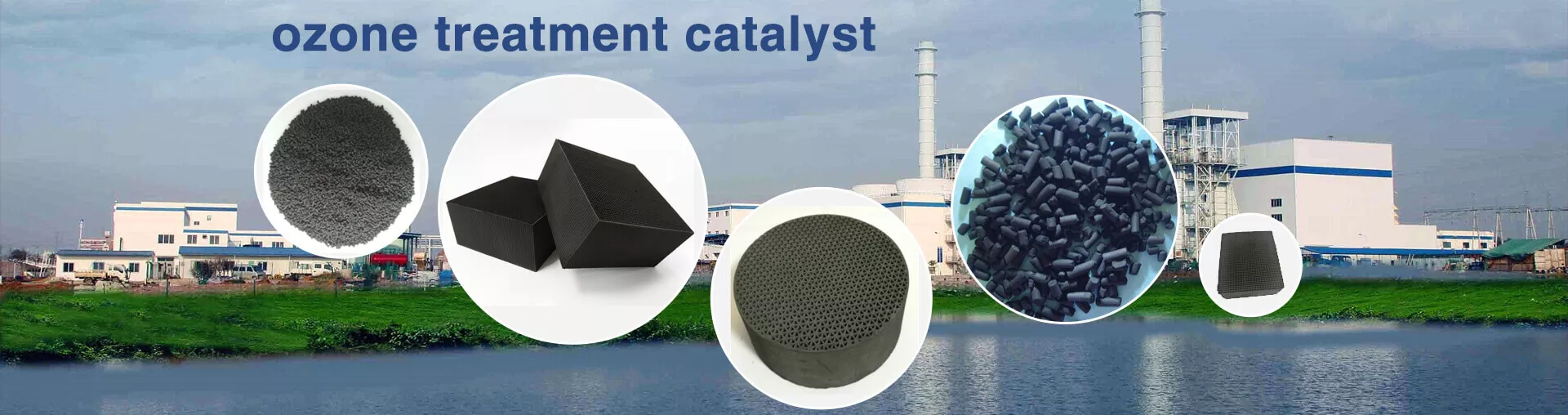
In industrial ozone treatment applications, ozone decomposition catalysts are generally more suitable for continuous operation and high-concentration ozone exhaust treatment, while activated carbon is more suitable for certain low-concentration and intermittent ozone removal scenarios. The main difference between these two technologies lies in their working mechanisms: activated carbon removes ozone mainly through adsorption, whereas ozone decomposition catalysts convert ozone (O₃) into harmless oxygen (O₂) through catalytic reactions. Therefore, in applications such as ozone generators, semiconductor manufacturing, high-purity gas treatment, and water treatment, catalytic ozone decomposition technology often provides better long-term operational stability.
Ozone is a highly oxidizing gas widely used in industrial processes such as disinfection, oxidation treatment, and pollutant degradation. During these processes, ozone may be generated as a residual gas from ozone generators, water treatment systems, air purification equipment, and other industrial oxidation applications.
Although ozone has strong oxidation capabilities, excessive ozone emissions may cause operational and environmental concerns. Due to its strong oxidizing properties, ozone can affect human health, accelerate the aging of certain materials, and impact precision industrial environments. Therefore, industrial systems often require effective ozone removal technologies to reduce residual ozone concentration before gas discharge.
Common ozone treatment technologies include adsorption, thermal decomposition, and catalytic decomposition. Among them, activated carbon adsorption and ozone decomposition catalysts are two widely used approaches for industrial ozone removal.
Activated carbon is a porous carbon material with a large internal surface area. Its primary function is to remove gases through adsorption. When ozone-containing gas passes through an activated carbon bed, ozone molecules are captured on the carbon surface and further react through oxidation processes, reducing ozone concentration.
Activated carbon has certain advantages in specific applications. For example, in environments with low ozone concentration, small gas flow rates, or short operating periods, activated carbon can provide effective initial ozone removal performance. In addition, activated carbon materials are widely available and relatively simple to apply.
However, activated carbon also has limitations when used for long-term ozone treatment. Since its performance depends mainly on adsorption capacity, removal efficiency gradually decreases as adsorption sites become occupied. Furthermore, ozone is a strong oxidant, and continuous exposure may alter the structure of activated carbon, causing performance degradation. Therefore, in high-concentration ozone environments with continuous operation requirements, activated carbon may require more frequent maintenance or replacement.
The major difference between ozone decomposition catalysts and activated carbon is that catalytic materials do not simply capture ozone molecules but accelerate ozone decomposition through catalytic reactions.
During catalytic ozone decomposition, ozone molecules are first adsorbed on active sites of the catalyst surface. The catalyst then promotes oxygen atom transfer and molecular restructuring, converting unstable ozone molecules into stable oxygen molecules.
The chemical reaction can be expressed as:
2O₃ → 3O₂
During this process, the catalyst provides active sites that reduce the reaction activation energy but is not consumed in the same way as adsorption materials. This allows ozone decomposition catalysts to operate continuously under stable gas flow conditions.
Compared with adsorption-based technologies, catalytic ozone decomposition provides stable treatment efficiency, longer service life, and reduced replacement frequency, making it suitable for industrial ozone exhaust purification.
| Comparison Item | Ozone Decomposition Catalyst | Activated Carbon |
|---|---|---|
| Working Principle | Catalytic decomposition of ozone into oxygen | Adsorption and oxidation of ozone |
| Main Removal Mechanism | Catalytic chemical reaction | Mainly physical adsorption |
| Saturation Risk | Less affected by adsorption capacity limitations | Easily reaches adsorption saturation |
| Long-Term Operation Capability | Suitable for continuous operation | More suitable for short-term or low-concentration applications |
| High-Concentration Ozone Adaptability | Strong adaptability | Limited performance under high ozone loads |
| Maintenance Requirement | Relatively lower replacement frequency | Requires regular replacement |
Therefore, selecting an ozone removal material should not only focus on initial removal efficiency but also consider operating time, ozone concentration, gas flow rate, humidity conditions, and long-term maintenance requirements.
Ozone generator exhaust treatment:
Ozone generator systems usually produce relatively high ozone concentrations and require continuous operation. Under these conditions, ozone decomposition catalysts are often more suitable because they can rapidly reduce ozone concentration while maintaining stable performance over long operating periods.
Semiconductor and high-purity gas applications:
Industries involving precision manufacturing and high-purity gases usually have strict requirements for gas quality and process stability. Residual ozone may affect equipment performance and production processes. Therefore, ozone removal technologies with stable catalytic decomposition capabilities are commonly preferred for these applications.
Water treatment ozone exhaust:
Ozone is widely used in water treatment processes for oxidation and disinfection. The selection of ozone removal technology should consider ozone concentration, exhaust gas flow rate, and operating cycles. When ozone loading is relatively high, catalytic decomposition technology generally provides better adaptability.
Low-concentration air purification applications:
For environments with low ozone concentrations and short operating periods, activated carbon can still be a practical option. The selection should be based on actual operating conditions and treatment requirements.
The performance of ozone removal systems depends not only on the material type but also on several operating parameters.
Ozone concentration:
Higher ozone concentrations require materials with stronger catalytic activity and better structural stability. Treatment materials designed for high ozone loads usually need stronger resistance to oxidation and longer service life.
Gas humidity:
Humidity can influence ozone adsorption and reaction processes on material surfaces. Excessive moisture may occupy active sites and affect ozone decomposition efficiency, so humidity conditions should be considered during system design.
Operating temperature:
Temperature affects the reaction rate of ozone decomposition. Different industrial conditions may require suitable catalyst formulations and operating parameters to achieve stable ozone removal performance.
Gas residence time:
The contact time between ozone-containing gas and treatment materials directly affects removal efficiency. Proper airflow design and sufficient contact time help improve overall purification performance.
With increasing requirements for environmental protection, production safety, and gas purity, industrial ozone treatment technologies are developing toward higher efficiency, lower energy consumption, and longer service life.
Future ozone decomposition technologies will focus on improving low-temperature activity, enhancing moisture resistance, extending catalyst lifetime, and adapting to more complex industrial gas conditions.
At the same time, optimization of catalyst structures and ozone purification equipment design will further improve system stability, reduce maintenance requirements, and provide more reliable ozone treatment solutions for industrial applications.
Ozone decomposition catalysts and activated carbon each have their own application advantages, and neither technology completely replaces the other. Activated carbon can provide effective ozone removal performance in low-concentration and short-term applications through adsorption. However, ozone decomposition catalysts remove ozone through catalytic conversion into oxygen, making them more suitable for continuous industrial operation and high-concentration ozone exhaust treatment.
When selecting an ozone removal solution, companies should evaluate multiple factors, including ozone concentration, gas flow rate, humidity, operating time, and maintenance requirements. For industrial ozone treatment systems that require long-term and stable operation, catalytic ozone decomposition technology generally provides a more reliable and sustainable approach.
author:kaka
date:2026/7/27
Contact: Candyly
Phone: +8618142685208
Tel: 0086-0731-84115166
Email: sales@minstrong.com
Add: E2 Building, Kinglory Science And Technology Industrial Park, Wangcheng Area, Changsha, Hunan, China.
 minstrong