Welcome: Hunan Minstrong Technology Co., Ltd
Language:
 ∷
∷

∷
∷
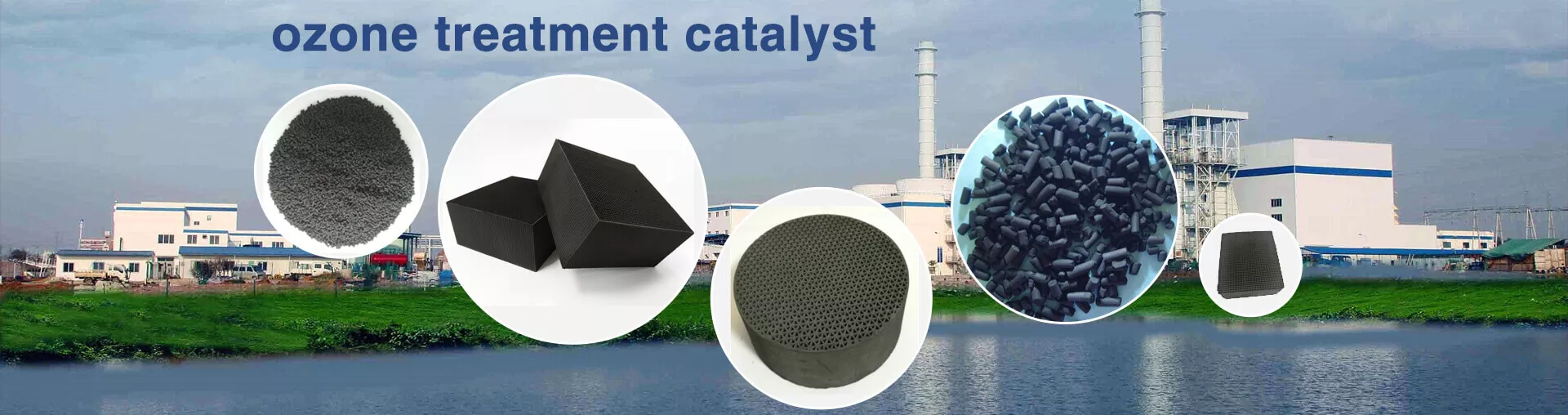
In industrial ozone off-gas catalytic treatment systems, the thermal stability and regenerability of the catalyst together constitute the decisive factors determining its economic service life. The core conclusion is this: The thermal stability of an ozone decomposition catalyst defines its intrinsic tolerance limit under high-temperature conditions, while regeneration processes represent the key engineering approach to extending its effective operating cycle beyond that limit. Thermal stability originates from the catalyst's formulation and preparation methods, reflecting its resistance to active component sintering, phase transformation, and structural collapse. Regeneration technologies, on the other hand, employ physical or chemical means to recover deactivated active sites. These two aspects are not isolated technical concerns—only through their synergistic optimization can the optimal cost-performance ratio over the catalyst's full lifecycle be achieved. Any regeneration strategy that is formulated without considering actual operating conditions and deactivation mechanisms is unlikely to deliver the expected economic or technical benefits.
During long-term operation, particularly when subjected to temperature fluctuations or abnormal overtemperature excursions, the catalytic performance of ozone decomposition catalysts gradually declines. This decline is not attributable to a single cause but results from the superposition of multiple physical and chemical changes. Understanding these deactivation mechanisms provides the scientific foundation for developing thermal stability enhancement strategies and regeneration protocols.
Thermal sintering is one of the most dominant high-temperature deactivation mechanisms. The core active components of ozone decomposition catalysts are typically transition metal oxides (such as MnO₂, CuO, Co₃O₄, etc.), which are highly dispersed on porous supports in the form of microcrystallites or nanoparticles. When the catalyst is exposed to elevated temperatures (typically exceeding 300-400°C) for extended periods, these small crystallites acquire sufficient energy to migrate across surfaces, and adjacent crystallites coalesce and grow. Sintering produces two direct consequences: first, the specific surface area of the catalyst decreases significantly, reducing the number of active sites available for ozone adsorption and reaction; second, pore structures become blocked or coarsened, increasing internal diffusion resistance. Both effects collectively lead to a reduction in the apparent reaction rate.
Irreversible phase transformation of the active crystalline phase is another important deactivation pathway. Many transition metal oxides exist in multiple crystalline forms, among which certain phases exhibit higher intrinsic activity for ozone decomposition. Taking manganese oxides as an example, the activity order of different valence states and crystalline phases toward ozone decomposition is approximately: MnO₂ > Mn₂O₃ > Mn₃O₄. At elevated temperatures, the highly active MnO₂ may undergo thermal decomposition or phase transformation, generating the less active Mn₂O₃ or even Mn₃O₄. This phase change is irreversible—even if the temperature is reduced, the original phase cannot be spontaneously restored, and the resulting activity loss is permanent.
Volatilization of active components may occur under extreme high-temperature conditions. For certain metal oxides, particularly some noble metals or low-melting-point metal oxides, once the temperature exceeds their Tamman temperature (approximately half the melting point), surface atoms begin to exhibit significant mobility and may even depart from the catalyst surface in the gas phase. Although the volatilization temperatures of the transition metal oxides commonly used in ozone decomposition catalysts are generally quite high, this mechanism still warrants consideration under localized hot spots or abnormal overtemperature conditions (e.g., >600°C).
Collapse or shrinkage of the support structure is another deactivation factor that cannot be overlooked. Common catalyst supports (such as γ-Al₂O₃, molecular sieves, or composite oxide supports) may undergo phase transformations (e.g., γ-Al₂O₃ to α-Al₂O₃) or pore contraction at high temperatures, leading to a substantial reduction in support specific surface area. Once the support loses its original porous structure, even if the active components are partially retained, they can no longer effectively contact reactant molecules, and the overall catalytic efficiency will inevitably decline.
The thermal stability of a catalyst is not an isolated material parameter but a system-level characteristic influenced by formulation composition, preparation processes, and operating conditions collectively.
Optimization of the material formulation is the fundamental approach to enhancing thermal stability. Different transition metal oxide combinations exhibit significantly different resistance to sintering. Copper-manganese composite oxides (Hopcalite-type catalysts) offer excellent ozone decomposition activity across room temperature to moderate temperature ranges, but their resistance to high-temperature sintering is relatively limited—specific surface area decays rapidly once temperatures exceed 250°C. Cobalt-manganese composite systems tend to perform better in terms of thermal stability because Co₃O₄ has a higher Tamman temperature, making crystallite growth more difficult. Adding structural promoters (such as CeO₂, ZrO₂) is an effective strategy for enhancing thermal stability—CeO₂ possesses oxygen storage/release capacity and structural stabilization effects, functioning as a "spacer" within the catalyst to inhibit direct contact and coalescence of active component crystallites.
Preparation process parameters have a significant impact on the final catalyst's thermal stability. Calcination temperature is a critical variable: if the calcination temperature is too low, the active phase crystallinity will be insufficient, resulting in poor mechanical strength; if it is too high, it may directly cause sintering of active components or excessive crystallite growth, reducing the initial specific surface area. The optimal calcination temperature typically lies above the active phase formation temperature but below the Tamman temperature. The forming method (such as extrusion, granulation, or coating) also affects thermal stability—formed bodies with uniform wall thickness and well-ordered channels experience more evenly distributed stress under high temperatures and are less prone to cracking or spalling due to localized thermal stress.
Coordinated control of actual operating parameters is equally critical. The following table qualitatively describes the directional influence of key operating parameters on catalyst thermal stability:
| Operating Parameter | Trend as Parameter Increases | Effect on Thermal Stability | Engineering Control Points |
|---|---|---|---|
| Operating Temperature | Increases | Accelerates sintering and phase transformation, shortens service life | Strict temperature control, avoid overtemperature operation |
| Temperature Fluctuation Amplitude | Increases | Increases thermal stress, promotes structural fatigue | Stabilize operation, reduce start/stop frequency |
| Water Vapor Content | Increases | May accelerate active component volatilization or phase transformation | Pre-dehumidification or use of hydrophobic formulations |
| Space Velocity | Increases | Exacerbates bed temperature rise, increases risk of localized hot spots | Reasonable space velocity design, ensure uniform gas distribution |
In practical engineering, temperature has the most direct and significant effect on thermal stability. Studies indicate that when the catalyst bed temperature increases from 200°C to 350°C, the specific surface area retention (relative to fresh catalyst) of some manganese-based catalysts may decline from above 90% to between 50% and 70%, depending on the specific material system. Therefore, reserving sufficient thermal margin in system design and installing reliable temperature monitoring and overtemperature interlock systems are fundamental measures for ensuring long-term stable catalyst operation.
When catalyst performance deteriorates to a point where it can no longer meet process requirements due to deactivation, regeneration represents an important approach to extending service life and reducing replacement costs. Different regeneration technologies target different deactivation mechanisms and have their respective scopes of application, advantages, and limitations.
Thermal regeneration is the most traditional and widely applied regeneration method. Its principle involves subjecting the deactivated catalyst to high-temperature heat treatment in a controlled atmosphere, causing adsorbed organics or certain poisons on the active surface to thermally decompose and desorb, while simultaneously promoting some degree of structural rearrangement and redispersion of sintered structures. Thermal regeneration temperatures are typically controlled between 300-500°C, depending on the upper limit of the catalyst material's thermal stability. The advantages of thermal regeneration lie in its relatively simple operation, no need for chemical reagents, and no wastewater disposal issues. However, its limitations are that it offers limited recovery for severely sintered catalysts, and the high-temperature treatment itself may cause secondary damage.
Chemical regeneration utilizes specific chemical solutions to react with the deactivated catalyst, dissolving surface deposits or redispersing active components. Commonly used chemical reagents include dilute acids (such as nitric acid, citric acid), alkaline solutions, or complexing agent solutions. The advantage of chemical regeneration is its ability to selectively remove certain specific types of contaminants, often achieving a higher degree of recovery than thermal regeneration alone. However, its limitations are also evident—chemical reagents may corrode the catalyst structure or cause leaching of active components, and post-regeneration washing and wastewater treatment add to process complexity and environmental burden.
Ultrasound-assisted regeneration is an intensification technology that has gained attention in recent years. By applying ultrasound during the chemical regeneration process, the localized high-temperature, high-pressure conditions and micro-jets generated by ultrasonic cavitation are harnessed to enhance the stripping and dissolution of contaminants from within the catalyst pore structure. Ultrasound assistance can shorten regeneration time and improve cleaning effectiveness, particularly suitable for deactivated catalysts suffering from pore blockage. The challenges of this technology lie in the uniformity of ultrasonic energy distribution during industrial-scale scale-up and the associated equipment capital costs.
The following table compares the core characteristics of the three main regeneration technologies described above:
| Regeneration Technology | Applicable Deactivation Type | Main Advantages | Main Limitations | Typical Operating Conditions |
|---|---|---|---|---|
| Thermal Regeneration | Surface adsorbate coverage, mild sintering | Simple operation, no reagent consumption | Ineffective for deep sintering, high energy consumption | 300-500°C, air or nitrogen, several hours |
| Chemical Regeneration | Surface contamination, pore blockage | High recovery degree, selective cleaning possible | Wastewater disposal issues, potential structural damage | Dilute acid/alkali, room temp-80°C, tens of minutes |
| Ultrasound-Assisted Regeneration | Pore blockage, dense contaminant layers | High efficiency, more thorough cleaning | Higher equipment investment, scale-up challenges | Chemical cleaning solution + ultrasound, room temp-60°C |
In practical selection of a regeneration process, multiple factors must be considered comprehensively, including the deactivation mechanism diagnosis results, the value of the catalyst itself, regeneration costs, and expected recovery effectiveness. As a general rule, higher-value catalysts in large-scale industrial units are more deserving of investment in more complex regeneration flows.
An ozone decomposition catalyst was installed in the waste gas treatment system supporting an industrial coating production line to eliminate residual ozone in the exhaust from the drying oven. The system was initially designed for an inlet ozone concentration of approximately 150 ppm, with the catalyst bed operating temperature designed for ambient to 60°C. However, in actual operation, waste heat from the drying oven caused the catalyst inlet temperature to frequently reach 120-150°C, with periodic overtemperature excursions above 200°C.
After approximately 18 months of operation, routine performance testing revealed that the catalyst's ozone decomposition efficiency under standard test conditions had dropped from over 98% initially to approximately 72%, and the outlet ozone concentration fluctuation had increased significantly. Initial troubleshooting ruled out gas distribution issues and pre-treatment failure. After removing catalyst samples for characterization analysis, the following was found: active component crystallite size had grown from approximately 15-20 nm when fresh to 40-60 nm, specific surface area had declined by about 45%, and XRD analysis indicated that some active crystalline phases had undergone transformation to lower-activity phases. The comprehensive diagnosis was deactivation dominated by thermal sintering and phase transformation.
Based on the diagnostic findings, the engineering team selected thermal regeneration as the primary process route. The regeneration was carried out in a dedicated electric heating furnace with the following parameters: 350°C in air atmosphere, held for 6 hours, with a heating rate controlled within 3°C/min to prevent thermal shock. After regeneration, the catalyst tested under standard conditions recovered to approximately 88% of its initial activity, with specific surface area restored to about 80% of the fresh state. The catalyst was reloaded and continued in service for approximately 12 additional months, and after optimizing system insulation and reducing operating temperature, the rate of activity decline slowed significantly.
This case reveals a key logic in regeneration process implementation: regeneration must be built upon an accurate diagnosis of the deactivation cause. If thermal sintering had not been identified as the dominant deactivation mechanism and chemical regeneration had been blindly applied, not only would the results have been limited, but additional risks could have been introduced. A complete regeneration engineering workflow should include five steps: performance evaluation to determine the degree of deactivation → characterization analysis to identify the deactivation mechanism → laboratory-scale testing to verify the regeneration process → engineering scale-up and implementation → regeneration effectiveness evaluation and economic assessment.
Incorporating thermal stability and regeneration strategies into the full lifecycle management of catalytic systems represents a systematic solution for achieving optimal economic performance. This management framework can be summarized as three levels: "source selection—process monitoring—end-of-life regeneration."
At the source level, during the catalyst selection phase, material systems with sufficient thermal stability margin should be chosen based on the actual operating temperature range and fluctuation characteristics. For processes with clearly defined overtemperature risks, priority should be given to catalyst formulations that incorporate thermal stability promoters (such as Ce and Zr).
At the process level, a comprehensive operational monitoring system should be established. Key parameters include catalyst bed inlet and outlet temperatures, pressure drop trends, and outlet ozone concentration trends. Through trend analysis, the inflection point of performance degradation can be detected early, accumulating data to support subsequent regeneration decisions. Operating management should strictly enforce temperature upper limits and avoid frequent start/stop operations that introduce thermal stress.
At the end-of-life level, a tiered regeneration response mechanism should be established based on performance monitoring data. When catalyst activity declines to 80%-90% of its initial value, preventive maintenance inspections can be initiated; when it declines to 70%-80%, off-line diagnostics and regeneration feasibility assessments should be scheduled; when it drops below 70% and the economics of regeneration become unfavorable, replacement should be considered.
Thermal stability and regenerability are twin challenges in the industrial application of ozone decomposition catalysts. Thermal stability determines whether the catalyst can sustain long-term effective operation under harsh conditions, while regeneration technology provides the means to recover value after the inevitable performance degradation. Engineering and technical professionals should treat these two aspects as a continuous technical chain to be addressed systematically—from material selection, design, and operation through to maintenance and regeneration—each stage's scientific management is a necessary condition for extending the catalyst's economic life and reducing system operating costs. Discussing thermal stability without reference to actual operating conditions is meaningless, and discussing regeneration without reference to deactivation mechanisms is inefficient. Only by integrating the two can the optimal cost-performance ratio of the catalytic treatment system be achieved.
Contact: Candyly
Phone: +8618142685208
Tel: 0086-0731-84115166
Email: sales@minstrong.com
Add: E2 Building, Kinglory Science And Technology Industrial Park, Wangcheng Area, Changsha, Hunan, China.
 minstrong