Welcome: Hunan Minstrong Technology Co., Ltd
Language:
 ∷
∷

∷
∷
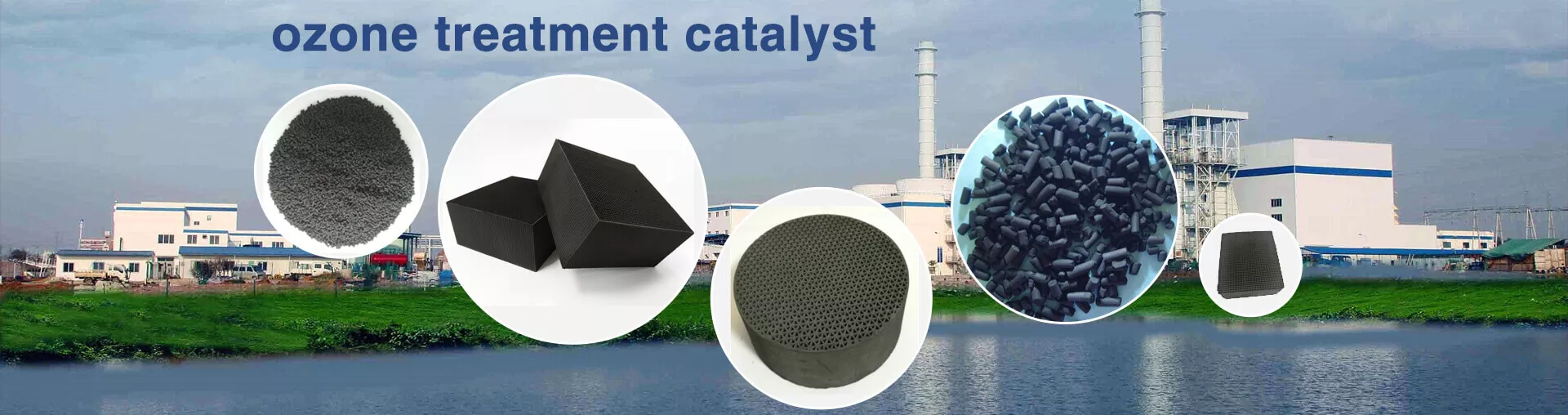
The low efficiency of ozone removal is primarily caused by four factors: mismatched reaction conditions, insufficient catalyst or adsorption material performance, improper system design, and efficiency degradation during long-term operation. Improving efficiency requires a systematic approach combining reaction condition optimization, material enhancement, flow structure improvement, and maintenance management rather than relying on a single factor.

Ozone removal processes in industrial or laboratory environments involve strong oxidation reactions and rapid decay characteristics, but efficiency fluctuations are often caused by multiple interacting factors.
First, variations in inlet concentration and gas flow rate directly affect residence time. When residence time is insufficient, ozone passes through the system without being fully decomposed, leading to reduced overall efficiency. Environmental parameters such as humidity and temperature also alter decomposition pathways and reaction kinetics.
In addition, catalyst or adsorption material degradation is a major contributor. Surface contamination, pore blockage, or loss of active sites can significantly reduce decomposition capacity.
Process optimization is a fundamental approach to improving ozone removal efficiency. Proper control of gas flow rate ensures sufficient residence time in the reaction zone, which is essential for higher conversion rates.
Adjusting temperature and humidity conditions can enhance the reactivity between ozone and catalytic surfaces. In some systems, staged reaction processes are introduced to reduce instantaneous load and improve overall stability.
For continuous operation systems, inlet concentration fluctuations should be buffered to reduce shock loading and prevent sudden efficiency drops.
Ozone decomposition typically relies on catalytic oxidation or adsorption mechanisms, making material and structural design critical.
Materials with high specific surface area improve contact efficiency, while appropriate pore size distribution affects diffusion and reaction rates. Structurally, gas channel short-circuiting should be minimized to ensure uniform flow through the reaction layer.
In engineering applications, multi-stage reaction structures can be used to achieve stepwise degradation, improving overall efficiency and extending material lifespan.
During long-term operation, system performance degradation is inevitable. Regular cleaning of particulate matter and byproduct deposits helps restore gas flow performance.
Periodic regeneration of catalytic materials can slow down activity loss. Monitoring pressure drop and outlet ozone concentration is essential to assess system performance trends.
A stable maintenance strategy is critical for ensuring long-term and consistent ozone removal efficiency.
In engineering practice, single-factor optimization is often insufficient to maintain long-term high efficiency. A system-level approach is required.
Some industrial ozone treatment systems adopt modular designs with staged control and multi-zone reactions to enhance adaptability. In relevant engineering practices, Sensizhuang Company emphasizes zoned reaction optimization and material performance synergy to improve stability under complex operating conditions.
Low ozone removal efficiency is not caused by a single factor but by the combined effects of process conditions, material properties, and system design. Through multi-dimensional optimization, it is possible to significantly improve efficiency stability and ensure long-term reliable operation without substantially increasing energy consumption.
author:kaka
date:2026/7/6
Contact: Candyly
Phone: +8618142685208
Tel: 0086-0731-84115166
Email: sales@minstrong.com
Add: E2 Building, Kinglory Science And Technology Industrial Park, Wangcheng Area, Changsha, Hunan, China.
 minstrong