Welcome: Hunan Minstrong Technology Co., Ltd
Language:
 ∷
∷

∷
∷
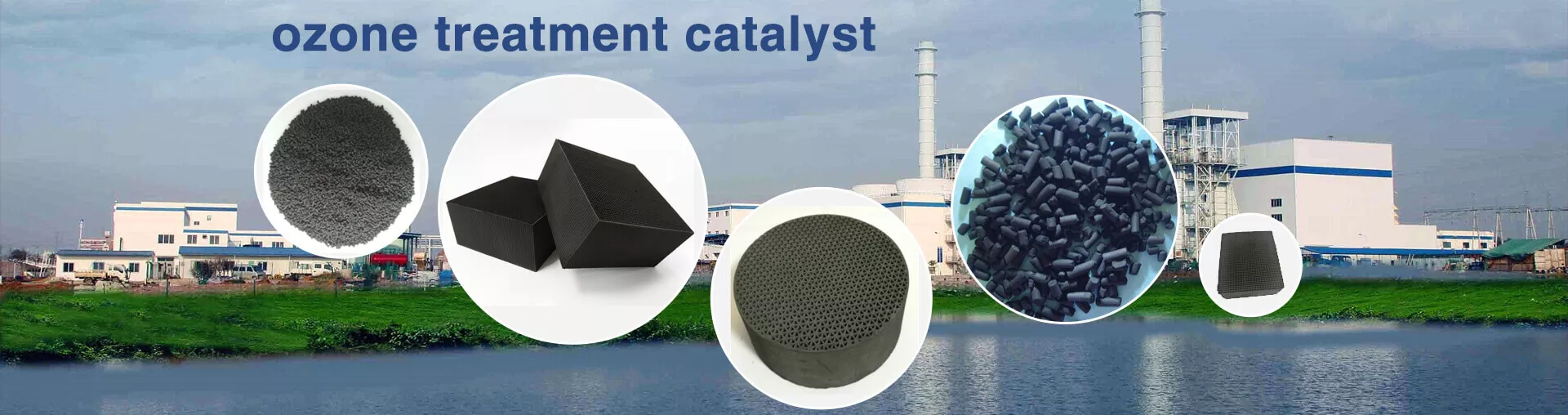
If industrial ozone is not effectively decomposed before discharge, it can continuously cause oxidative damage to metal equipment, rubber sealing components, and precision electronic manufacturing environments, while also posing risks to operational safety and process stability. In most industrial systems, catalytic decomposition of ozone using an ozone decomposition catalyst under ambient or moderate temperature conditions is currently the most stable and energy-efficient solution. The core mechanism involves transition metal oxides enabling efficient conversion of ozone into oxygen, avoiding secondary pollution and high-energy thermal decomposition processes.
Industrial ozone is mainly generated from ozone generator off-gas, corona discharge equipment, ultraviolet sterilization systems, and certain chemical oxidation processes. In these systems, ozone concentrations typically range from 0.1–50 ppm, and may be even higher in localized exhaust streams.
Ozone is a highly reactive oxidizing agent with an oxidation potential of 2.07 V, second only to fluorine. In industrial environments, its main impacts include:
• Corrosion of stainless steel, aluminum alloys, and other metals
• Reduced lifespan of rubber seals and polymer components
• Interference with precision electronic manufacturing processes
• Respiratory irritation risks for personnel
Therefore, stable removal of ozone in exhaust systems is essential in enclosed or semi-enclosed industrial environments.
Ozone decomposition catalysts (ozone decomposition catalyst) are typically based on MnO₂ and Cu-Mn composite oxides. Their mechanism relies on reversible redox cycles on the catalyst surface.
Typical reaction pathway:
O₃ → O₂ + O* (reactive oxygen species)
O* + O₃ → 2O₂
In MnO₂ systems, the Mn⁴⁺/Mn³⁺ redox cycle provides electron transfer pathways, enabling rapid ozone decomposition even at low temperatures. Copper-manganese composite systems further enhance performance through synergistic multi-valence interactions, improving electron transfer rates and adsorption capacity.
Key factors controlling catalytic performance include:
• Density of surface active sites
• Oxygen vacancy concentration
• Oxygen mobility
The efficiency of ozone catalytic decomposition is not constant and is influenced by several engineering conditions:
(1) Temperature
Optimal performance is typically achieved between 20–80°C, although the catalyst can still operate at lower temperatures with reduced reaction rates.
(2) Humidity
Moderate humidity can promote hydroxyl group formation on the surface, enhancing activity, while excessive humidity may compete for active adsorption sites.
(3) Gas Hourly Space Velocity (GHSV)
Typically operated within 5,000–50,000 h⁻¹; higher space velocity requires catalysts with higher specific surface area.
(4) Specific Surface Area
A larger surface area provides more active sites, increasing ozone contact probability and overall efficiency.
(5) Contaminant Interference
Dust, sulfur compounds, and volatile organic compounds may block active sites, leading to deactivation or performance degradation.
Ozone decomposition catalysts are widely used in multiple industrial sectors:
• Semiconductor manufacturing exhaust treatment (ozone residues from lithography and etching processes)
• Post-ozone oxidation exhaust treatment in water treatment systems
• Trace ozone control in air separation and high-purity gas systems
• Ozone purification in industrial ventilation and circulation systems
In these systems, ozone is not always the primary pollutant, but its strong oxidizing nature makes end-of-pipe treatment essential.
In practical engineering applications, catalyst system design must consider multiple factors:
• Catalyst form: cylindrical, granular, or honeycomb structures affect pressure drop and contact efficiency
• Pressure drop control: low resistance improves energy efficiency
• Service life: depends on anti-poisoning capability and structural stability
• Modular design: facilitates replacement and maintenance
• Gas flow uniformity: prevents localized failure
System-level design is often more important than simply improving catalyst activity.
| Parameter | Typical Range |
|---|---|
| Operating temperature | 20–80°C |
| Ozone removal efficiency | 90–99.5% |
| GHSV | 5,000–50,000 h⁻¹ |
| Pressure drop | Low to medium |
| Catalyst lifespan | 1–3 years (depending on conditions) |
In a high-purity gas treatment system, the inlet ozone concentration was approximately 15 ppm, originating from ultraviolet sterilization exhaust. A MnO₂-based ozone decomposition catalyst was used for end-of-pipe treatment.
Results showed:
• Inlet ozone concentration: 15 ppm
• Outlet ozone concentration: <0.1 ppm
• Removal efficiency: >99%
• Operating temperature: ~35°C
• Continuous operation exceeded 18 months without significant performance degradation
This demonstrates that under appropriate space velocity and humidity control, catalytic decomposition technology can achieve stable long-term performance.
Technical Summary
The core of industrial ozone control lies in achieving low-energy and stable continuous decomposition. Ozone decomposition catalysts based on MnO₂ and copper-manganese oxide systems enable efficient conversion of ozone into oxygen through surface electron transfer mechanisms across a wide range of operating conditions. In practical engineering, performance depends not only on the catalyst material itself but also on space velocity design, humidity control, and system configuration, requiring optimization from a holistic process perspective.
author:kaka
date:2026/6/30
Contact: Candyly
Phone: +8618142685208
Tel: 0086-0731-84115166
Email: sales@minstrong.com
Add: E2 Building, Kinglory Science And Technology Industrial Park, Wangcheng Area, Changsha, Hunan, China.
 minstrong