Welcome: Hunan Minstrong Technology Co., Ltd
Language:
 ∷
∷

∷
∷
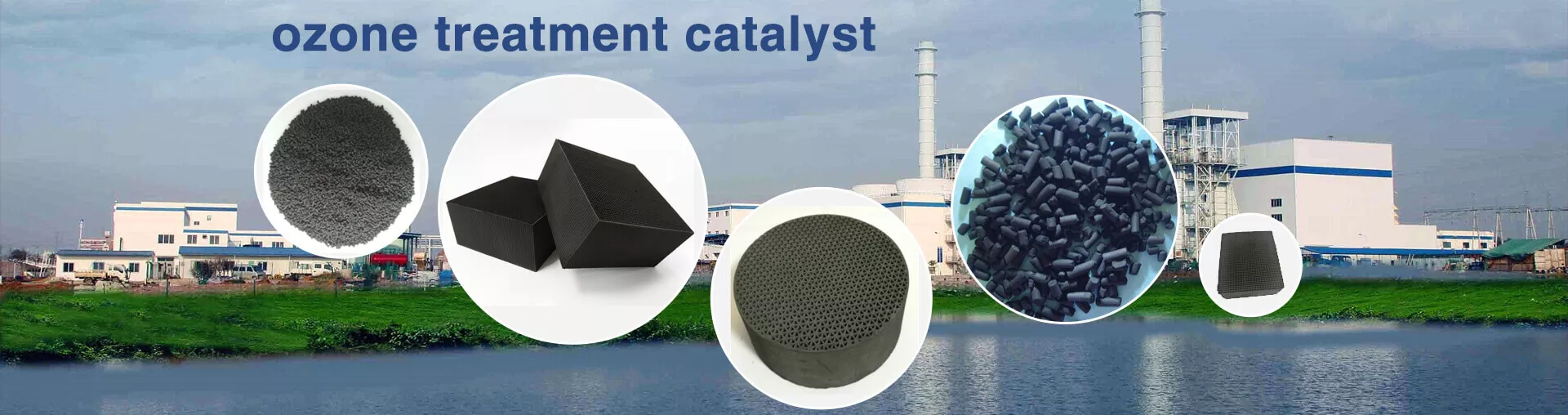
For the removal of residual ozone after sterilization in pharmaceutical workshops, catalytic decomposition technology based on transition metal oxides offers significant comprehensive advantages over traditional ventilation or activated carbon adsorption in terms of decomposition efficiency, safety, operating costs, and GMP compliance. The key to successful implementation lies in tailoring catalyst selection and system design to site-specific conditions—including airflow, humidity, and initial ozone concentration—while establishing robust performance monitoring protocols to ensure rapid and complete removal of residual ozone, thereby safeguarding production safety and efficiency.
Ozone sterilization is a widely used space decontamination method in pharmaceutical cleanrooms, valued for its high efficacy, broad-spectrum activity, and residue-free nature (decomposition product is oxygen). It is commonly applied in Grade A/B clean areas, pass-through chambers, water systems, and equipment surfaces. In areas that cannot withstand high-temperature autoclaving, ozone sterilization often becomes the preferred choice.
However, residual ozone remaining after sterilization poses direct risks to both production environments and personnel safety. According to occupational exposure limits, the permissible exposure level for ozone in workplace air is typically capped at 0.1 ppm (8-hour time-weighted average), while many pharmaceutical companies impose stricter safety margins, requiring residual concentrations to fall below 0.05 ppm before personnel entry or production resumption. Elevated ozone levels can irritate respiratory mucous membranes, accelerate degradation of rubber seals and filter media upon prolonged exposure, and potentially affect oxidation-sensitive active pharmaceutical ingredients.
Currently, most facilities rely on extended ventilation to dilute residual ozone. However, this approach has notable limitations: its efficiency depends on fresh air exchange rates and airflow volume, often requiring 30–60 minutes or more under HVAC return-air configurations, which severely impacts workshop utilization and production scheduling. Additionally, if outdoor air quality is substandard, introducing large volumes of fresh air may impose extra burdens on cleanroom filter systems. These pain points are driving the industry toward more efficient and controllable active removal technologies.
For pharmaceutical applications, mainstream residual ozone removal technologies can be categorized into three types. The table below provides a comparative overview across several critical dimensions.
| Technology Path | Dilution Ventilation | Activated Carbon Adsorption | Catalytic Decomposition |
|---|---|---|---|
| Decomposition Efficiency | Dependent on air changes, low and inconsistent | High initially, drops rapidly with saturation | Consistently high (typically >95%), stable performance |
| Reaction Speed | Slow, limited by fresh air supply | Moderate, limited by adsorption rate | Fast, real-time removal |
| Operating Cost | High energy consumption (thermal and humidity loads), ongoing expense | Moderate (periodic media replacement and hazardous waste disposal costs) | Low energy (ambient pressure/temperature, no regeneration required) |
| Maintenance Complexity | Low, but requires damper management | Moderate (requires change-out monitoring) | Low (only periodic efficiency verification needed) |
| Potential Contamination Risk | Introduces external particulates/microorganisms | Possible release upon saturation; supports microbial growth | No secondary contamination; byproducts are oxygen and water only |
Dilution ventilation proves too passive for high-throughput production environments. Activated carbon adsorption carries risks of desorption upon saturation and microbial proliferation, limiting its applicability in GMP cleanrooms. In contrast, catalytic decomposition employs transition metal oxides (e.g., manganese dioxide, copper oxide systems) as catalysts to convert ozone (O₃) into oxygen (O₂) at ambient temperature. Its core advantages include: complete decomposition, no secondary pollution, minimal susceptibility to humidity (particularly with hydrophobic modifications), and long catalyst service life with no consumable depletion—characteristics that align exceptionally well with the stringent cleanliness and safety demands of pharmaceutical manufacturing.
Ensuring effective implementation of catalytic decomposition requires careful attention to both catalyst selection and engineering system design.
For pharmaceutical applications, the following catalyst parameters are particularly critical:
In engineering practice, catalytic decomposition units are typically integrated into the return-air section of the HVAC system or into dedicated recirculation air handling units. The design must precisely match the total workshop airflow to ensure uniform distribution across the catalyst bed, avoiding channeling that would compromise overall efficiency. For workshops with higher particulate loads, a MERV-rated pre-filter should be installed upstream of the catalytic unit. In terms of structural configuration, honeycomb or plate-type catalytic modules are preferred for pharmaceutical applications due to their low resistance and ease of installation and replacement.
Within the GMP framework, any technical modification affecting the production environment must undergo rigorous validation—catalytic removal solutions are no exception.
A standard implementation process includes:
To ensure long-term effectiveness, a routine monitoring and periodic assessment program should be established. Continuous monitoring can be achieved using online ozone analyzers, or portable high-precision detectors may be used for off-line measurements per established procedures. Key data—including decomposition efficiency, catalytic unit differential pressure, and environmental temperature/humidity—should be trended over time to identify any degradation in catalyst performance. If efficiency declines to a predetermined alert threshold, catalyst inspection and maintenance procedures should be initiated.
In one oral solid dosage facility, a catalytic decomposition unit was installed in the HVAC return-air section. Post-installation data showed that within approximately 25 minutes of the sterilization cycle completion—under normal recirculation airflow—the indoor ozone concentration dropped from a peak of approximately 5 ppm to below 0.04 ppm. Over two subsequent years of routine monitoring, the unit maintained decomposition efficiency consistently above 98% of its initial value, confirming that its long-term stability meets production-cycle requirements.
In response to the pharmaceutical industry's dual demands for production efficiency and safety compliance, catalytic decomposition technology offers a technically robust and practically viable pathway for residual ozone removal after sterilization. It overcomes the limitations of traditional methods—low efficiency or contamination risks—and its success hinges on precise catalyst selection, thorough understanding of site conditions, and disciplined execution of verification and monitoring protocols. Looking ahead, continued advances in catalyst materials science (e.g., formulations with extended longevity and enhanced poison resistance), combined with deeper integration with intelligent sensing systems, will drive catalytic decomposition solutions toward greater intelligence and precision, continuing to safeguard pharmaceutical production environments.
Contact: Candyly
Phone: +8618142685208
Tel: 0086-0731-84115166
Email: sales@minstrong.com
Add: E2 Building, Kinglory Science And Technology Industrial Park, Wangcheng Area, Changsha, Hunan, China.
 minstrong