Welcome: Hunan Minstrong Technology Co., Ltd
Language:
 ∷
∷

∷
∷
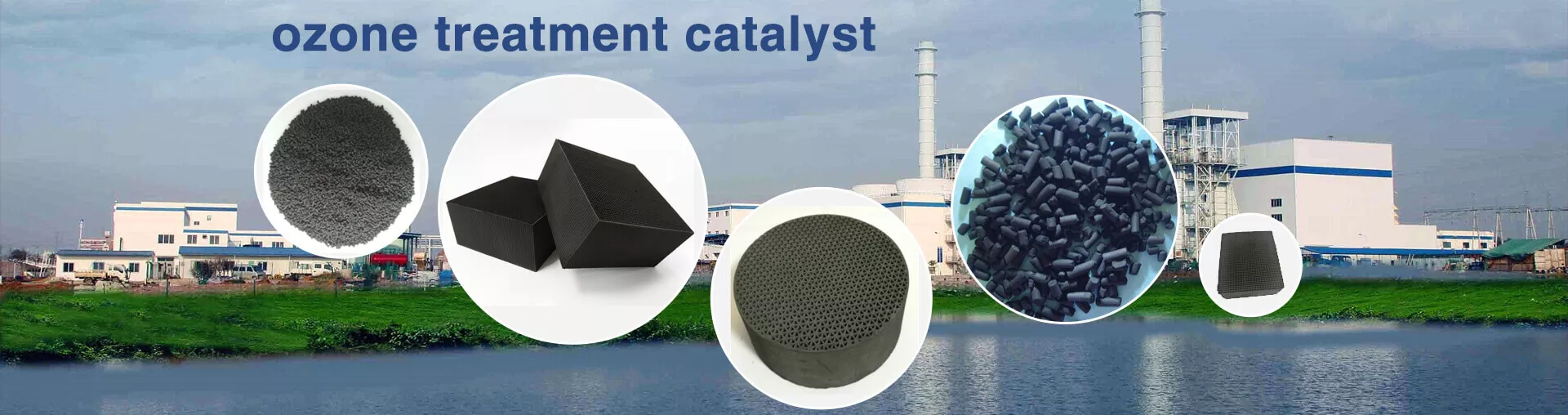
Active sites are specific chemical environments on the catalyst surface that can interact with ozone molecules. In ozone decomposition catalysts, active sites mainly include three categories:
Oxygen vacancies are among the most studied active sites. They are defect sites formed by the absence of oxygen ions in the metal oxide lattice. Both theoretical calculations and experimental studies have shown that oxygen vacancies have a strong affinity for ozone molecules, being able to preferentially adsorb ozone and promote its decomposition by elongating the O–O bond. In manganese-based oxides, oxygen vacancies have been confirmed as the primary reaction sites for ozone adsorption and catalytic decomposition. The higher the concentration of oxygen vacancies, the greater the number of active sites, and the stronger the ozone removal performance.
Metal redox pairs constitute another crucial type of active site. Transition metal oxides with variable valence states (such as Mn, Fe, Co, Cu, etc.) can act as electron donors or acceptors in reactions. Taking manganese-based catalysts as an example, the valence transition between Mn species (Mn³⁺↔Mn⁴⁺) is a key step in the ozone decomposition reaction. Iron doping can increase oxygen vacancies and accelerate electron transfer, thereby promoting the valence cycling of Mn species.
Surface hydroxyl groups and Lewis acid sites also participate in the adsorption and activation of ozone. Surface hydroxyl groups (S–OH) can enhance the adsorption and activation ability of ozone, while Lewis acid sites interact with ozone molecules by accepting electron pairs.
The ozone molecule (O₃) has a unique electronic structure – the central oxygen atom can act as a Lewis acid accepting electrons, while the terminal oxygen atoms serve as Lewis bases donating electrons. This asymmetric electron distribution makes ozone a dipolar molecule and provides the chemical basis for electron transfer.
It can be summarized in three steps: First, the ozone molecule adsorbs onto the active site of the catalyst, accepting electrons from the catalyst surface and decomposing into one oxygen molecule (O₂) and one atomic oxygen species (O⁻); subsequently, the atomic oxygen species reacts with another ozone molecule, obtaining electrons from the catalyst to form peroxide species (O₂²⁻) and releasing O₂; finally, the peroxide species further transform into reactive oxygen species (such as hydroxyl radicals ·OH, superoxide radicals ·O₂⁻, etc.).
These include: the electronic structure of the catalyst (band positions, Fermi level), the electron density of active sites, and the interfacial charge transfer resistance. Studies indicate that constructing P‑N heterojunctions can effectively regulate the direction of interfacial electron transfer, thereby accelerating the decomposition of accumulated intermediate oxygen species on the surface and breaking through the rate‑determining step of the reaction.
Active sites and electron transfer do not operate in isolation; they jointly determine catalytic performance through a close synergistic relationship.
Oxygen vacancies not only adsorb and activate ozone but also modulate the electronic structure of the catalyst, enhancing electron transfer capability. Surface oxygen vacancies mainly promote ozone adsorption and its conversion to hydroxyl radicals, while bulk oxygen vacancies tend to extract electrons from organic pollutants, constructing an electron transfer process. The spatial location difference between the two types of oxygen vacancies determines the selectivity of the reaction pathway.
Taking bimetallic catalysts as an example, the cycling between Fe³⁺/Fe²⁺ and Co³⁺/Co²⁺ not only enhances the generation of reactive oxygen species but also facilitates electron transfer. Oxygen vacancies can transfer electrons from pollutants to Fe³⁺, promoting its reduction to Fe²⁺, while the electron exchange between Fe²⁺ and Co³⁺ achieves the regeneration of Co²⁺. This multi‑level electron transfer network significantly improves the overall efficiency of ozone decomposition.
In manganese‑cerium bimetallic catalysts, the cerium sites, through the electron complementarity effect of their 4f orbitals, lower the energy required for the dual‑site catalysis of ozone to form reactive oxygen species. This self‑regulation of the electronic state enables the catalyst to operate over long periods without regeneration.
Understanding the action mechanisms of active sites and electron transfer provides clear directions for catalyst design and optimization.
This is a direct way to enhance catalytic performance. Metal doping (e.g., Fe doping into OMS‑2) can increase oxygen vacancy concentration; chemical reduction can regulate oxygen vacancy content; constructing heterojunctions can introduce interfacial oxygen vacancies.
This is key to improving reaction efficiency. Modulating the electronic structure of the catalyst (e.g., through heteroatom coordination, crystal facet engineering, etc.) can lower charge transfer resistance and enhance oxygen mobility. The direction and rate of electron transfer directly affect the rate‑determining step and are core constraints on catalyst activity and stability.
This is a central challenge in engineering applications. Ozone decomposition is often accompanied by the accumulation of intermediate products (O₂²⁻, O₂⁻) and competitive adsorption of water molecules, leading to catalyst deactivation. A rational design of active sites should ensure high activity while promoting the timely desorption of intermediates to extend the catalyst's service life.
The performance of ozone decomposition catalysts is determined by two core factors: active sites and electron transfer. Oxygen vacancies, metal redox pairs, and surface hydroxyl groups constitute the main types of active sites, responsible for ozone adsorption, activation, and conversion respectively; the valence cycling of metal ions and interfacial electron transfer provide the continuous driving force for the reaction. These two factors form a deep synergy through the electronic structure modulation by oxygen vacancies, the electron‑transfer channels built by metal valence cycling, and the self‑cycling mechanism of active sites, collectively determining the activity, selectivity, and stability of the catalyst. A thorough understanding of the relationship between active sites and electron transfer offers a clear theoretical guide for developing high‑performance ozone decomposition catalysts – increasing active site density, optimizing electron transfer pathways, and balancing activity with stability are the core engineering principles for catalyst development.
author:kaka
date:2026/6/23
Contact: Candyly
Phone: +8618142685208
Tel: 0086-0731-84115166
Email: sales@minstrong.com
Add: E2 Building, Kinglory Science And Technology Industrial Park, Wangcheng Area, Changsha, Hunan, China.
 minstrong