Welcome: Hunan Minstrong Technology Co., Ltd
Language:
 ∷
∷

∷
∷
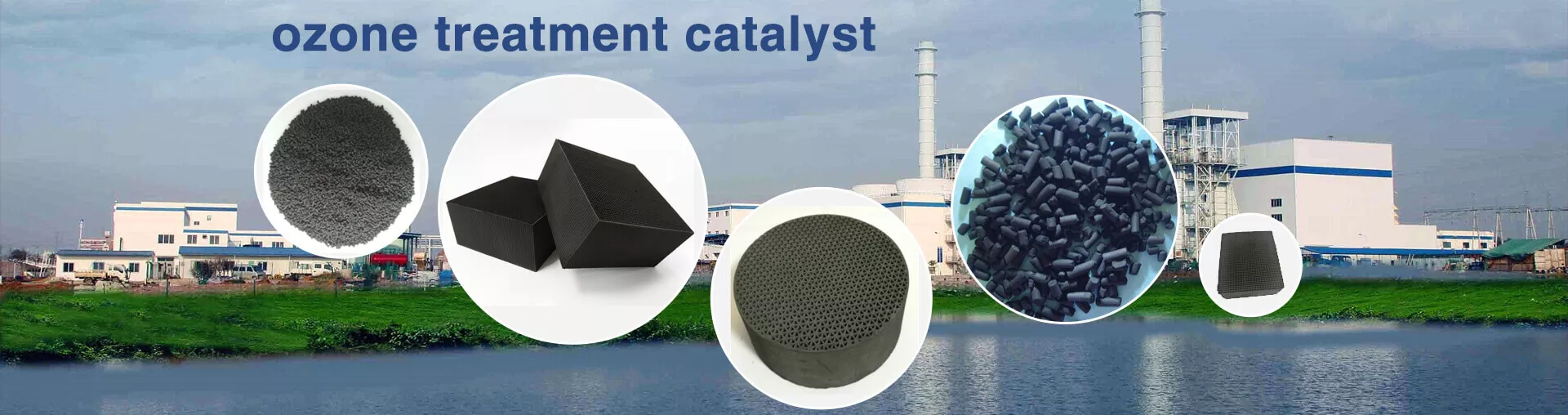
What are copper-manganese composite catalysts?
Copper-manganese composite catalysts are catalytic materials composed of two transition metals, copper (Cu) and manganese (Mn), through a specific preparation process (such as co-precipitation, sol-gel, or impregnation). They can be found in pure metal oxide complexes (such as a Cu-Mn-O spinel structure) or supported catalysts (where the copper and manganese active components are supported on a support such as activated carbon, molecular sieves, or Al₂O₃).
The combination of the two metals is not a simple mixing; rather, the metal ratio (such as a Cu/Mn molar ratio of 1:1 to 1:5) and the calcination temperature are manipulated to form a synergistic crystal structure or active sites. Their core feature is the enhanced catalytic performance achieved by leveraging the redox properties of copper and manganese (Cu²⁺/Cu⁺, Mn³⁺/Mn²⁺, and Mn⁴⁺/Mn³⁺).
Working Principle of Copper-Manganese Composite Catalysts
In wastewater treatment, copper-manganese composite catalysts primarily degrade pollutants by catalytically activating oxidants to generate strong oxidizing free radicals. The specific mechanism is as follows:
Oxidant Activation and Free Radical Generation
In advanced oxidation processes (AOPs), catalysts can efficiently activate oxidants such as hydrogen peroxide (H₂O₂), persulfate (PS), and ozone (O₃), generating reactive species such as hydroxyl radicals (・OH) and sulfate radicals (SO₄⁻・). For example:
When activating H₂O₂, Cu⁺ reacts with H₂O₂ to generate ・OH (Cu⁺ + H₂O₂ → Cu⁺ + ・OH + OH⁻). Mn⁺ rapidly oxidizes Cu⁺ to Cu⁺ (Mn⁺ + Cu⁺ → Mn⁺ + Cu⁺), forming a redox cycle that continuously activates H₂O₂. When activating persulfate, Mn²⁺ directly cleaves the O-O bond of the persulfate (SO₂O₈²⁻) to form SO₄⁻ (Mn²⁺ + S₂O₈²⁻ → Mn³⁺ + SO₄⁻ + SO₄²⁻). Copper stabilizes Mn³⁺, reducing its inefficient decomposition.
A synergistic effect enhances reaction efficiency.
Mn's high electron transfer capacity accelerates oxidant activation, while the presence of copper inhibits excessive reduction of manganese and stabilizes high-valence active sites.
The composite structure increases the catalyst's specific surface area and the number of active sites, enhancing both pollutant adsorption and catalysis.
Key Application Areas in Wastewater Treatment:
Industrial Wastewater Treatment: Degrades colored pollutants such as azo dyes (e.g., methyl orange, Congo red) and anthraquinone dyes, reducing color and COD with removal rates exceeding 80%.
Pharmaceutical and Chemical Wastewater: Oxidizes toxic organic compounds such as antibiotics (e.g., tetracycline), phenols (e.g., phenol), and pesticide residues (e.g., chlorpyrifos), reducing biological toxicity.
Coking Wastewater: Removes heterocyclic compounds such as pyridine and quinoline, improving wastewater biodegradability.
Municipal Wastewater Advanced Treatment: Used for deep purification of secondary treatment effluent, removing residual endocrine disruptors (e.g., bisphenol A) and trace organic matter, improving water quality to reclaimed water standards (e.g., for landscape use and industrial circulating water).
Emergency Pollution Remediation: For sudden organic pollution (e.g., organic solvent leaks and pesticide spills), catalysts and oxidants can be rapidly added to achieve efficient in-situ degradation of pollutants. Copper and manganese are significantly cheaper than precious metals like Pt and Pd. Furthermore, the catalysts can be regenerated through high-temperature calcination and chemical cleaning, maintaining high activity after 5-10 reuses. In wastewater treatment, copper-manganese composite catalysts are highly sought after for their high efficiency, stability, and low cost. Minstrong is a professional manufacturer of copper-manganese catalysts. If you have any questions, please contact us at minstrong@minstrong.com.
Contact: Candyly
Phone: +8618142685208
Tel: 0086-0731-84115166
Email: sales@minstrong.com
Add: E2 Building, Kinglory Science And Technology Industrial Park, Wangcheng Area, Changsha, Hunan, China.
 minstrong