Welcome: Hunan Minstrong Technology Co., Ltd
Language:
 ∷
∷

∷
∷
Ozone Generation Mechanism in Plasma Equipment
When operating, plasma equipment uses a high-voltage electric field to excite air to form a plasma. During this process, oxygen molecules (O₂) in the air are bombarded by high-energy electrons, causing them to dissociate into oxygen atoms (O). Oxygen atoms are highly reactive and rapidly combine with surrounding oxygen molecules to form ozone (O₃). The chemical reaction equation is: O₂ + e⁻ (high-energy electrons) → 2O; O + O₂ → O₃.
This ozone generation process is closely related to factors such as the power of the plasma equipment, the oxygen concentration in the operating environment, and humidity. Generally speaking, higher equipment power and higher oxygen concentrations result in greater ozone generation. Harms of Failed Ozone Removal
If ozone is not removed promptly, it can cause multiple hazards, impacting human health, the environment, and equipment operation.
Regarding human health, ozone is a strong irritant. When inhaled at certain concentrations, it directly irritates the respiratory mucosa, causing symptoms such as coughing, chest tightness, and difficulty breathing. Long-term exposure to low-concentration ozone can also lead to decreased lung function and increase the risk of respiratory diseases such as asthma. Ozone is also irritating to the eyes, potentially causing dryness, pain, and blurred vision.
Regarding the environment, ozone is a strong oxidant. It accelerates the aging of materials such as rubber and plastic, shortening the service life of these products. Furthermore, under certain conditions, ozone can participate in atmospheric chemical reactions, adversely affecting local air quality. Regarding equipment operation, high concentrations of ozone can corrode metal components of plasma equipment and peripheral devices, affecting their stability and service life, and increasing maintenance costs.
Comparison with Other Catalysts
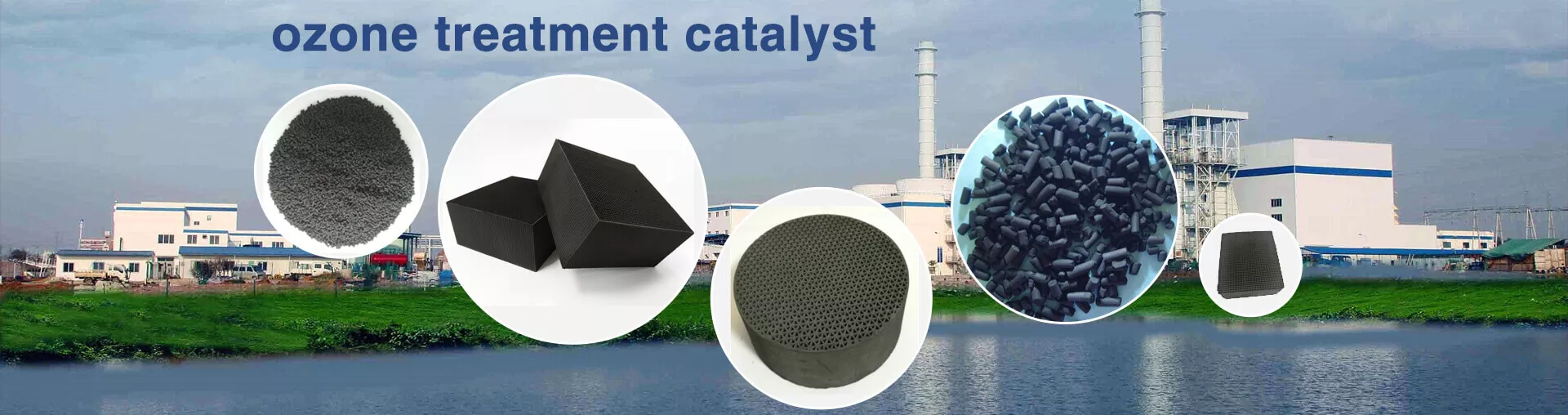
Using ozone decomposition catalysts is an efficient and cost-effective solution to the problem of ozone generated by plasma equipment. Currently, common ozone decomposition catalysts include activated carbon, precious metal catalysts, and copper-manganese composite oxide catalysts. Copper-manganese composite oxide catalysts stand out due to their significant advantages.
Activated carbon catalysts primarily remove ozone through physical adsorption, but they have significant limitations. Their adsorption capacity is limited, and once saturation is reached, they lose their purification capacity, requiring frequent replacement, increasing operating costs and maintenance workload. Furthermore, activated carbon's adsorption performance decreases significantly in high humidity environments, limiting its applicability.
Precious metal catalysts (such as platinum and palladium) are highly active in decomposing ozone, but they are expensive. The scarcity of precious metals makes them expensive, and large-scale use significantly increases initial equipment investment, hindering widespread adoption. Furthermore, precious metal catalysts are sensitive to reaction conditions and are easily deactivated by impurities such as sulfides and nitrogen oxides, resulting in a relatively short service life.
In contrast, copper-manganese composite oxide catalysts offer numerous advantages. First, they offer high catalytic activity and strong stability. The synergistic effect of copper and manganese effectively reduces the activation energy of ozone decomposition, maintaining efficient catalytic decomposition performance across a wide temperature and humidity range, and resisting deactivation even in high-humidity environments. Furthermore, they offer a long service life. Copper-manganese catalysts exhibit excellent resistance to poisoning and are highly tolerant to common impurities, reducing replacement frequency and long-term operating costs. Furthermore, they are affordable. Copper-manganese materials are widely available and relatively inexpensive, significantly lowering the barrier to application compared to precious metal catalysts and making them more suitable for large-scale industrial applications. Finally, they offer a wide range of applications. Copper-manganese catalysts deliver excellent purification results in environments ranging from low to medium- to high-concentration ozone, meeting the ozone treatment needs of various plasma equipment.
Minstrong: A Professional Ozone Decomposition Catalyst Manufacturer
Minstrong is a professional company specializing in the research, development, and production of ozone decomposition catalysts. Leveraging years of technical expertise and advanced production processes, the company possesses substantial technical expertise in the research, development, and production of copper-manganese composite oxide ozone decomposition catalysts. Minstrong 's copper-manganese-based ozone decomposition catalysts are manufactured with strict control over raw material quality and production processes, ensuring high catalytic activity, excellent stability, and a long service life. They are highly effective in addressing ozone issues generated by plasma equipment. Always customer-focused, Minstrong offers customized solutions tailored to specific application scenarios, meeting the ozone treatment needs of various plasma equipment types.
If your company is experiencing ozone issues with plasma equipment and requires professional ozone decomposition catalyst products and technical support, please contact us at minstrong@minstrong.com. Minstrong is committed to providing high-quality products and attentive service.
Contact: Candyly
Phone: +8618142685208
Tel: 0086-0731-84115166
Email: sales@minstrong.com
Add: E2 Building, Kinglory Science And Technology Industrial Park, Wangcheng Area, Changsha, Hunan, China.
 minstrong