Company new
How to Correctly Select a Catalyst to Remove Ozone Generated by a Corona Treatment Machine?
As a highly effective surface treatment device, corona treatment machines play an irreplaceable role in many aspects of modern industry. However, the ozone (O₃) byproduct produced during operation also poses significant health, safety, and environmental challenges. The correct selection and application of catalytic purification technologies is key to effectively addressing this issue. This article will delve into the operating principles of corona treatment machines, the mechanisms of ozone generation, and its multiple hazards, and systematically explain scientific catalyst selection strategies and key system design considerations.
The core principle of a corona treatment machine is high-frequency, high-voltage corona discharge. It primarily consists of a high-frequency generator, a high-voltage electrode, a grounded electrode roller, and a treatment frame. During operation, the high-frequency generator converts ordinary industrial frequency current into a high-frequency current of tens of thousands of hertz, then boosts the voltage to thousands or even tens of thousands of volts. This high-voltage current is applied to a precision electrode system (typically a knife-shaped or wire-shaped electrode), creating a very small gap between it and the grounded roller. When substrates such as plastic film, metal foil, and paper pass through this gap, the air in between is violently ionized by the high and rapid voltage change, resulting in a purple, non-destructive discharge phenomenon known as "corona discharge." This high-energy electron stream, like countless tiny projectiles, bombards the material's surface, breaking its molecular chains, generating free radicals, and introducing polar groups (such as carbonyl and carboxyl groups). This process significantly increases the material's surface energy, transforming it from "hydrophobic" to "hydrophilic," greatly improving the adhesion and spreadability of inks, coatings, and adhesives, thus completely resolving quality issues in subsequent printing, lamination, and coating. Therefore, corona treaters are essential core pretreatment equipment for industries such as flexible packaging, printing, medical device manufacturing, and wire and cable manufacturing.
However, while corona discharge excites air molecules, it also produces a significant byproduct: ozone. Under the powerful energy of the high-voltage electric field, oxygen molecules in the air break their chemical bonds, decomposing into highly reactive oxygen atoms. These free oxygen atoms then combine with other intact oxygen molecules to form ozone molecules consisting of three oxygen atoms. This process occurs continuously and extensively while the device is operating, causing ozone concentrations in the surrounding environment to rise dramatically.
While the high-altitude ozone layer protects us, ground-level ozone is a harmful pollutant. It is a strong oxidizing and irritating agent. Even at low concentrations, it can severely irritate the respiratory mucosa, causing coughing, chest tightness, and sore throat. Long-term exposure can even damage lung function. Ozone can also corrode metal parts and electronic components in equipment, shortening their lifespan. From an environmental perspective, ozone is also a major component of photochemical smog, and its emissions are subject to strict regulations. Therefore, effectively removing ozone generated by the device is not only a necessary measure to protect employee health and safety, but also a key step for companies to fulfill their environmental responsibilities and ensure safe production.
Among various ozone removal technologies, such as thermal combustion, adsorption, and ultraviolet irradiation, catalytic decomposition is recognized as the optimal solution due to its advantages: it operates at room temperature, is extremely efficient, consumes minimal energy, and does not cause secondary pollution. The core of the process is the catalyst, and proper selection directly determines the efficiency, lifespan, and economic viability of the purification system.
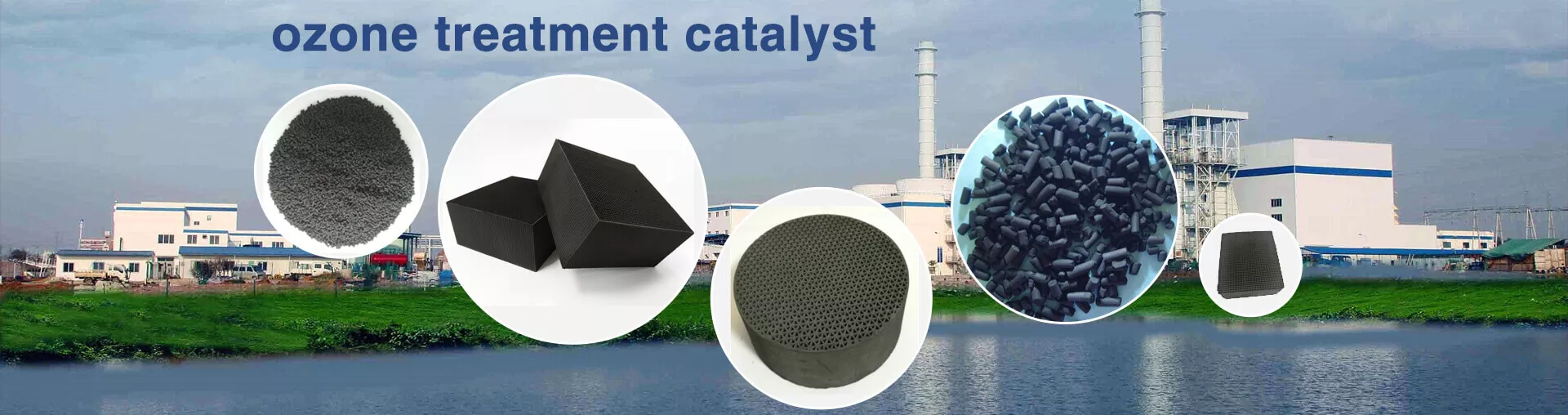
Transition metal oxide catalysts: Based on manganese dioxide (MnO₂), composite catalysts doped with other metal oxides such as copper, cobalt, and silver are the most mainstream and cost-effective choice on the market. High-quality manganese-based catalysts can instantly decompose low-concentration ozone at room temperature and high humidity, achieving purification efficiencies exceeding 99%. Their advantages lie in low cost, mature technology, and high safety.
Precious metal catalysts: Primarily composed of precious metals such as platinum (Pt) and palladium (Pd) as active ingredients, they offer extremely high catalytic activity, low ignition temperatures, and strong resistance to poisoning. However, their significant cost disadvantage is their high cost, making them typically reserved for applications with extreme safety requirements (such as aerospace) or under specific harsh operating conditions.
Selection Recommendation: For most corona treatment applications, high-loaded composite manganese-based catalysts are the ideal choice, offering the best balance between activity, cost, and durability. Manganese-based catalysts can achieve removal efficiencies exceeding 95% at room temperature. The catalyst's carrier and structure are also crucial. Common honeycomb ceramic carriers offer the advantages of low pressure drop and a large surface area, making them ideal for handling the high-volume, low-concentration airflows generated by corona machines. Finally, actual operating conditions must be considered, including the initial ozone concentration, airflow volume, temperature, humidity, and other environmental factors, all of which will impact the catalyst's effectiveness and service life.
In short, addressing the ozone problem posed by the corona machine, a necessary piece of production equipment, by using catalytic decomposition technology is a scientific and cost-effective investment. The right catalyst selection should be based on its highly active manganese-based composition and low-pressure-drop honeycomb carrier, carefully considered in light of the operating conditions, including concentration, airflow, and humidity. A complete purification system, including effective collection and pretreatment, should also be constructed. Only in this way can we fundamentally tame the ozone ferocity, improve product quality and production efficiency, strengthen occupational health and environmental protection, and achieve green, safe, and sustainable modern production.
 ∷
∷

 minstrong