Company new
What are the advantages of ozone in waste gas treatment?
With the rapid development of industrialization, waste gas treatment has become an urgent issue for environmental protection. Among many waste gas treatment technologies, ozone oxidation technology, with its unique mechanism of action and excellent treatment effect, demonstrates irreplaceable advantages. It acts like a highly efficient "molecular scalpel," capable of precisely and deeply decomposing those difficult-to-treat pollutants.
I. Powerful Oxidation Capacity: Targeting Recalcitrant Pollutants
The core advantage of ozone in waste gas treatment stems primarily from its powerful oxidizing properties.
High Oxidation-Reduction Potential: Ozone has an oxidation-reduction potential as high as 2.07 eV, second only to fluorine in its oxidizing capacity in nature. This means it can effectively attack and break the chemical bonds of various volatile organic compounds (VOCs) and odorous gas molecules.
Tackling "Stubborn" Pollutants: For pollutants that are difficult to treat effectively using traditional biological methods or activated carbon adsorption, such as hydrogen sulfide, methanethiol, ammonia, and other odorous substances, as well as halogenated hydrocarbons and non-methane total hydrocarbons such as benzene, toluene, and xylene, ozone exhibits excellent removal effects. It can directly oxidize and decompose these large, long-chain organic molecules into low-molecular-weight products, such as CO₂ and H₂O, or convert them into smaller, more biodegradable organic molecules, creating conditions for subsequent treatment.
II. Flexible Synergistic Processes: Enhancing Overall Treatment Efficiency
Ozone technology is rarely used alone; its greatest advantage lies in its ability to form highly efficient synergistic effects with other processes.
Ozone-Biological Combined Process: This is one of the most classic and economical combinations. Ozone, as a pretreatment method, first "shreds" recalcitrant large organic molecules into smaller, more biodegradable fragments (such as aldehydes and acids), which then enter the biological treatment unit (such as a biofilter or biotrickling filter). This significantly improves the biodegradability of the waste gas, enhances the treatment efficiency and stability of the biological system, and simultaneously reduces the ozone dosage and operating costs.
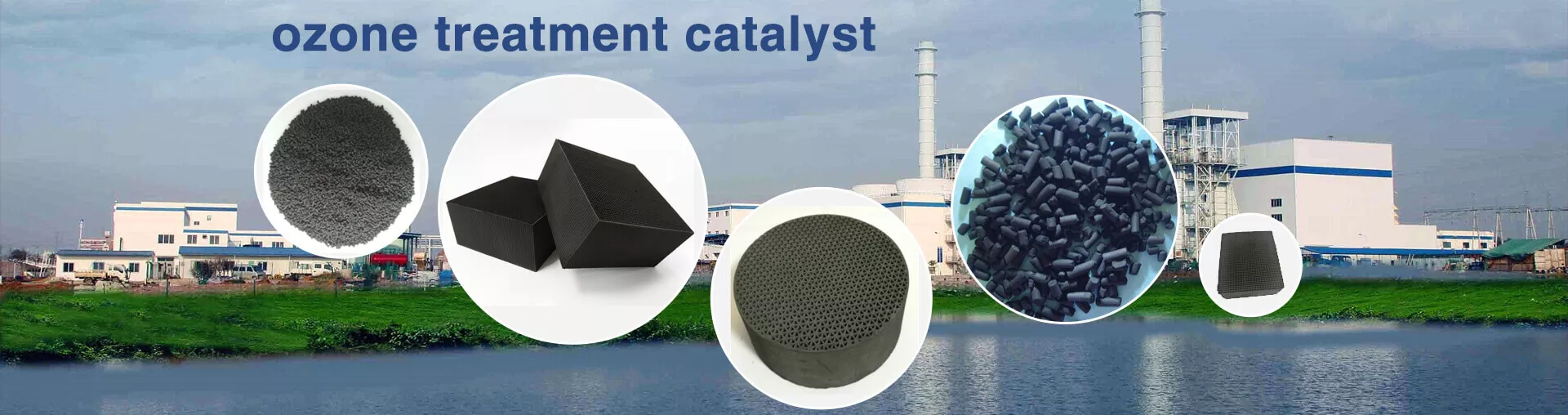
Ozone-Catalytic Oxidation Combined Process: By introducing a catalyst (such as metal oxides), ozone decomposition can be induced to produce more potent hydroxyl radicals (•OH), thereby triggering advanced oxidation processes. This combination significantly improves oxidation efficiency, achieving near-complete mineralization of pollutants, resulting in more thorough treatment and a wider range of applications.
As a deep treatment unit: Adding an ozone oxidation unit at the end of existing treatment processes can serve as a final "gatekeeping" step, ensuring that complex and fluctuating waste gases can be stably discharged in compliance with standards.
III. Significant Technical and Economic Advantages
From an engineering application perspective, ozone oxidation technology possesses several outstanding advantages:
* Rapid reaction and small footprint: The gas-phase reaction between ozone and pollutants is typically very rapid, allowing for a very compact reactor design. The footprint is far smaller than that of a large biological filter, making it particularly suitable for upgrading older plants with limited space or for workshops with limited space.
* No secondary pollution and environmentally friendly: Unlike adsorption methods, ozone oxidation is a complete decomposition reaction, producing no secondary solid waste like spent activated carbon, avoiding the difficulties and costs associated with subsequent hazardous waste treatment.
* High operational flexibility and adaptability to changing operating conditions: For operating conditions with large fluctuations in waste gas concentration and volume, the ozone system can achieve a rapid response by adjusting the ozone generation rate, ensuring stable treatment results. This is something many traditional processes struggle to achieve.
Improving sensory experience and providing immediate deodorization: Ozone can rapidly break down the molecular structure of odor-causing substances, making it highly effective in situations requiring quick elimination of odors (such as wastewater treatment plants and garbage transfer stations).
The advantages of ozone in waste gas treatment can be summarized as follows: It leverages its powerful oxidation capacity and flexible synergistic processes to ultimately achieve efficient, economical, and environmentally friendly pollution control. While not a panacea, it plays a crucial "game-changer" role in treating recalcitrant pollutants and enhancing system synergy. With the continuous reduction in the cost of ozone generators and the increasing intelligence of control technologies, ozone oxidation technology will undoubtedly demonstrate greater application potential and value in the broader field of waste gas treatment in the future.
 ∷
∷

 minstrong