Industry new
Practical Applications of Ozone Oxidation Technology
Ozone, as one of the strongest known natural oxidants, has been widely used in numerous industrial and civilian fields due to its powerful oxidizing ability and lack of secondary pollution residues. Its core principle is to utilize the instability of ozone molecules (O₃) to decompose and produce nascent oxygen (O) with extremely strong oxidizing power, which can rapidly degrade organic matter, kill microorganisms, and decolorize and deodorize. The following are several typical cases demonstrating its practical effectiveness.
Case 1: Advanced Treatment of Urban Drinking Water – Ensuring Water Quality Safety for the “Last Mile”
Background: With industrialization and urbanization, traditional water treatment processes (coagulation-sedimentation-filtration-chlorination disinfection) are insufficient to completely remove trace amounts of pesticide residues, endocrine disruptors, pharmaceuticals, and personal care products (PPCPs) and other emerging pollutants from water sources. Simultaneously, chlorination disinfection easily produces chlorinated disinfection byproducts with “three-fold” risks (carcinogenic, teratogenic, and mutagenic), such as chloroform.
Application: A large city waterworks upgraded its process by adding an ozone-activated carbon deep treatment unit after the conventional treatment process. The process flow is as follows: Raw water → Conventional treatment → Pre-ozone contact tank (mainly for killing bacteria and viruses, preliminary oxidation of large organic molecules, and improving the odor and taste of the water) → Main ozone contact tank (used in conjunction with activated carbon filtration for deep oxidation and decomposition of trace organic pollutants) → Biological activated carbon filter (utilizing the small organic molecules generated after ozone oxidation, which are more easily adsorbed by activated carbon and degraded by microorganisms) → Safe disinfection → Effluent.
Results:
Highly efficient removal of pollutants: Removes over 95% of earthy odors (such as Geosmin and MIB), phenols, etc., significantly improving the taste and odor of tap water.
Control of disinfection byproducts: Ozone pretreatment significantly reduces the amount of subsequent chlorination, thereby reducing the generation of harmful byproducts such as trihalomethanes at the source. The effluent quality is comprehensively superior to the "Standards for Drinking Water Quality".
Enhancing Biological Stability: The ozone-activated carbon process removes the nutrient substrate in water that allows bacteria to proliferate, significantly improving the biological stability of water at the end of the pipe network and effectively ensuring water supply safety at the "last mile."
Case Study 2: Industrial Wastewater Treatment – Solving the Dilemma of High-Difficulty Chemical Wastewater
Background: A large chemical industrial park's wastewater has a complex composition, containing large amounts of recalcitrant benzene compounds, halogenated hydrocarbons, dye intermediates, etc., with extremely low biodegradability (BOD/COD ratio). Conventional biological treatment systems are inefficient or even completely ineffective, resulting in severely excessive COD (chemical oxygen demand) and color in the effluent.
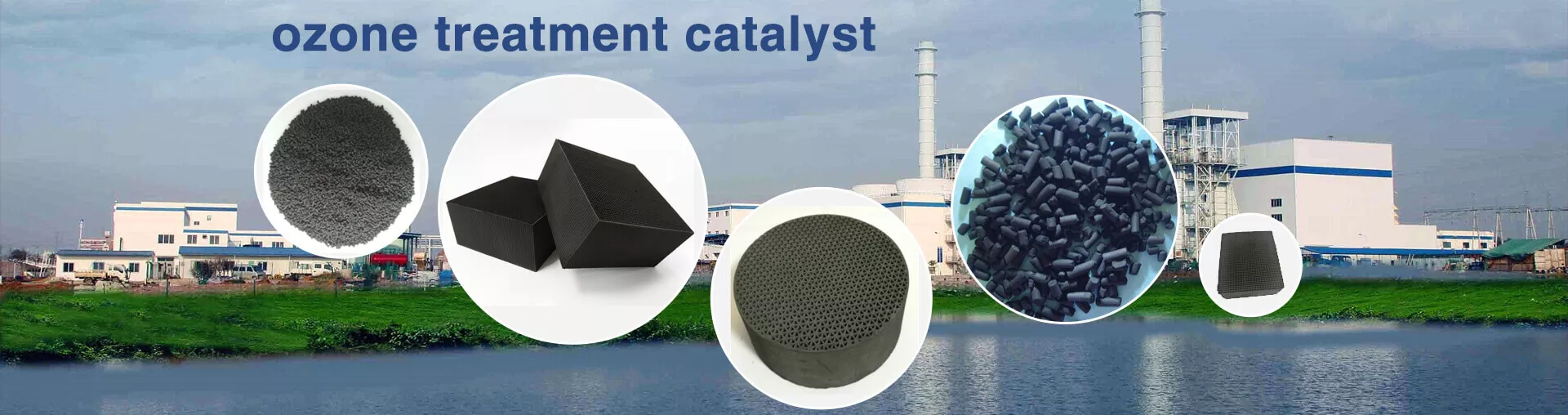
Application: The wastewater treatment plant in this park introduced ozone advanced oxidation technology as a pretreatment unit. The specific process involves pumping the pre-treated wastewater into an ozone catalytic oxidation tower. Inside the tower, a special catalyst (such as metal-loaded activated alumina) synergistically interacts with ozone to generate hydroxyl radicals (·OH) with an oxidation capacity far exceeding that of ozone alone. These free radicals can non-selectively attack and "shred" large molecules, long chains, and cyclic organic compounds in wastewater, converting them into small-molecule organic acids, carbon dioxide, and water, thus significantly improving the biodegradability of the wastewater.
Results:
Improved Biodegradability: After ozone catalytic oxidation treatment, the BOD/COD ratio of the wastewater increased from approximately 0.1 to over 0.3, enabling it to be effectively treated by subsequent biological systems.
Deep Degradation and Decolorization: The degradation rate of characteristic pollutants (such as nitrobenzene and anthraquinone dyes) exceeds 90%, while the wastewater color is completely removed, changing from dark brown to colorless and transparent.
Ensuring Compliance with Discharge Standards: The COD of the entire system's effluent is consistently below 50 mg/L, meeting the most stringent discharge standards, solving the park's environmental problems, and achieving a win-win situation for both the environment and the economy.
Case Study 3: Medical and Public Health – Creating a Sterile and Safe Space
Background: In hospital environments, microbial control in operating rooms, ICU wards, medical devices, and medical pure water is crucial. Traditional disinfection methods, such as ultraviolet irradiation, have blind spots, while chemical fumigation (e.g., formaldehyde) leaves harmful residues, which are unfriendly to humans and the environment.
Applications:
Hospital Space Disinfection: During surgical breaks or after daily treatment, ozone generators are used to disinfect unoccupied operating rooms in a sealed environment. Ozone gas can diffuse throughout the entire space, effectively killing bacteria, viruses, and spores suspended in the air and attached to object surfaces, with a sterilization efficiency of over 99%. After disinfection, ozone automatically decomposes into oxygen within 30-60 minutes, leaving no chemical residue, and the space is ready for use after ventilation.
Medical Device Sterilization: For precision instruments that are not resistant to high temperatures and humidity (such as fiber optic endoscopes), low-temperature ozone sterilization cabinets can be used. Ozone is introduced into a vacuum environment, ensuring that the gas penetrates every tiny pore of the instrument, achieving rapid, low-temperature, dry, and non-destructive sterilization.
Food and Home Applications: Ozone is used in cold storage to inhibit mold growth and extend the shelf life of fruits and vegetables; household ozone sterilizers are used to disinfect tableware; and even high-end washing machines have built-in ozone generators for waterless washing and deep sterilization.
In summary, ozone oxidation technology, with its high efficiency, broad spectrum, and cleanliness, is increasingly becoming an indispensable tool in environmental governance, industrial production, and public health. From the clean water we drink every day to environmental compliance in industrial production, and to the sterile environment that protects health, ozone is ubiquitous, continuously contributing to building a safer, healthier, and more sustainable society.
 ∷
∷

 minstrong