Detailed Explanation of Application Conditions for Ozone Decomposition Catalysts
Ozone (O₃), as a strong oxidant, has wide applications in industrial production, medical disinfection, and water treatment. However, its residue in ambient air poses a threat to human health and equipment safety. Therefore, efficient and safe decomposition and removal of ozone is crucial. Ozone decomposition catalysts are the core technology for achieving this goal, but their high efficiency depends on a series of stringent application conditions. These conditions collectively constitute the "optimal window" for catalyst application.
I. Core Application Conditions
Temperature Conditions
Temperature is the most critical factor affecting catalyst activity.
Optimal Temperature Window: Most metal oxide catalysts (such as manganese dioxide-based catalysts) exhibit high activity at room temperature (20°C - 40°C), making them ideal for applications in environments such as ventilation and air conditioning systems. For some noble metal catalysts (such as supported palladium and platinum catalysts), their optimal activity temperature may be slightly higher (50°C - 150°C).
Mechanism of Temperature Influence: Increased temperature accelerates the movement of reactant molecules, increasing the probability of collisions and reactions at active sites on the catalyst surface. However, higher temperatures are not always better. Excessively high temperatures (e.g., above 250°C) can cause catalyst sintering, leading to particle growth of the active component and a reduction in specific surface area, resulting in permanent deactivation. Simultaneously, at certain high temperatures, ozone may directly decompose thermally, competing with the catalytic decomposition pathway.
Humidity Conditions
Ambient humidity is one of the biggest challenges in the application of catalysts at room temperature.
Competitive Adsorption: Water vapor (H₂O) competes with ozone molecules for adsorption on the active sites of the catalyst. In high humidity environments, a large number of active sites are occupied by water molecules, hindering ozone adsorption and decomposition, leading to a significant decrease in catalyst efficiency.
Deactivation and Poisoning: For some catalysts (such as silver oxide), water vapor may react chemically with it, generating hydroxides or carbonates, covering or destroying the active centers, causing irreversible poisoning.
Coping Strategies: Therefore, in practical applications, the moisture resistance of the catalyst must be clearly defined. High-performance catalysts will repel water molecules and keep the active sites "dry" through hydrophobic modification (such as introducing hydrophobic groups on the support) or the design of special pore structures. During application, the ambient relative humidity must be controlled within the range allowed by the catalyst design (generally, below 70% is recommended).
Space Velocity (H⁻¹) refers to the volume of gas processed per unit volume of catalyst per unit time, directly reflecting the contact time between the gas and the catalyst.
Low Space Velocity Advantages: Low space velocity means a longer contact time between the gas and the catalyst, allowing ozone molecules more opportunity to diffuse into the catalyst's internal pores and be adsorbed and decomposed, resulting in a higher conversion rate.
High Space Velocity Challenges: When the space velocity is too high, the gas residence time is too short, and some ozone molecules pass through the catalyst bed before reacting, leading to excessive outlet concentrations. Therefore, the amount of catalyst used must be accurately calculated based on the processing air volume and target decomposition efficiency to ensure operation at the designed space velocity.
Initial Ozone Concentration: The processing capacity of a catalyst has an upper limit.
Low Concentration Applications: In scenarios such as air purification and office environments, ozone concentrations are typically low (ppb to a few ppm), allowing the catalyst to easily handle and maintain a long lifespan.
High Concentration Challenges: In scenarios such as ozone generator outlets and industrial wastewater treatment, ozone concentrations can reach tens or even hundreds of ppm. High concentrations mean that more ozone needs to be decomposed per unit time, which rapidly depletes catalyst activity and generates a large amount of reaction heat. If the heat cannot be dissipated in time, it can lead to localized overheating and deactivation of the catalyst. Therefore, when dealing with high concentrations of ozone, it is necessary to design thicker catalyst beds with better heat dissipation, or to adopt a multi-stage decomposition approach.
II. Catalyst Intrinsic Properties
The choice of application conditions is also closely related to the physicochemical properties of the catalyst itself.
Active Component: Manganese dioxide (MnO₂) is the most commonly used and highly efficient active component at room temperature. Its crystal form, valence state, and complexation with other metals (such as Cu, Co, Ce) determine its initial activity and stability.
Support: The role of the support is crucial. Supports with high specific surface area (such as activated alumina, molecular sieves, and honeycomb ceramics) can provide more loading sites and reaction sites. The pore structure of the support affects the diffusion rate of substances, while its mechanical strength determines the catalyst's lifespan.
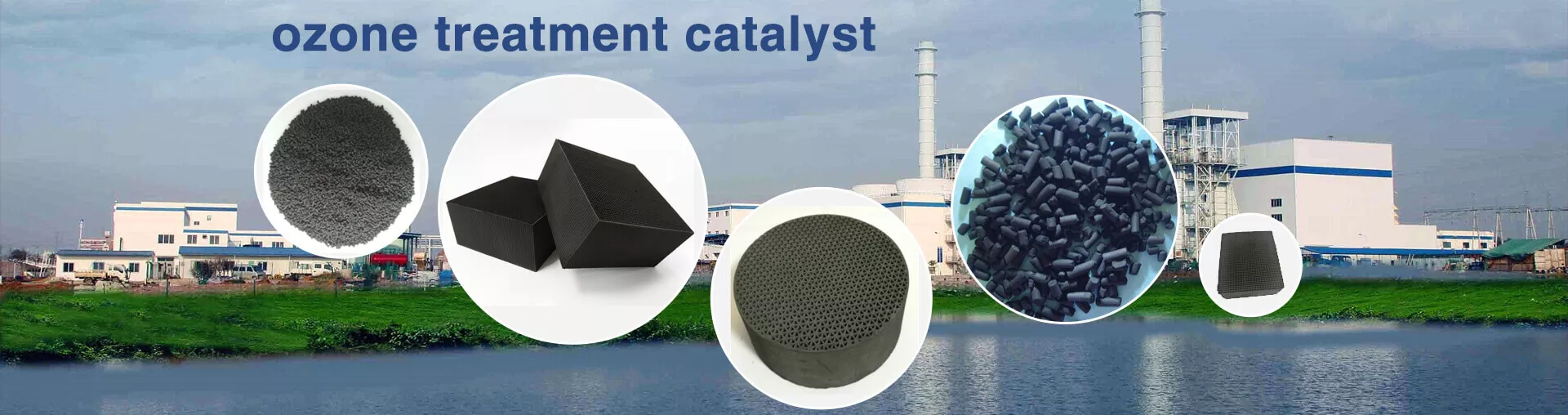
Macroscopic Morphology: Catalysts are typically manufactured in granular, honeycomb, or mesh forms. Honeycomb catalysts offer advantages such as low pressure drop and high flux, making them ideal for high-volume, low-concentration air purification applications; while granular catalysts are suitable for small-scale, high-concentration fixed-bed reactors.
III. Poisoning and Deactivation Factors
Besides moisture, some impurity gases can cause catalyst poisoning.
Chlorine, sulfur, and phosphorus compounds: These substances undergo strong chemisorption with active sites, forming stable compounds that permanently occupy the active sites.
Dust and oil mist: These physically cover the catalyst surface, blocking pores and preventing reactants from contacting the active sites.
Conclusion
In summary, the application of
ozone decomposition catalysts is not simply a matter of "place and use," but rather a systematic engineering process. Its efficient and stable operation is the result of a high degree of matching between external conditions such as temperature, humidity, space velocity, and ozone concentration, and the catalyst's own composition and internal structural properties. In practical applications, it is essential to fully assess the target environment, select a suitable catalyst type, and create and maintain optimal catalytic reaction conditions through reasonable system design (such as pre-filtration, temperature and humidity regulation, and airflow control) in order to achieve long-term, efficient, and safe decomposition and removal of ozone.
 ∷
∷

 minstrong