Company new
How to deal with residual ozone in UV equipment?
The most effective, economical, and energy-saving method for treating residual ozone generated in UV equipment (such as UV disinfection cabinets, air purifiers, and wastewater advanced oxidation equipment) is to use an ozone decomposition catalyst. Copper-manganese-based catalysts are the most widely used and technologically mature.
The specific treatment scheme is generally as follows:
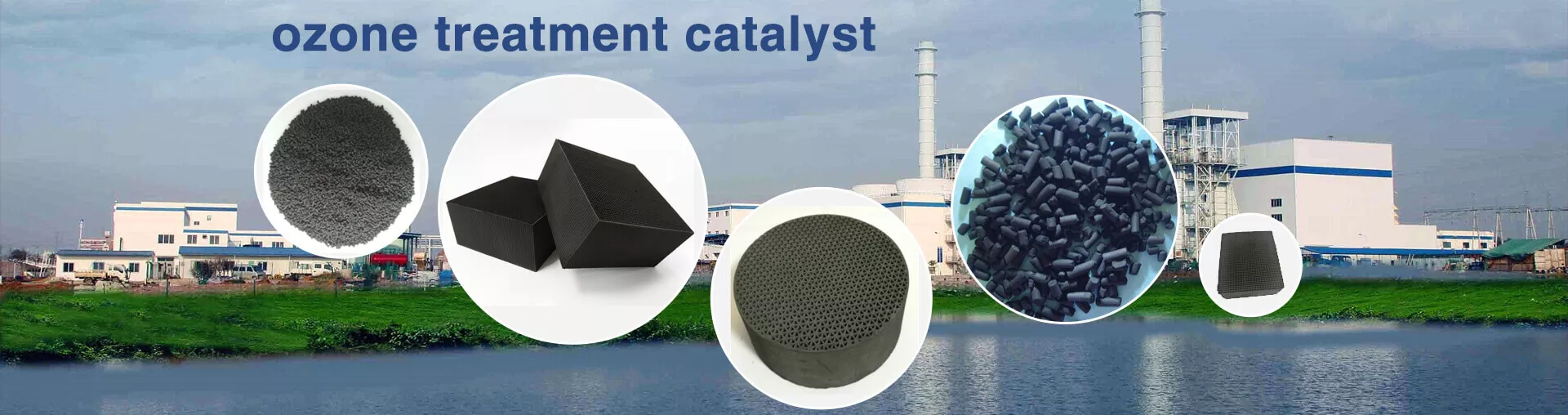
Integrated catalytic module: A filter or honeycomb ceramic module containing a copper-manganese-based catalyst is installed at the rear end of the UV lamp reaction chamber, in the gas outflow path. All airflow containing residual ozone is forced through this catalytic module before exiting the equipment.
Efficient decomposition at room temperature: When ozone (O₃) molecules come into contact with the catalyst surface, the catalyst lowers the activation energy for ozone decomposition, allowing the catalytic reaction to occur rapidly at room temperature. Ozone is decomposed into harmless oxygen (O₂). The core chemical reaction is: 2O₃ → 3O₂.
Maintenance-Free: Once installed, high-quality copper-manganese-based catalysts typically require no replacement throughout the life of the equipment. They are non-consumable and serve only as a catalyst, making them a "set-and-forget" solution.
Why is residual ozone present in UV systems?
The root cause of residual ozone lies in the working principle of UV lamps:
Specific wavelengths of UV light: UV lamps, particularly low-pressure mercury lamps, emit two primary wavelengths of ultraviolet light: 254nm and 185nm.
254nm UV light: Primarily used for disinfection, it can destroy the DNA/RNA of microorganisms.
185nm UV light: The photons at this wavelength are highly energetic, breaking down oxygen (O₂) molecules in the air into two oxygen atoms (O). These highly reactive oxygen atoms then combine with surrounding oxygen molecules (O₂) to form ozone (O₃).
"Byproduct," not primary function: In most UV systems designed for disinfection, ozone production is an undesirable byproduct. Although specialized ozone generators exist that utilize 185nm UV lamps to produce large quantities of ozone, residual ozone must be removed from standard air or water purification equipment.
Incomplete Reaction and Escape: During equipment operation, the ozone produced cannot be completely broken down within the reaction chamber by subsequent UV light or other mechanisms. Some ozone escapes through airflow or tiny gaps in the equipment, forming "residual ozone" and causing secondary pollution.
The Hazards of Ozone: Why is Removal Essential?
Ozone is a harmful pollutant at low altitudes (the altitude at which we breathe). Its main hazards are:
Strong Irritation to Human Health:
Respiratory System: Ozone is a strong oxidizing agent that can irritate and damage the respiratory tract, causing coughing, chest tightness, sore throat, and exacerbating conditions such as asthma and bronchitis.
Nervous System: Prolonged exposure to low concentrations of ozone may cause headaches, fatigue, and dizziness.
The International Agency for Research on Cancer (IARC) has classified ozone as a human carcinogen.
Damage to Equipment and the Environment:
Material Aging: Ozone's strong oxidizing properties can accelerate the aging, hardening, and embrittlement of organic materials such as rubber, plastic, and textiles, shortening the service life of components such as seals and wiring in equipment.
Metal Corrosion: Under certain conditions, ozone can also accelerate metal corrosion.
Environmental Pollutants: Environmental regulations have strict limits on indoor ozone concentrations. Untreated ozone emissions do not meet safety standards and environmental requirements.
In-Depth Analysis of Copper-Manganese-Based Ozone Decomposition Catalysts
Copper-manganese-based catalysts are essentially a variant or improved version of hopcalite. Their high efficiency stems from the synergistic catalytic effect between copper (Cu) and manganese (Mn) oxides.
1. Catalytic Mechanism:
Adsorption and Activation: Manganese oxides (such as MnO₂) on the catalyst surface have a rich variety of valence states and excellent oxygen adsorption capacity, effectively adsorbing ozone molecules and loosening their chemical bonds (activating them).
Electron Transfer and Decomposition: Copper oxides (such as CuO or Cu₂O) and manganese oxides form efficient electron transfer pathways. Activated ozone molecules acquire electrons from the catalyst surface and rapidly decompose into an oxygen molecule (O₂) and an active oxygen atom (O).
Regeneration: The resulting active oxygen atom reacts with another ozone molecule or bonds with lattice oxygen on the catalyst surface, ultimately desorbing as an oxygen molecule, restoring the catalyst surface to its original state and preparing for the next catalytic cycle. The synergistic effect of copper and manganese makes this cycle extremely rapid.
2. Core Advantages:
High Efficiency at Room Temperature: Its greatest advantage is its ability to maintain extremely high activity at room temperature or even low temperatures, eliminating the need for additional heating, making it energy-efficient and safe.
High Conversion Rate: High-quality copper-manganese-based catalysts can achieve an ozone decomposition rate exceeding 99%, rapidly reducing ozone concentrations to below safety standards.
Long Life: The catalyst itself is non-depleting and has a long theoretical lifespan. Its lifespan is typically due to physical clogging or poisoning (see Limitations below).
Low Cost: The primary components are the transition metals copper and manganese, which are widely available, making the cost significantly lower than catalysts based on precious metals such as palladium and platinum.
Managing residual ozone in UV equipment is a critical step for safety and regulatory compliance. Using a copper-manganese-based ozone decomposition catalyst, through simple back-end integration, effectively and persistently converts harmful ozone into harmless oxygen at room temperature, making it the most ideal and mainstream solution. Understanding its principles and limitations will help us better design and maintain related equipment, ensuring effective disinfection without causing secondary harm to people and the environment.
 ∷
∷

 minstrong