News
Application of Ozone Catalysts in Advanced Treatment of Paper Mill Wastewater
In the paper industry, achieving environmentally compliant emissions and water resource recycling are core challenges for sustainable development. Even after biochemical treatment, paper mill wastewater still retains a large amount of organic matter that is difficult for microorganisms to degrade, manifested as high chemical oxygen demand (COD) and deep color, which are key challenges affecting compliance with emission standards. Against this backdrop, advanced oxidation technologies centered on ozone decomposition catalysts demonstrate irreplaceable value as a highly efficient advanced treatment method.
Core Technology Principles and Role
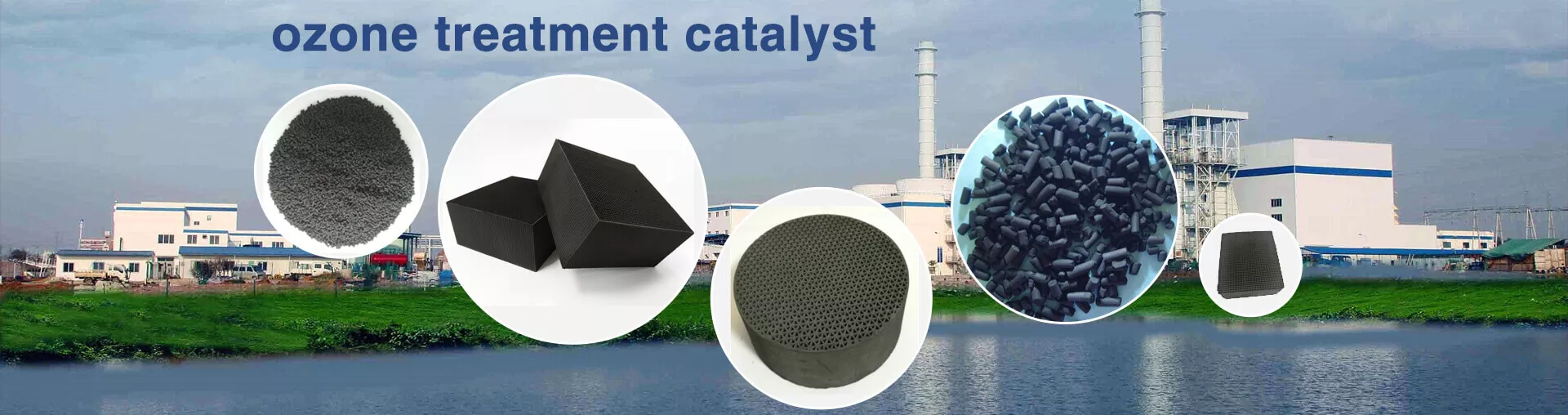
Ozone catalysts play the role of "efficiency enhancers" in paper mill wastewater treatment. Their core function is not simply to decompose excess ozone, but rather to efficiently convert ozone (O₃) introduced into the wastewater into more potent hydroxyl radicals (·OH) through catalysis. This conversion is crucial because ozone molecules themselves have strong selectivity for certain recalcitrant organic matter (such as lignin and its derivatives, and some synthetic dyes), resulting in limited oxidation capacity. Hydroxyl radicals are non-selective, indiscriminately attacking and breaking down the large molecular structures of complex organic compounds, decomposing them into smaller organic molecules, and even ultimately mineralizing them into carbon dioxide and water. This process greatly improves the utilization efficiency and oxidation effect of ozone, achieving an upgrade over traditional ozone oxidation technology.
Specific Performance in Paper Wastewater Treatment
In practical applications, ozone catalytic oxidation units are usually installed after the biological treatment system as a "gatekeeping" step to ensure effluent meets standards. Its effectiveness is mainly reflected in the following aspects:
First, this technology performs exceptionally well in removing recalcitrant COD and decolorizing. For example, a large paper mill in Jiangxi Province introduced ozone catalytic oxidation technology when upgrading its wastewater system, which has a daily treatment capacity of tens of thousands of cubic meters. Operational data shows that the system can stably control the effluent COD below the stringent standard of 50 mg/L, while achieving a color removal rate of over 95%, making the originally dark brown wastewater clear and transparent. This is crucial for meeting increasingly stringent emission standards or achieving wastewater reuse. Secondly, this technology significantly improves the biodegradability of wastewater. It breaks down large, cyclic organic molecules into smaller, easily biodegradable substances such as carboxylic acids and aldehydes. This characteristic allows the process to sometimes be placed before biological treatment as a pretreatment method, creating favorable conditions for subsequent microbial treatment and improving the stability and efficiency of the entire treatment system.
Finally, compared to another common advanced oxidation technology—the Fenton process—ozone catalytic oxidation has the advantages of being environmentally friendly and easy to operate. The Fenton process requires the addition of large amounts of iron salts and hydrogen peroxide, generating a large amount of iron-containing chemical sludge, leading to subsequent sludge disposal problems and the risk of secondary pollution. In contrast, the ozone catalytic oxidation process does not introduce additional chemical agents, the catalyst itself can be used for a long time, and the final products are oxygen and water, fundamentally avoiding secondary pollution and better conforming to the principles of clean production.
Key Considerations in Technology Implementation
To ensure that the ozone decomposition catalyst can achieve optimal performance, several key points need to be considered in engineering applications. First, optimizing reaction conditions is crucial, including the pH value of the wastewater, the ozone dosage ratio and method, and the hydraulic retention time. These parameters require precise control based on the specific water quality. Second, the selection and lifespan of the catalyst are critical. High-performance catalysts should possess high activity, high strength, and resistance to fouling to extend their lifespan and reduce operating costs. Currently, common catalysts include manganese dioxide-based transition metal oxides or noble metal catalysts supported on activated carbon, alumina, and other carriers.
In summary, ozone decomposition catalyst technology provides the paper industry with an efficient and clean pathway for advanced wastewater treatment. It not only effectively overcomes the challenge of removing recalcitrant organic pollutants, helping companies achieve stable emissions compliance, but also demonstrates broad application prospects and significant practical value in promoting the green transformation of the paper industry towards energy conservation, emission reduction, and water resource recycling.
 ∷
∷

 minstrong