Industry new
How to choose the right ozone decomposition catalyst?
The first step in selecting an appropriate ozone decomposition catalyst is to clearly define the intended use case and core requirements. This serves as the foundation for all subsequent selections. Ozone concentrations, accompanying impurity compositions, and environmental conditions vary significantly across different scenarios, directly determining the catalyst selection. For example, the performance requirements for a catalyst used for indoor air purification differ significantly from those used to treat industrial exhaust gases. The former prioritizes safety and low wind resistance, while the latter emphasizes resistance to high ozone concentrations and impurity poisoning. Failure to clearly define the requirements and blindly purchasing a high-performance catalyst can lead to problems such as overkill, increased costs, or insufficient performance that fails to meet standards. Therefore, prioritizing the intended use case, clarifying the ozone concentration to be treated, the ambient temperature and humidity range, and the presence of impurities such as dust and VOCs, is the first step in selecting the right catalyst.
After clarifying the requirements, focus on the catalyst's core performance indicators, as these directly determine its actual performance. Ozone decomposition efficiency is one of the most critical indicators, but it's not enough to simply look at laboratory values. Performance under actual operating conditions is crucial. For example, can a decomposition rate consistently exceed 95% under the target ozone concentration and ambient temperature and humidity? Temperature and humidity adaptability are also crucial. Most catalysts perform best in environments between 20-40°C and 40%-60% relative humidity. If the ambient temperature or humidity is too high, specially modified catalysts, such as those with high-temperature-resistant alumina supports or hydrophobic catalysts, should be selected to prevent environmental factors from causing catalytic activity loss or deactivation. Furthermore, anti-poisoning capabilities must be considered based on the impurity profile of the application. If dust or VOCs are present, composite catalysts with pretreatment layers should be selected to prevent impurities from clogging active sites and affecting purification effectiveness.
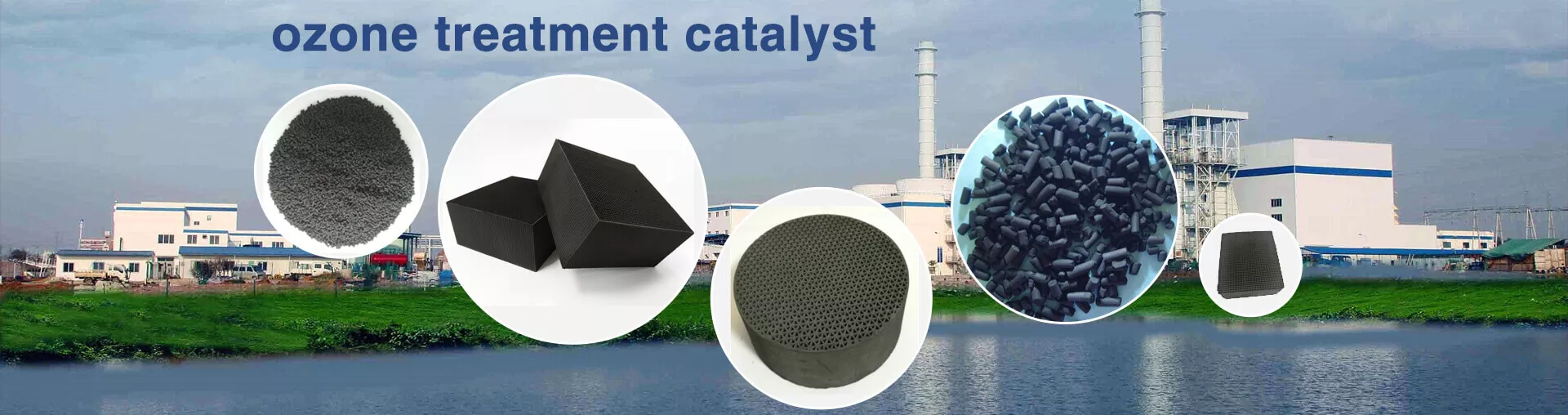
In addition to core performance, cost and lifespan are also crucial factors when selecting a catalyst and should be comprehensively evaluated from a long-term perspective. The lifespans of different catalyst types vary significantly. Standard non-precious metal catalysts typically have a lifespan of 6-12 months, while precious metal catalysts can reach 2-3 years. While precious metal catalysts have a higher initial purchase cost, they may be more cost-effective in high-ozone environments due to their average annual replacement costs and reduced downtime. Furthermore, the difficulty of catalyst regeneration and replacement also affects the cost of ownership. Granular catalysts are simple to replace and do not require specialized personnel, while honeycomb catalysts require matching equipment dimensions and may require professional assistance during replacement. Compatibility of the equipment interfaces should be confirmed in advance. Some regenerable catalysts can be restored through high-temperature baking, further extending their lifespan. They are suitable for budget-constrained environments with available regeneration facilities.
Finally, during the selection process, it is important to avoid common misconceptions and prevent cognitive biases from influencing decision-making. Avoid blindly pursuing "high activity" parameters. Some catalysts may exhibit excellent activity under ideal laboratory conditions, but their performance may decline significantly under complex operating conditions. Therefore, it is important to rely on actual test data rather than simply relying on advertised specifications. At the same time, the importance of carrier materials cannot be overlooked. Carriers not only affect catalyst stability but also safety. For example, carriers prone to pulverization should be avoided in indoor applications to prevent dust generation and secondary pollution. By comprehensively considering these factors and following a step-by-step screening process of "clarifying requirements → evaluating performance → calculating costs → avoiding pitfalls," a truly suitable, efficient, and cost-effective ozone decomposition catalyst can be selected.
 ∷
∷

 minstrong