Industry new
How do you choose the right catalyst to decompose residual ozone?
Choosing the right catalyst is essentially about finding an "accelerator" that efficiently and sustainably converts ozone (O₃) to oxygen (O₂). This decision-making process requires a systematic approach, not simply picking a single substance.
First, understand the core challenge: environmental conditions.
Before selecting any catalyst, you must clearly define your application scenario. Two factors are crucial:
Humidity: Water vapor in the environment is the primary enemy of ozone decomposition catalysts. Water molecules compete with ozone for active sites on the catalyst surface, causing the catalyst's efficiency to rapidly decrease or even completely deactivate. Therefore, the catalyst's humidity tolerance is a primary consideration.
Temperature and space velocity: The operating temperature and the gas flow rate to be processed (usually measured as "space velocity") determine the required catalytic reaction rate. At room temperature and high flow rates, you need a catalyst with extremely high intrinsic activity.
Second, build the core of the catalyst: the active material.
This is the "heart" of the catalyst and determines the upper limit of its conversion capacity.
Manganese Oxide: The King of Cost-Effectiveness
Among numerous materials, manganese dioxide (MnO₂) reigns supreme due to its exceptional ozone decomposition activity, abundant reserves, and low cost. It is not a single substance, but rather exists in a variety of crystal structures (such as α, β, and γ), with certain crystal forms (such as γ-MnO₂) exhibiting particularly exceptional performance. Its catalytic efficiency and the typical product of pure oxygen make it the preferred choice for most commercial applications, such as air purifiers and photocopier ozone decomposition units.
Precious Metals: Efficient but Delicate
Precious metal catalysts such as platinum (Pt) and palladium (Pd) exhibit extremely high activity at low temperatures and low humidity. However, their significant drawbacks are their high cost and sensitivity to certain toxicants (such as chlorine and sulfur compounds). Consequently, they are typically used in specialized applications requiring less cost and clean operating conditions, such as aerospace and certain high-precision laboratory equipment.
Compounded Metal Oxides: A Powerful Synergy
A single material sometimes struggles to combine all the desirable properties, leading to the development of composites of two or more metal oxides. For example, introducing copper (Cu) or iron (Fe) into manganese oxide can modify its electronic structure and surface properties, often creating a synergistic effect of "1+1>2," significantly enhancing its activity and stability in harsh environments (such as high humidity). This is a key direction in current high-performance catalyst research and development.
Next, a solid "skeleton" is built for the "heart": the support.
Active materials are rarely used alone; they need to be uniformly supported on a porous "skeleton," known as the support. The choice of support also profoundly influences the final performance.
Alumina: Due to its high specific surface area and excellent mechanical strength, it is one of the most commonly used supports, effectively dispersing the active components.
Activated carbon: While it has a certain ability to adsorb and decompose ozone, its mechanism of action is more physical adsorption, and there is a risk of combustion in oxygen-rich environments, requiring careful evaluation.
Molecular sieves: Their well-organized pore structure enables shape-selective catalysis, but their structure may be damaged in high humidity.
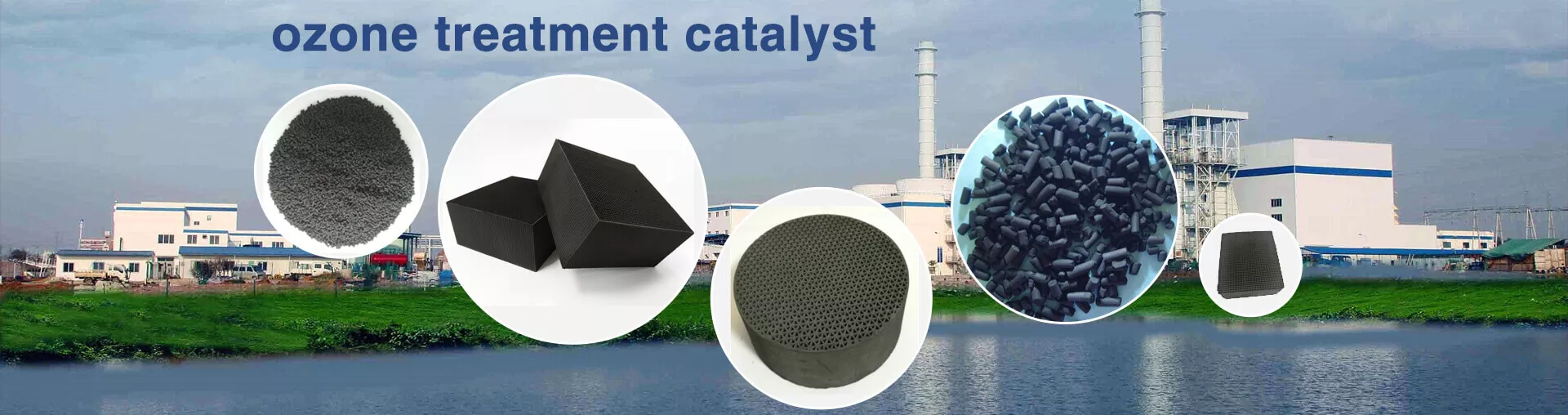
Metal foam/Ceramic honeycomb: These carriers, formed into specific shapes (such as honeycombs), offer the primary advantage of low pressure drop, making them ideal for handling large gas volumes and a common form factor for industrial applications.
Finally, putting your selection strategy into practice
A systematic selection process should go something like this:
Define your needs: First, clarify your application scenario—is it treating high-humidity, high-volume industrial waste gas, or is it for dry, low-volume office air purification? What are the catalyst lifespan, cost, and size requirements?
Establish a preliminary selection scope: For most general ozone degassing applications, catalysts based on manganese oxide as the active component and supported on alumina or ceramic honeycomb carriers are the best starting point for balancing performance and cost.
Consider operating conditions: If the ambient humidity is extremely high, moisture-resistant manganese-based catalysts that have undergone special treatments (such as those incorporating hydrophobic components or specific metals) should be prioritized. If space is limited and air resistance requirements are stringent, a honeycomb monolithic catalyst is an ideal choice.
Balancing Cost and Performance: Precious metal catalysts should only be considered when the above options fail to meet extreme performance requirements (such as instantaneous decomposition at extremely low concentrations or temperatures) and the budget is sufficient.
In summary, selecting a catalyst for residual ozone decomposition is a systematic decision-making process that seeks the optimal balance between activity, stability (especially moisture resistance), cost, and engineering suitability (such as pressure drop). Starting with manganese-based materials, then fine-tuning and validating them based on specific operating conditions, is the most efficient and reliable approach.
 ∷
∷

 minstrong