Welcome: Hunan Minstrong Technology Co., Ltd
Language:
 ∷
∷

∷
∷
Q: What is an ozone destruction catalyst?
Which type of ozone does it target?
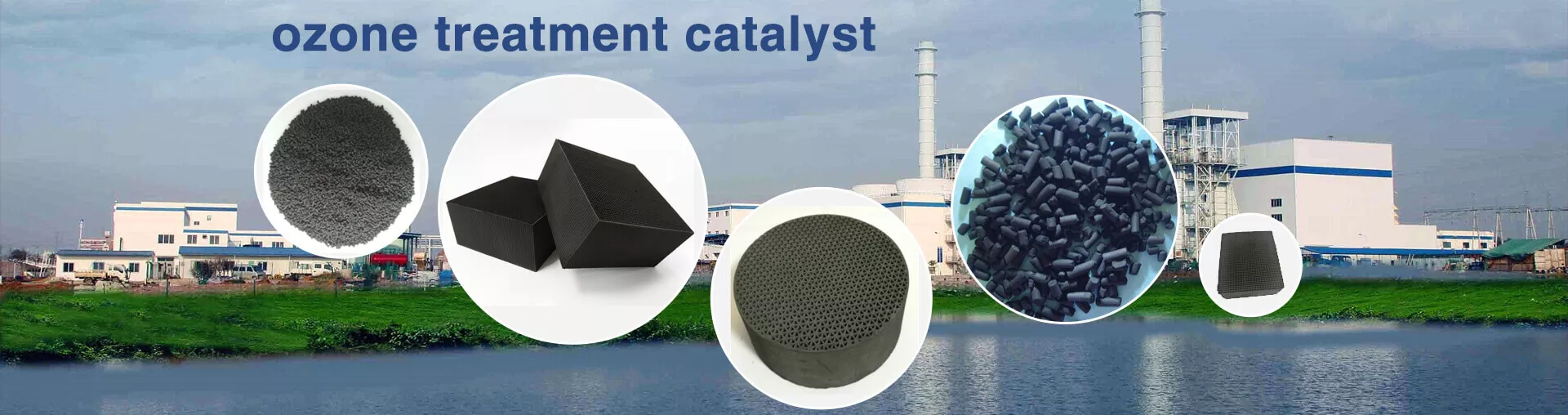
A: There is a very important distinction here. The ozone destruction catalyst discussed in this article does not aim to protect the ozone layer in the upper stratosphere. On the contrary, it is an environmental catalytic material specifically designed to eliminate near-surface (tropospheric) ozone pollution. Near-surface ozone is the main component of photochemical smog, generated by the reaction of nitrogen oxides and volatile organic compounds under sunlight, and is significantly harmful to plants, building materials, and especially the human respiratory system. Therefore, the core task of this catalyst is to actively decompose this harmful near-surface ozone (O₃) and efficiently convert it into harmless oxygen (O₂), making it a "ground guardian" for purifying low-altitude air.
Q: What are the main materials composed of ozone destruction catalysts? How do they work?
A: Currently, a highly efficient and promising ozone decomposition catalyst is a composite material of manganese dioxide (MnO₂) and copper oxide (CuO).
Active Host: Manganese Dioxide (MnO₂): It is the core of the catalytic reaction, especially MnO₂ with specific crystal forms (such as α-type), which possesses abundant surface oxygen vacancies and variable manganese valence states. Ozone molecules (O₃) are adsorbed onto these active sites. MnO₂, through its own valence state cycle (e.g., Mn³⁺ ↔ Mn⁴⁺), promotes the decomposition of unstable ozone molecules, releasing oxygen.
Key Synergistic Component: Copper Oxide (CuO): The addition of copper oxide is not merely a supporting role, but plays a crucial synergistic enhancement role. On the one hand, CuO can effectively regulate the electron distribution on the surface of MnO₂, making the active sites more "active"; on the other hand, it can promote the rapid desorption of reaction intermediates, preventing the active sites from being blocked, thereby significantly improving the overall activity and long-term stability of the catalyst. The combination of these two components produces a synergistic effect, significantly outperforming the single-component catalyst.
Q: What are the specific advantages of this
manganese dioxide-copper oxide composite catalyst compared to others?
A: Its advantages are mainly reflected in three aspects: high efficiency, stability, and practicality:
High-efficiency low-temperature decomposition and strong adaptability: This composite catalyst exhibits extremely high ozone decomposition efficiency (typically >95%) at room temperature or lower temperatures (e.g., room temperature to 50°C), effectively addressing ozone pollution in everyday environments. This is much more energy-efficient than some technologies requiring high temperatures (such as thermal decomposition).
High stability and long lifespan: In humid environments or under long operating times, the activity of pure MnO₂ may decrease due to the adsorption of water molecules. The CuO composite significantly enhances the material's moisture resistance and structural stability, reducing the loss or deactivation of active components, ensuring the catalyst can operate continuously in complex real-world air conditions, resulting in a long service life.
Safe, economical, and environmentally friendly: The entire catalytic process only converts ozone into oxygen, without producing secondary pollutants. Its main components are oxides of manganese and copper. Raw materials are relatively abundant, and the production cost is controllable, far lower than catalysts using precious metals (such as platinum and palladium), making large-scale commercial application economically feasible.
Q: In which scenarios is this catalyst
currently mainly used? What are its future prospects?
A: Its applications are rapidly expanding to key areas requiring control of indoor and outdoor air quality:
Indoor air purification: Integrated into air purifiers, fresh air systems, or air conditioning filters, continuously decomposing ozone that seeps in from outdoors or is generated by indoor equipment.
Special enclosed spaces: Used in aircraft cabins, spacecraft compartments, subway stations, and underground facilities to ensure air quality in densely populated and poorly ventilated spaces.
Edge treatment of industrial and office equipment: Installed at the exhaust vents of equipment that easily generates ozone, such as copiers, laser printers, and ozone sterilizers, to eliminate pollution sources.
Auxiliary treatment of outdoor environments: Can be used as a functional coating on the surfaces of building materials in urban ventilation corridors or specific polluted areas.
Looking ahead, research will focus on
further enhancing its performance under extreme humidity or complex
multi-pollutant conditions through nanostructure design and doping
modification. Simultaneously, developing more convenient coating processes to
deeply integrate it with everyday building materials (such as paints and
decorative panels) to create a "passive" air purification environment
will be a key direction for realizing its large-scale environmental governance
potential. As an efficient and green solution, it plays an increasingly
important role in winning the battle for blue skies and improving public
health.
Contact: Candyly
Phone: +8618142685208
Tel: 0086-0731-84115166
Email: sales@minstrong.com
Add: E2 Building, Kinglory Science And Technology Industrial Park, Wangcheng Area, Changsha, Hunan, China.
 minstrong