Industry new
Catalytic Ozone Decomposition: An Economical and Effective Method for Controlling Ozone Emissions in Exhaust Gas
Ozone, as a highly effective oxidant and disinfectant, plays an important role in drinking water purification, industrial wastewater treatment, air purification, and some production processes. However, with increasingly stringent environmental standards, the problem of ozone emissions in exhaust gas during its application has attracted increasing attention. Untreated residual ozone is not only harmful to human health but can also cause equipment corrosion; therefore, its emission concentration is strictly limited. In this context, catalytic decomposition technology, with its high efficiency, low energy consumption, and reliability, has become an economically preferred solution for treating ozone in exhaust gas.
The Urgency of Ozone Emission Control
Ozone has strong oxidizing properties and is often actively added or generated during industrial production and water treatment processes. If residual ozone in exhaust gas is released directly, it can easily threaten the surrounding environment and human health. Long-term exposure to low concentrations of ozone may cause respiratory irritation and decreased lung function, while higher concentrations are significantly toxic. Therefore, environmental regulations in various countries have set strict limits on ozone concentrations in workplaces and emission outlets. Effectively controlling ozone emissions is not only a compliance requirement but also a manifestation of companies achieving green production and fulfilling their social responsibilities.
Comparison of Common Ozone Decomposition Technologies
Currently, the main technologies used for ozone exhaust gas treatment include thermal decomposition, adsorption decomposition, and catalytic decomposition, each with its own characteristics:
Thermal decomposition: Ozone molecules are broken down into oxygen at high temperatures (usually above 300°C). This method provides complete decomposition, but it is energy-intensive, requiring continuous heating, resulting in significant equipment investment and operating costs. It is suitable for special occasions with high concentrations and large volumes of gas, but its economic efficiency is generally low.
Adsorption decomposition: Activated carbon and other adsorbent materials are commonly used to adsorb and decompose ozone on their surface. This technology uses simple equipment and can operate at room temperature, but the adsorbent material is gradually consumed by the reaction and needs to be replaced regularly. There is also a risk of combustion and explosion in high-concentration, high-humidity, or oxygen-rich environments, resulting in higher long-term costs.
Catalytic decomposition: Under the action of a catalyst, ozone can be efficiently converted into oxygen at lower temperatures. The catalyst itself is not consumed during the process, resulting in a long service life, low operating energy consumption, and suitability for continuous operation systems, leading to outstanding overall economic benefits.
Core Advantages of Catalytic Decomposition Technology
Catalytic decomposition enables efficient ozone conversion at near-ambient temperatures, significantly reducing energy consumption. This is primarily due to the catalyst's significant promotion of the ozone molecule decomposition reaction, allowing the reaction to proceed under milder conditions while maintaining high treatment efficiency and stability.
Among various catalysts, transition metal oxide-based catalysts (such as those based on manganese and copper oxides) perform particularly well. These catalysts exhibit excellent ozone adsorption and activation capabilities, achieving over 99% ozone conversion at room temperature to moderate temperatures, and possess strong resistance to humidity interference, making them suitable for most industrial exhaust gas environments. Compared to noble metal catalysts, transition metal oxides are less expensive, more abundant, and have better prospects for large-scale application.
System Design and Operation Considerations
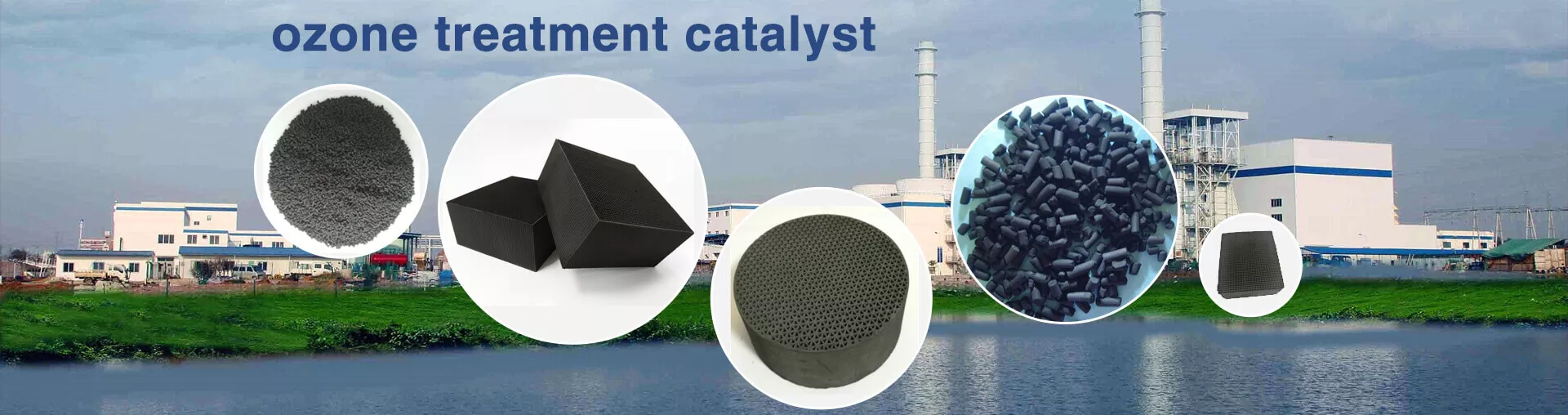
Achieving an efficient catalytic decomposition system requires careful design of reaction space velocity, residence time, and airflow distribution to ensure sufficient contact between the exhaust gas and the catalyst. Fixed-bed reactors are typically used, with the catalyst loaded in granular, honeycomb, or coated forms. The following aspects should be considered during system operation:
Humidity Management: Although most catalysts have some moisture resistance, continuous high humidity may lead to surface condensation, affecting the exposure of active sites. This can be avoided by pre-treatment with gas-liquid separation or moderate preheating of the inlet gas.
Pollutant Protection: Certain volatile organic compounds, sulfides, or halogen substances may occupy the catalyst's active centers or cause chemical poisoning, affecting long-term performance. Pre-treatment is recommended when the exhaust gas composition is complex.
Temperature Control: The catalytic reaction itself is exothermic. When ozone concentration is high, attention should be paid to the temperature rise in the catalyst bed to avoid local overheating, which can affect catalyst lifespan and safety.
Economic and Applicability Analysis
From a total life cycle cost perspective, catalytic decomposition devices have moderate initial investment costs, significantly lower than thermal incineration systems, and slightly higher than activated carbon adsorption equipment. However, their long-term operating costs are the lowest, requiring no frequent material replacement, consuming less energy, and requiring simple maintenance. Especially for applications involving continuous operation and relatively stable ozone concentrations, catalytic methods demonstrate a balanced performance in terms of compliance reliability, safety, and economic efficiency. This has made it the preferred exhaust gas treatment process for many water treatment plants, ozone disinfection facilities, and ozone-related manufacturing industries.
Conclusion
Facing increasingly stringent ozone emission standards, catalytic decomposition technology offers an efficient, reliable, and economically viable control pathway. This technology fully utilizes the chemical enhancement effect of catalysts to achieve the harmless conversion of ozone to oxygen at low temperatures, offering advantages such as low energy consumption, simple operation, and wide applicability. With the continuous optimization of catalyst performance and ongoing improvements in system design, catalytic ozone decomposition will play an even more important role in industrial exhaust gas purification, helping companies achieve environmental compliance and sustainable development at a lower cost.
 ∷
∷

 minstrong