Industry new
How does the central air conditioning fresh air system rely on ozone decomposition catalyst to purify the air?
With the increasingly prominent issue of urban ozone pollution and the continuous improvement of air quality requirements in indoor places such as office buildings, shopping malls, and hospitals, central air conditioning fresh air systems have become an important component of building air purification.
However, many managers have found that after the introduction of fresh air, the indoor ozone concentration does not decrease but increases. What is the reason for this? The answer lies in the ozone decomposition catalyst.
1. The Realistic Threat of Ozone Pollution
Indoor ozone primarily originates from two main sources. Firstly, high-concentration ozone resulting from outdoor photochemical smog enters the room directly through the ventilation system. Secondly, electrostatic dust removal modules or ultraviolet sterilization devices commonly found in ventilation equipment produce ozone as a by-product during operation. Studies indicate that ozone, as a potent oxidant, becomes harmful to humans when its concentration exceeds 0.06mg/m³, with particularly significant impacts on children, the elderly, and individuals with respiratory diseases. Consequently, if the ventilation system lacks the ability to decompose ozone, it could potentially transform "purification" into "pollution," representing a hidden pain point in many commercial buildings today.
II. Installation and selection of catalytic decomposition technology
Among various ozone removal methods, activated carbon method is susceptible to humidity and requires frequent replacement after saturation, while thermal decomposition method consumes extremely high energy.
In comparison, catalytic decomposition is currently the most widely adopted ideal solution, capable of achieving high decomposition rates, long-term stability, safety, and economy at room temperature.
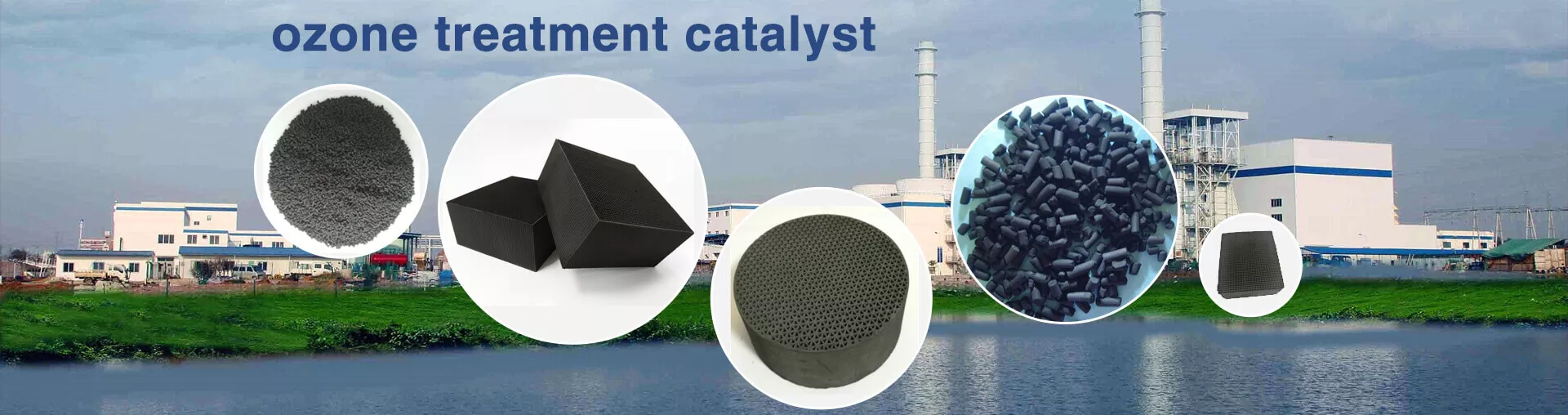
There are usually two installation methods for the central air conditioning fresh air system. One is to embed the ozone decomposition catalyst in the form of a honeycomb filter screen into the fresh air unit or air duct, utilizing a low air resistance design to ensure smooth passage of a large volume of fresh air. The honeycomb structure has two major advantages: an ultra-large specific surface area and low airflow resistance. When ozone molecules come into contact with the active components on the catalyst surface, the O-O bond quickly breaks down into harmless oxygen, and the entire process requires no additional heating or energy consumption. The second method is to arrange the catalytic filter screen after the electrostatic precipitation module or ultraviolet module to decompose the excess ozone produced by these modules, which can also effectively avoid secondary pollution.
In terms of selection, commercial buildings should give priority to manganese-based composite oxide catalysts (such as the MnO₂-CuO-CeO₂ system). Manganese-based ozone decomposition catalysts not only have a lower cost (ordinary manganese catalysts cost about 8,000-15,000 yuan/cubic meter, while precious metal-based catalysts cost about 30,000-60,000 yuan/cubic meter), but also achieve an ozone decomposition rate of over 98% at room temperature. If the building is located in a high-humidity area or in a basement or other humid environments, water-resistant MnO₂-based catalysts should be preferred to ensure long service life.
III. Long-term purification and comprehensive value
Firstly, the ozone decomposition catalyst can operate at room temperature with zero energy consumption, without generating additional electricity consumption and emitting secondary pollutants during the normal operation of the air conditioning fresh air handling unit. Secondly, the catalyst has a long service life. The manganese-based ozone decomposition catalyst, using honeycomb ceramic as the carrier, has a firmly bonded active component after high-temperature sintering, enabling it to maintain an efficiency of over 96% for 24 consecutive months of operation. In contrast, activated carbon filters need to be replaced every six months to a year. The catalytic solution significantly reduces maintenance frequency and overall operating costs.
Furthermore, ozone decomposition catalysts can be used in conjunction with formaldehyde purification modules to achieve synergistic removal of indoor ozone and formaldehyde, making them particularly suitable for scenarios with stringent air quality requirements such as hospitals, schools, and high-end office buildings. Some innovative designs even integrate the catalytic layer with cooling or heating modules within the same channel, further simplifying the equipment structure.
Currently, the health risks posed by indoor ozone have garnered increasing attention. Installing ozone decomposition catalysts is not only an effective means of enhancing air quality but also a necessary investment to safeguard user health and avert potential environmental risks. If you are seeking ozone decomposition catalysts suitable for your ventilation and air conditioning system, or wish to receive more professional advice on condition matching and model selection, please feel free to contact us for free technical consultation and solution design.
 ∷
∷

 minstrong