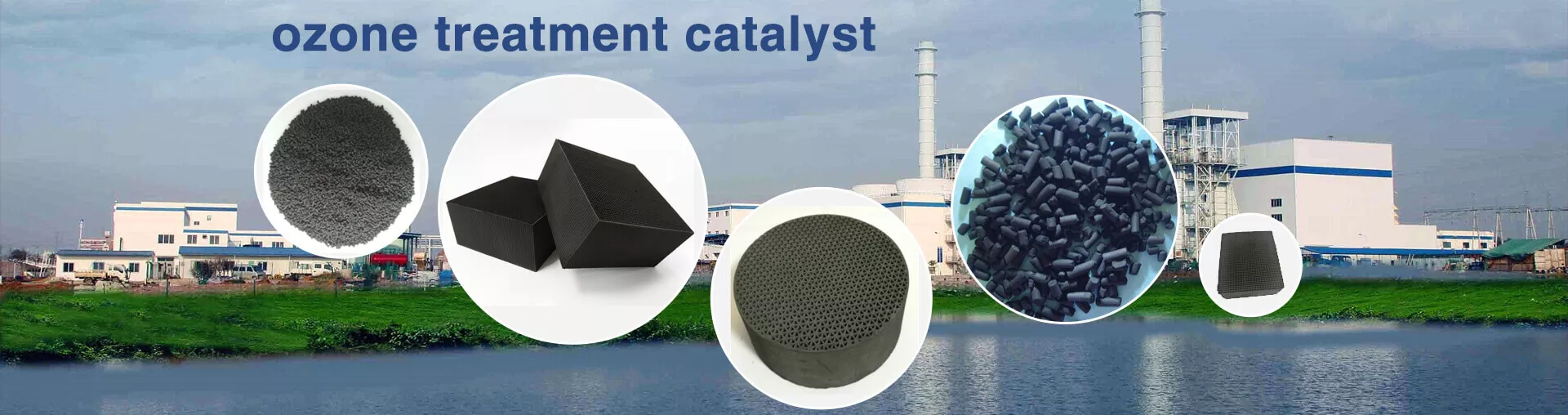
Detailed Explanation of the Core Reaction Mechanism of O₃ Degradation Catalysts
In industrial waste gas purification, water treatment, and air disinfection, ozone degradation catalysts have become core materials for solving residual O₃ pollution. Their core reaction mechanism for catalyzing O₃ degradation determines purification efficiency, stability, and application value, and is also a key technical basis for buyers' selection. The core of ozone decomposition catalysts for O₃ degradation lies in a closed-loop catalytic cycle of "adsorption-activation-decomposition-regeneration." First, active sites on the catalyst surface (such as metal ions like Mn, Cu, and Co, and oxygen vacancies) rapidly chemisorb O₃ molecules, polarizing the O-O bonds of ozone and significantly reducing the activation energy for decomposition. This step is crucial; traditional natural ozone decomposition takes several hours, while catalysts can increase the reaction rate by tens of times.
Secondly, electron transfer and free radical chain reactions occur. Transition metals in the catalyst undergo valence state cycling (e.g., Mn²⁺↔Mn³⁺↔Mn⁴⁺), transferring electrons to O₃, triggering its decomposition into oxygen molecules and highly reactive atomic oxygen and hydroxyl radicals (・OH). These reactive oxygen species rapidly attack the remaining O₃, forming a chain reaction that achieves complete O₃ degradation, with the sole product being harmless oxygen and no secondary pollution.
Furthermore, the regeneration cycle of oxygen vacancies is the core of the catalyst's long-term stability. Active oxygen atoms fill oxygen vacancies to form peroxide species, which are then desorbed by adjacent sites to form O₂. This rapid regeneration of oxygen vacancies ensures continuous catalytic cycling. High-quality catalysts, through the regulation of crystal structure, surface defects, and hydrophobic modification, can suppress competitive adsorption of water molecules, maintaining an O₃ degradation rate of over 99% even under high humidity and high space velocity conditions, and operating continuously for over 100 hours without degradation.
For industrial buyers, this mechanism directly addresses three major pain points: first, zero energy consumption at room temperature, requiring no heating or reagents, significantly reducing operating costs; second, moisture resistance and stability, suitable for humid waste gas and water treatment scenarios, avoiding the sharp drop in efficiency common with traditional catalysts; and third, long lifespan and easy maintenance, with no catalyst loss or dissolution, reducing replacement frequency and adapting to the continuous production needs of industries such as chemical, pharmaceutical, and printing.
Choosing a suitable ozone decomposition catalyst is based on the core reaction mechanism, matching operating conditions, ensuring efficiency, and controlling costs to achieve efficient, safe, and economical ozone pollution control.