Welcome: Hunan Minstrong Technology Co., Ltd
Language: Chinese ∷  English

Industry new

How to Achieve Efficient Removal of Ozone from Wastewater Treatment Plants?

I. The Dual Role of Ozone in Wastewater Treatment
Ozone, as a strong oxidant, is widely used in wastewater treatment. Its strong oxidizing properties can effectively degrade organic pollutants, sterilize, and remove color and odor, especially in treating recalcitrant industrial wastewater. However, ozone utilization is a problem in practical applications—typically only 10%-30% of ozone is effectively utilized, with the remainder being discharged as exhaust gas. Direct emission of unused ozone will cause serious environmental and health problems.

II. Why Ozone Emissions Must Be Treated 

Ozone is a strong oxidant with a strong irritant effect on the human respiratory tract; long-term exposure can lead to lung damage. According to the "Integrated Emission Standard for Air Pollutants," ozone, as an ambient air pollutant, is subject to strict regulation. Furthermore, ozone emissions often carry incompletely oxidized volatile organic compounds (VOCs), forming compound pollution. With increasing environmental supervision, the legal risks and public pressure faced by wastewater treatment facilities that fail to meet ozone emission standards are becoming increasingly prominent.


III. High-Efficiency Removal Technology: Breakthroughs in Ozone Decomposition Catalysts 

Current mainstream ozone emission treatment methods include thermal decomposition, activated carbon adsorption, and catalytic decomposition. Among these, ozone decomposition catalysts, with their high efficiency, energy saving, and stability, have become the industry's preferred solution.


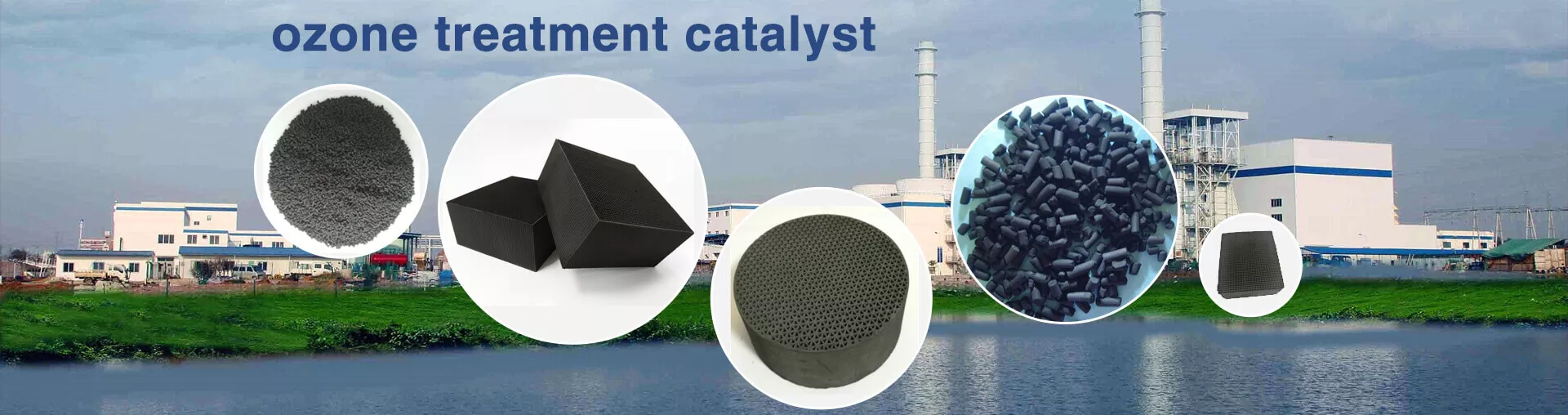
Catalytic decomposition mechanism: Ozone molecules are adsorbed onto the active sites of the catalyst (usually transition metal oxides such as MnO₂, CuO, Co₃O₄, etc.), and rapidly decomposed into oxygen through electron transfer. The reaction requires no external energy source and can achieve an ozone removal rate of over 99% at room temperature.

Technical Advantages:

High Efficiency: Space velocity up to 10,000-30,000 h⁻¹, outlet ozone concentration can be stably below 0.1 ppm

Long Lifespan: High-quality catalysts have a lifespan of 3-5 years, with excellent resistance to moisture and poisoning.

Synergistic Treatment: Some composite catalysts can simultaneously degrade residual VOCs in the exhaust gas, achieving multi-effect in one unit.

IV. Selection Considerations and Pain Points Response
For potential buyers, catalyst selection should focus on the following dimensions:

Operating Condition Adaptability: Exhaust gas humidity, temperature, and ozone concentration directly affect catalyst performance; detailed operating condition data is required for customized selection.

Pressure Drop Control: Honeycomb structures can significantly reduce system pressure drop compared to granular packing, saving blower energy consumption.

Stability Verification: Suppliers are required to provide third-party testing reports and long-term operational case data.

Conclusion: The application of ozone decomposition catalysts is not only a necessary choice to meet environmental compliance but also an important means to improve the operational safety and economy of wastewater treatment facilities. With increasingly stringent ozone emission standards, proactively deploying efficient exhaust gas treatment systems will become a core competitive advantage for environmental protection companies. For targeted technical solutions and product selection advice, please contact our technical team for in-depth discussions.


author:kaka

date:2026/3/30

CONTACT US

Contact: Candyly

Phone: +8618142685208

Tel: 0086-0731-84115166

Email: sales@minstrong.com

Add: E2 Building, Kinglory Science And Technology Industrial Park, Wangcheng Area, Changsha, Hunan, China.

Scan the qr codeClose
the qr code