How to Customize Ozone Decomposition Catalysts Based on Waste Gas Conditions?
In the field of industrial waste gas treatment, ozone, as a strong oxidant, is facing increasingly stringent environmental regulations regarding its emissions. However, many enterprises, when selecting ozone decomposition catalysts, often overlook the complex characteristics of waste gas conditions, falling into the predicament of "rapid catalyst efficiency decay, short lifespan, and high operating costs." In fact, no single catalyst can be suitable for all scenarios—only customized design based on actual operating conditions can achieve efficient and stable ozone treatment.
I. Understanding Exhaust Gas Conditions: The First Hurdle in Customization

Before customizing an ozone decomposition catalyst, a comprehensive diagnosis of the exhaust gas conditions is essential. Key parameters include:
* **Temperature Range:** Low temperatures (<25℃) and high temperatures (>80℃) have vastly different effects on catalytic activity. For example, low-temperature ozone decomposition requires enhancing the low-temperature ignition performance of the active components, while high-temperature conditions necessitate preventing catalyst thermal sintering.
* **Relative Humidity:** In high-humidity environments (RH>80%), water molecules compete with ozone for active sites, leading to catalyst "poisoning" and deactivation. For such conditions, a hydrophobic support or optimized pore structure must be designed.
* **Ozone Concentration and Space Velocity:** Concentration fluctuations ranging from tens to thousands of ppm, and the residence time challenges posed by high space velocities (>10000 h⁻¹), require the catalyst to possess sufficient active component loading and mass transfer efficiency.
Coexisting pollutants: VOCs, sulfides, dust, and other impurities can coat the active surface, necessitating the introduction of anti-poisoning components or pretreatment designs in the catalyst formulation.
II. Core Design Logic of Customized Catalysts

Based on operating data, the customization of ozone decomposition catalysts needs to revolve around three levels:
1. Support and Structure Control
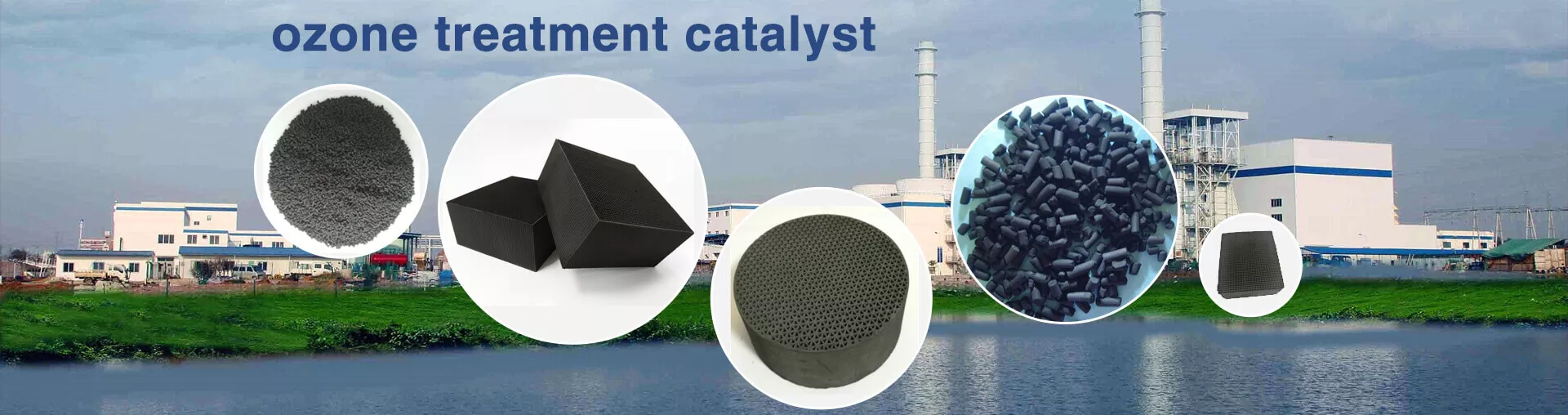
The choice of catalyst support directly determines mechanical strength and heat transfer performance. For high humidity and dusty conditions, honeycomb ceramics or foamed metals with large specific surface area and good pore permeability are typically used, supplemented by special coating processes to ensure uniform distribution of active components and prevent them from easily detaching.
2. Active Component Optimization
The core of the catalytic oxidation reaction lies in the active component. For ambient temperature and high humidity conditions, transition metal catalysts such as manganese-based and copper-manganese composite oxides can be selected, with their hydrophobicity and low-temperature activity improved through doping modification; for high-temperature and high-concentration ozone scenarios, a formulation combining precious metals (such as platinum and palladium) and rare earth elements is required, balancing activity and heat resistance.
3. Operating Condition Adaptability Verification
Customization is not just theoretical. Professional suppliers should provide small-scale verification tests on actual waste gas sideflow, dynamically adjusting catalyst selection parameters using online monitoring data to ensure that the ozone treatment efficiency remains stable above 95% after loading, and that pressure drop and lifespan meet engineering requirements.
III. Addressing Pain Points: A Value Leap from "General" to "Precise"
Users of non-customized catalysts often encounter two major pain points: first, efficiency is acceptable in the initial stage of operation, but rapid deactivation occurs after several weeks due to the accumulation of water vapor or impurities; second, over-design to cope with fluctuations in operating conditions leads to wasted investment. Catalysts customized based on waste gas conditions can extend effective lifespan by 30%~50%, while reducing the amount of precious metals used through precise matching, achieving a better total life cycle cost.
IV. How to Obtain Professional Customization Support?
When you face excessive ozone emissions, frequent catalyst replacements, or the impact of process fluctuations, it means your system urgently needs a customized industrial waste gas treatment solution. Professional catalyst manufacturers should possess full-chain capabilities from operating condition diagnosis and material development to engineering delivery—providing complete services including laboratory pilot-scale testing, pilot-scale verification, and long-term operation and maintenance.
Contact our technical team now and submit your exhaust gas operating parameters. We will provide you with targeted ozone decomposition catalyst optimization suggestions to help you achieve stable compliance at a lower cost. ∷
∷

 minstrong