Will Ozone Decomposition Catalysts Produce Harmful Byproducts?
Ozone (O₃), as a powerful oxidizing agent, is widely used in water purification, air purification, and other fields, but its residual hazards cannot be ignored. Using catalysts to efficiently decompose it into oxygen (O₂) at room temperature is an ideal solution. Among them, copper-manganese catalysts have attracted much attention due to their high performance and low cost. The most pressing question is: will the catalyst itself produce new pollutants during its operation? This article will delve into its working principle, revealing that the core of the potential risk lies in the balance between catalytic activity and selectivity, and clarifying the key role played in this process.
I. Core Mechanism
The high efficiency of
copper-manganese catalysts (such as CuO-MnO₂ composite oxides) is rooted in their unique redox cycle capabilities and abundant surface defects. The microscopic process of catalytic ozone decomposition can be simplified into a three-step process: "adsorption-decomposition-desorption":
Adsorption and Activation: Ozone molecules are first chemically adsorbed by the active sites on the catalyst surface (mainly manganese and copper ions).
Electron Transfer and Decomposition: Ozone gains electrons and decomposes into one oxygen molecule and a highly active atomic oxygen species. This step is crucial; the active atomic oxygen quickly combines with oxygen vacancies on the catalyst surface, filling the vacancies and forming peroxy or superoxide species.
Desorption and Regeneration: Adjacent active sites promote the combination of these surface oxygen species, forming oxygen molecules and desorbing, while simultaneously regenerating the oxygen vacancies, completing the catalytic cycle.
Ideally, this cycle is completely closed, and the only product is oxygen. The catalyst's excellent catalytic activity ensures high decomposition efficiency, while its superior selectivity guarantees that the reaction path is precisely directed towards oxygen generation, avoiding side reactions.
II. Tracing the Risk: When Do Byproducts Occur?
Theoretically, a perfectly designed catalytic reaction is "clean." However, under actual non-ideal conditions, a decrease in catalytic activity or interference with the selective pathway may lead to risks. The generation of byproducts is mainly associated with two types of situations:
Catalyst performance degradation and intermediate product escape: When the catalyst becomes deactivated due to prolonged use (e.g., active sites being covered by dust, or reduced due to high-temperature sintering), or when environmental humidity and complex gas components interfere with its surface chemistry, its catalytic activity and selectivity will decrease simultaneously. At this time, the intermediate steps of ozone decomposition may not be completed smoothly, leading to highly reactive atomic oxygen or peroxide species failing to be converted into oxygen in time, and instead escaping from the catalyst surface. If these reactive oxygen species (such as •OH radicals) undergo random oxidation reactions with volatile organic compounds (VOCs) present in the environment, harmful organic byproducts such as formaldehyde and acetaldehyde may be generated. This is not because the catalyst "produces" toxins, but rather because its "failure" triggers subsequent uncontrollable chain reactions.
Physical wear and tear of the catalyst itself: In dynamic environments such as gas flow or liquid phase reactions, the catalyst may experience extremely slight physical wear, leading to the dissolution of trace amounts of nanoscale particles or metal ions. Although usually far below safety standards, this potential impact still needs to be considered in specific fields requiring extremely high purity of effluent water or gas (such as clean rooms in semiconductor factories).
III. How to apply safely?
The key to ensuring the safe and long-term operation of copper-manganese catalysts lies in firmly protecting their catalytic activity and selectivity through material design and system control.
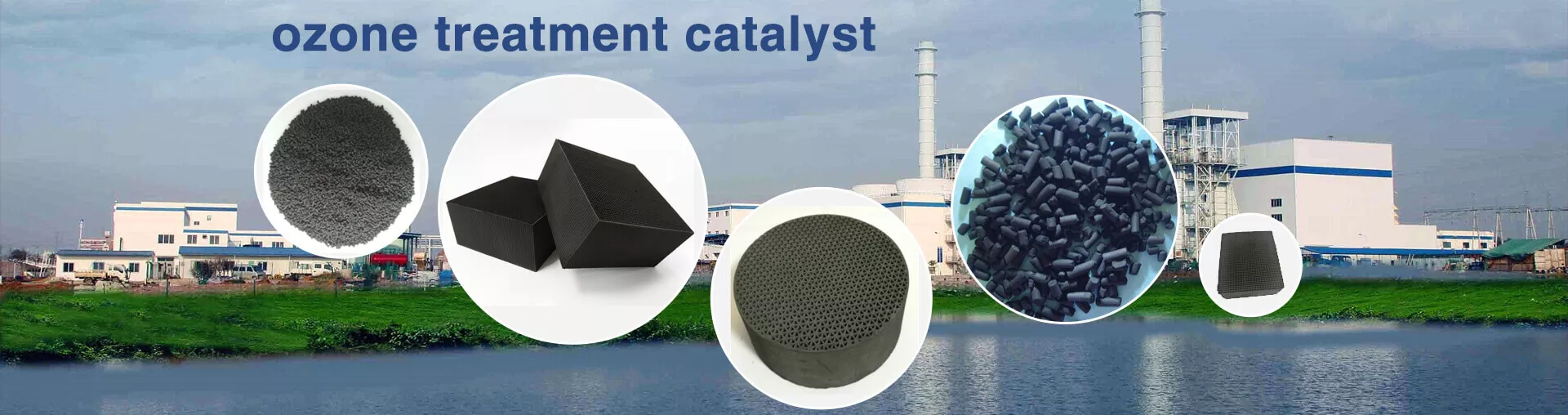
Optimization of material design: Modern research aims to create richer and more stable oxygen vacancies and enhance the synergistic effect between active components by precisely controlling the copper-manganese ratio, preparation methods (such as hydrothermal method, co-precipitation method), and introducing a third metal (such as cerium, iron). This directly improves the intrinsic activity of the catalyst and its selective stability in complex environments. For example, using carbon nanotubes or honeycomb ceramics as carriers can not only increase the effective contact area but also prevent the aggregation and deactivation of active components.
Precise control of reaction conditions: In the application system, it is necessary to scientifically calculate and ensure sufficient catalyst loading and a reasonable space velocity (gas flow rate/catalyst volume ratio) based on the inlet ozone concentration and airflow rate, providing sufficient contact time for the reaction. Simultaneously, appropriate pretreatment of the gas entering the catalytic unit (such as dust removal and dehumidification) can protect the catalyst surface from "poisoning" or blockage, maintaining its long-term catalytic activity.
System monitoring and maintenance: In critical applications, installing an outlet ozone concentration monitoring sensor is a necessary safety measure. It can reflect the degradation of catalyst performance in real time, prompting timely maintenance or replacement. For some regenerable catalysts, regular thermal regeneration treatment can remove adsorbed poisons from the surface, restore the number of oxygen vacancies, and extend their service life.
In summary, a high-performance, process-matched copper-manganese ozone decomposition catalyst itself does not directly produce harmful chemical byproducts. The core of its safety lies in the lasting stability of its catalytic activity and selectivity, which is largely determined by the density and stability of oxygen vacancies. Potential risks arise from indirect oxidation reactions caused by catalyst performance degradation, or extreme physical wear. By "empowering" it through advanced materials science and "safeguarding" it with reasonable system engineering design, we can fully trust and safely utilize this efficient "molecular scissor" for ozone decomposition, effectively mitigating all potential risks while enjoying its benefits.
 ∷
∷

 minstrong