How do ozone decomposition catalysts help reduce indoor air pollution?
In modern urban life, we spend approximately 90% of our time indoors. However, few people realize that, in addition to pollutants such as formaldehyde and PM2.5, ozone (O₃) has also become a significant source of indoor air pollution. Office equipment, air purifiers, and UV disinfection devices can all produce ozone, and outdoor ozone can also enter indoors through ventilation. Long-term exposure to low concentrations of ozone can lead to respiratory irritation, decreased lung function, and even exacerbate asthma and other diseases. How can this invisible threat be effectively addressed? Ozone decomposition catalysts are gradually becoming a key technology for indoor air purification.
Catalytic Decomposition: The Transformation from Harmful to Harmless
The core working principle of
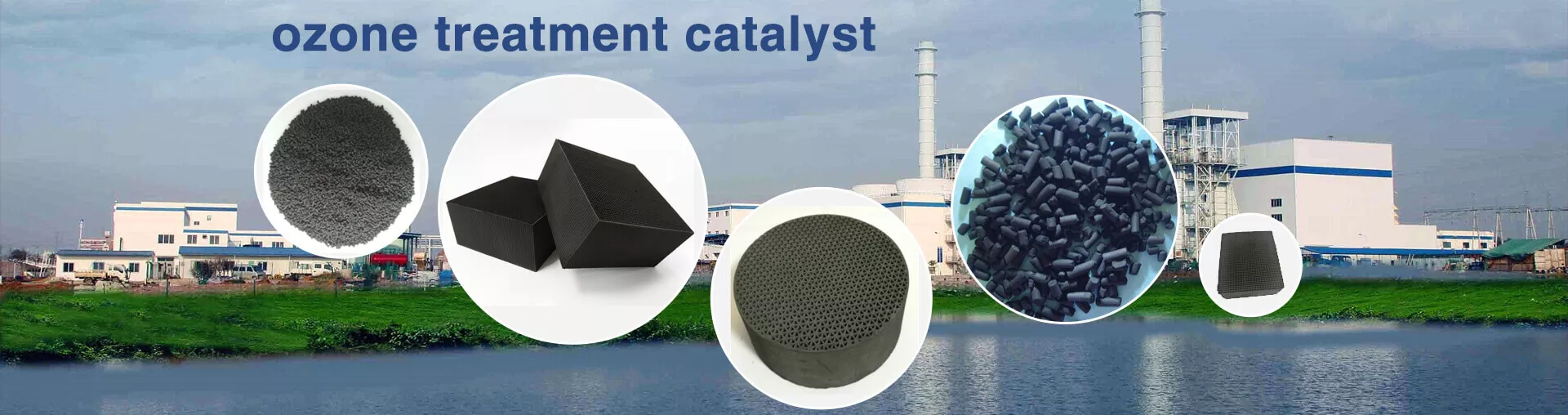
ozone decomposition catalysts is catalytic decomposition. These catalysts typically consist of a porous support (such as activated carbon, molecular sieves, alumina, etc.) and active components (such as transition metal oxides like manganese, iron, and copper). When air containing ozone flows over the catalyst surface, the catalyst provides active sites, significantly reducing the activation energy required for ozone decomposition, allowing ozone to rapidly decompose into non-toxic oxygen at room temperature.
Unlike traditional activated carbon adsorption, catalysts do not become saturated and can operate continuously for a long time; compared to UV light decomposition technology, catalytic decomposition does not require additional energy input, avoiding secondary pollution. This "instant transformation" characteristic makes catalysts an efficient, energy-saving, and safe ozone removal solution.
Application Practices: Comprehensive Protection of Respiratory Health
In practical applications, ozone decomposition catalysts have been integrated into various indoor air purification scenarios:
Integration with central air conditioning and fresh air systems: The catalyst is made into a filter or module and installed in the return air duct of the air conditioning or fresh air system to purify the air entering the room in real time, effectively blocking outdoor ozone pollution.
Embedded in office and home appliances: Modern printers, copiers, air purifiers, and other appliances have begun to incorporate small catalyst modules to reduce ozone emissions from the equipment itself at the source.
Customized solutions for specific locations: In special places with high ozone concentrations, such as hospitals, laboratories, and electronics factories, specialized catalytic purification devices can be equipped to achieve targeted and efficient removal. Innovation and Integration in Building Materials: New environmentally friendly coatings and decorative materials are beginning to incorporate nanoscale catalysts, allowing walls themselves to decompose ozone and achieve "passive" air purification.
Value Extension: Comprehensive Benefits Beyond Single Pollutants
It is worth noting that advanced ozone decomposition catalysts often possess multiple synergistic effects. Many catalysts can not only decompose ozone but also simultaneously catalyze the oxidative decomposition of organic pollutants such as formaldehyde and benzene. This "multi-functional" characteristic makes them an economical choice for comprehensive indoor pollution control.
Furthermore, catalyst technology is developing towards low-temperature and high-efficiency performance. Recent research shows that some manganese-based catalysts can achieve an ozone removal rate of over 95% at room temperature, and even maintain good performance in low-temperature environments during winter, solving the problem of decreased activity of traditional catalysts under low-temperature conditions.
A Healthy Future: The Outlook for Catalytic Technology
As public awareness of indoor air quality increases, ozone decomposition catalysts are moving from industrial applications to daily life. In the future, we can expect to see more intelligent catalytic purification systems—systems that can monitor ozone concentration in real time and automatically adjust their operating mode, or combine solar energy with catalytic technology to create zero-energy air purification solutions.
More importantly, this technology reminds us that a healthy indoor environment requires not only the removal of pollutants but also the prevention of pollutant formation. Choosing appliances with low ozone emissions, rationally planning indoor ventilation, and combining catalytic purification technology are essential to creating a truly "safe breathing zone."
In today's world, where air pollution is receiving increasing attention, seemingly small technological innovations like ozone decomposition catalysts actually carry the important mission of protecting public health. They act like silent scavengers, quietly transforming harmful ozone into life-sustaining oxygen, making every breath safer.
 ∷
∷

 minstrong