How are Ozone Decomposition Catalysts Applied in Industrial Waste Gas Treatment?
The gears of modern industry are turning at a rapid pace, but they leave behind an invisible yet harmful "trail"—mixed waste gases containing ozone and volatile organic compounds (VOCs). Traditional treatment methods often face efficiency bottlenecks, but a technology as precise and efficient as molecular scissors—ozone decomposition catalysts—is becoming the key to solving this problem.

The core function of ozone decomposition catalysts is to significantly reduce the activation energy of the reaction, allowing oxidation reactions that would otherwise require high temperatures and pressures to be completed rapidly under mild conditions.
When waste gas containing ozone (O₃) and VOCs passes through the catalyst bed, the catalyst surface first efficiently catalyzes the decomposition of ozone, producing highly reactive oxygen atoms (O*) or hydroxyl radicals (·OH) with strong oxidizing capabilities. These "molecular scissors" then undergo a chain reaction with VOCs molecules, precisely "cutting" them apart, ultimately mineralizing them into harmless carbon dioxide and water. The entire process is efficient, energy-saving, and avoids the generation of harmful byproducts.
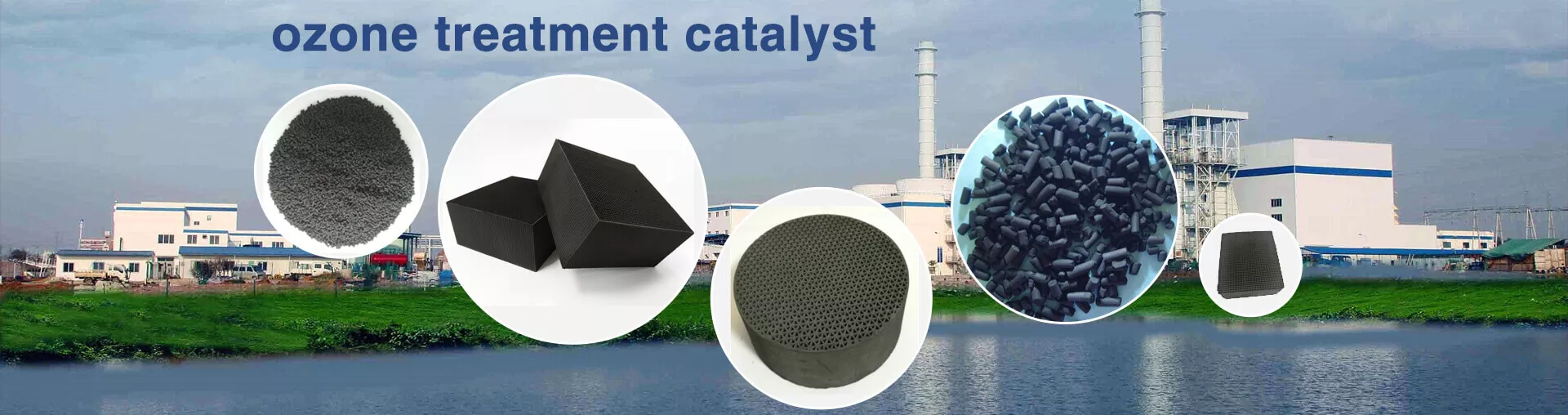
The performance of the catalyst largely depends on its material "formula":
Precious metal catalysts: such as palladium and platinum, have high activity and good stability, and were the mainstream in early applications, but they are expensive.
Transition metal oxide catalysts: represented by oxides of manganese (Mn), cobalt (Co), and copper (Cu). Especially manganese-based catalysts, due to their excellent ozone decomposition performance, abundant reserves, and lower cost, have become the focus of current research and application. Through nanostructure design and compounding, their activity has approached that of precious metals.

Composite and supported catalysts: Loading active components onto carriers such as alumina, molecular sieves, or activated carbon can greatly increase the reaction contact area, improving dispersion and stability. For example, MnOx/AC (manganese oxide supported on activated carbon) materials combine adsorption and catalytic functions, showing significant synergistic effects.
This technology has been deeply integrated into several key industrial fields, specifically addressing emission problems:
Semiconductor and electronics industry: Ozone is widely used in chip photolithography and cleaning processes. Installing an ozone decomposition catalytic unit allows for the immediate online decomposition of ozone in exhaust gases, protecting the environment and personnel safety, and is a "standard feature" in high-end manufacturing.
Chemical and pharmaceutical industries: For complex and toxic VOCs exhaust gases, the "ozone catalytic advanced oxidation" technology is employed. The system first injects an appropriate amount of ozone, which, under the action of a catalyst, generates a large number of free radicals, thereby non-selectively and thoroughly degrading various difficult-to-treat organic pollutants. The treatment efficiency far exceeds traditional single methods.
Automotive and furniture coating industries: Spraying workshops produce large volumes of low-concentration VOCs such as benzene and esters. A "adsorption concentration + catalytic oxidation" combined process is used: VOCs in the exhaust gas are first adsorbed and concentrated, then desorbed into a high-concentration, low-volume gas, which is then passed into a catalytic oxidation unit along with ozone for complete destruction, achieving a perfect balance of energy saving and high efficiency.
Wastewater treatment plants and waste disposal sites: Used to treat malodorous gases containing sulfur and nitrogen compounds emitted during the treatment process. While decomposing ozone, the catalyst can also synergistically degrade these malodorous molecules, improving the surrounding environment.
With the advancement of "dual carbon" goals and increasingly stringent environmental standards, ozone decomposition catalyst technology is developing towards lower energy consumption, higher adaptability, and longer lifespan. The development of new low-temperature catalysts, anti-poisoning catalysts, and intelligent catalytic reaction systems will make this "molecular scissor" more precise and powerful, continuously eliminating pollution and protecting the blue sky for the green transformation of industry.
 ∷
∷

 minstrong