Definition of Ozone Decomposition Catalysts
While ozone acts as a protective shield in the Earth's stratosphere, at ground level it becomes a pollutant that harms health and the environment. Ground-level ozone, generated by industrial emissions and vehicle exhaust under sunlight, has become a major challenge in urban air pollution control. Ozone decomposition catalysts, with their precise and efficient characteristics, have become a key technology for eliminating this pollutant.
Catalytic Decomposition Principle: High-Efficiency Conversion from Ozone to Oxygen
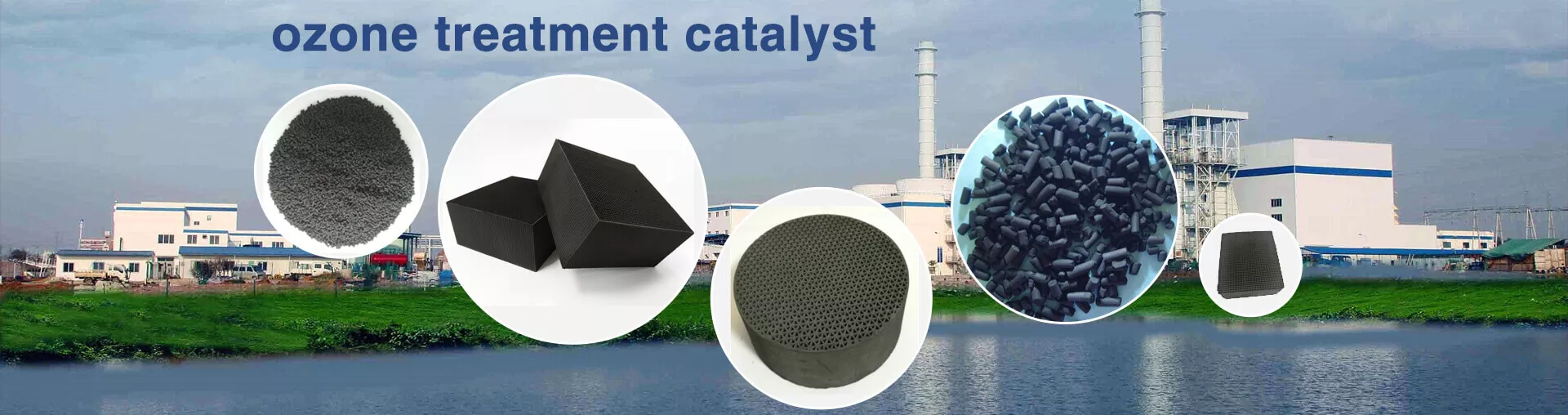
Ozone decomposition catalysts are high-performance composite materials with transition metal oxides (such as manganese dioxide, copper oxide, and cobalt oxide) as the main active components. Their unique surface structure and catalytic active sites can efficiently adsorb ozone molecules (O₃) at room temperature and pressure, promoting the breaking of chemical bonds and rapid recombination into safe oxygen molecules (O₂). This process requires no additional energy input, achieving green elimination of pollutants.
Core Technological Advantages: High Efficiency, Energy Saving, and Long-Lasting
Compared with traditional technologies such as activated carbon adsorption and high-temperature thermal decomposition, ozone decomposition catalysts demonstrate multiple superior performances:
High Efficiency at Room Temperature: Maintains a decomposition efficiency of over 95% at room temperature, requiring no preheating or external energy, significantly reducing operating energy consumption.
Excellent Selectivity: Exhibits excellent decomposition ability for low-concentration ozone (ppb to ppm levels), while being unaffected by common moisture and carbon dioxide in the air.
Long Lifespan: The special carrier and active component design ensure the catalyst's excellent mechanical strength and chemical stability, with a service life of several years under normal operating conditions.
Safe and Environmentally Friendly: The reaction product is only oxygen, with no secondary pollution, and the process is quiet and noiseless.
Industrial-Grade Solutions: Protecting Production and Emissions
This technology has been deeply integrated into pollution control systems in various industrial fields:
Ozone Generator Application Industries: Used to treat the exhaust gas from ozone generators in semiconductor cleaning, drinking water sterilization, and wastewater treatment, ensuring workplace safety.
Indoor Air Purification Industry: As a core filter material, it is integrated into central air conditioning and fresh air systems to continuously decompose ozone generated by equipment in enclosed spaces such as offices, hospitals, and laboratories. Transportation Sector: Applied in air circulation systems for ventilation-restricted areas such as subway tunnels, underground parking lots, and aircraft cabins, effectively controlling ozone accumulation caused by electrical equipment and high temperatures.
Specific Manufacturing Industries: Eliminating ozone pollution generated during processes such as printing, welding, and high-voltage discharge.
Integrated into Daily Life: An Invisible Health Guardian
Ozone decomposition catalysts are serving daily life in various forms:
Core of Household Appliances: Becoming a core module in high-end air purifiers and air conditioners, continuously decomposing trace amounts of ozone released indoors by devices such as UV disinfection lamps and laser printers.
Personal Protective Equipment: Integrated into professional protective masks and portable respirators, providing an extra layer of protection against ozone for sensitive individuals.
Automotive Interior Purification: Some in-car air purification devices utilize this technology to improve air quality in car cabins, which may deteriorate under high temperatures or strong sunlight.
Innovation Driving the Future
As an important branch of environmental catalysis, ozone decomposition catalyst technology is continuously developing towards higher activity, wider temperature and humidity adaptation range, and lower cost. Nanotechnology, carrier innovation, and composite formula optimization will continuously expand its application boundaries.
Ozone decomposition catalysts are a practical and effective solution to ground-level ozone pollution. We focus on material research and process innovation in this field, committed to providing high-performance, stable, and reliable catalytic products. Through continuous technological iteration, we are dedicated to providing core material support for creating a cleaner air environment and protecting public respiratory health.
 ∷
∷

 minstrong