Welcome: Hunan Minstrong Technology Co., Ltd
Language:
 ∷
∷

∷
∷
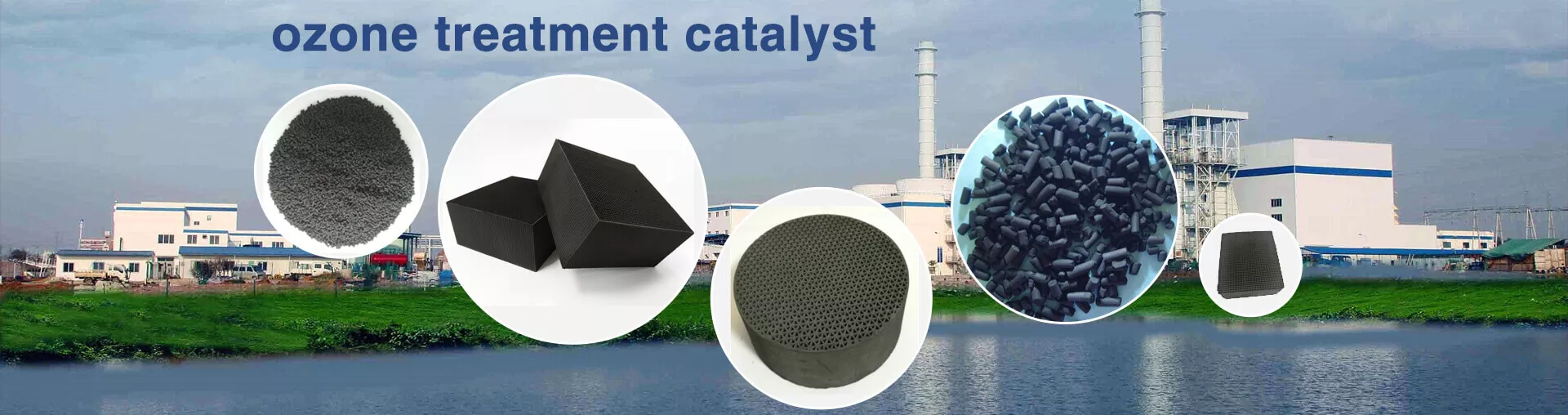
Ozone decomposition catalyst are able to efficiently decompose ozone primarily because they lower the reaction activation energy, promoting the rapid conversion of ozone (O₃) into oxygen (O₂) at room temperature and pressure. This process involves several key steps in surface catalytic reactions, which will be explained below from the perspectives of principle, material mechanism, and practical application.

I. Chemical Characteristics of Ozone and the Need for Decomposition
Ozone is a strong oxidizing gas composed of three oxygen atoms, with an unstable molecular structure (bond angle 116.8°, possessing a dipole moment). At room temperature, ozone slowly decomposes spontaneously. Although this reaction is exothermic, it requires overcoming a high activation energy (approximately 105 kJ/mol), resulting in a slow natural decomposition rate. In industrial or indoor environments, excessive ozone concentrations can damage the human respiratory system and materials, requiring the use of catalysts for rapid removal.
II. Core Mechanism of Catalytic Decomposition
Catalysts provide surface active sites, altering the reaction pathway of ozone decomposition. The specific process usually consists of four steps:Variable-valence metal ions in the catalyst (such as Mn³⁺/Mn⁴⁺, Ce³⁺/Ce⁴⁺) undergo redox cycles, enabling electron transfer and regeneration, thus maintaining catalytic activity. For example, in manganese oxides, Mn³⁺ provides electrons to reduce ozone and is converted to Mn⁴⁺, which then obtains electrons from ozone or intermediates to be restored.
III. Key Catalyst Materials and Their Functions
High-efficiency ozone decomposition catalysts often possess the following characteristics:
IV. Influencing Factors and Challenges
Humidity effects: Water molecules compete with ozone for adsorption sites, which may lead to temporary deactivation of the catalyst. However, some catalysts (such as MnO₂–CeO₂ composites) can maintain stability under humid conditions through hydrophobic modification or hydroxyl-promoting mechanisms.
V. Applications and Significance
Ozone decomposition catalysts have been widely used in air purification, medical devices, printing workshops, and aircraft cabins, achieving low-energy consumption and pollution-free ozone elimination. Their design not only deepens the understanding of gas-solid phase catalytic mechanisms but also provides insights for the catalytic conversion of other atmospheric pollutants (such as VOCs). In summary, ozone decomposition catalysts transform the high-energy barrier homogeneous decomposition reaction into a low-energy barrier heterogeneous reaction through surface electron transfer and oxygen species recombination, demonstrating the precise control capabilities of catalytic science in environmental remediation. Future research will focus on improving the resistance and lifespan of these materials in complex environments, further expanding their applications in dynamic atmospheric purification.Contact: Candyly
Phone: +8618142685208
Tel: 0086-0731-84115166
Email: sales@minstrong.com
Add: E2 Building, Kinglory Science And Technology Industrial Park, Wangcheng Area, Changsha, Hunan, China.
 minstrong