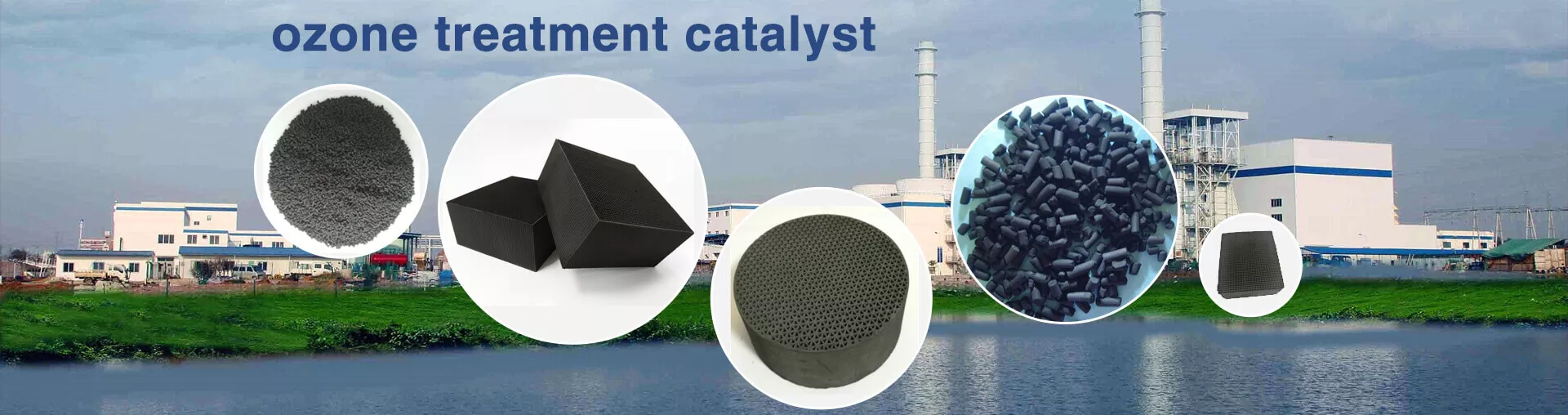
Ozone decomposition catalysts effectively catalyze ozone generated by corona.
In industrial production and power systems, ozone produced by corona phenomenon is often ignored, but it has multiple hidden hazards. When the ozone concentration in the environment exceeds 0.1ppm, it will strongly irritate the human respiratory mucosa, causing symptoms such as coughing and chest tightness. Long-term exposure may lead to pulmonary fibrosis; for plants, ozone will destroy the stomatal structure of leaves, inhibit photosynthesis, and cause crop yield reduction; at the same time, high concentrations of ozone will also accelerate the aging of materials such as rubber and plastic, shorten the service life of equipment, and bring hidden losses to industrial production.
The process of corona producing ozone is closely related to gas ionization. In high-voltage transmission lines, electrostatic precipitators and other equipment, the electric field strength around the electrodes is extremely high. When the electric field strength exceeds the breakdown field strength of the air, it will cause local ionization of the gas and form a corona discharge. At this time, the oxygen molecules in the air decompose under the impact of high-energy electrons to produce a large number of oxygen atoms. The oxygen atoms combine with the undecomposed oxygen molecules to generate ozone (O₃). This process is more significant in environments with low humidity and poor air circulation, resulting in the continuous accumulation of ozone in local spaces.
In response to the ozone problem generated by corona, ozone decomposition catalysts containing copper and manganese components have shown excellent purification capabilities. The core of this type of catalyst lies in the synergistic effect of copper and manganese oxides, in which the composite structure formed by copper oxide (CuO) and manganese dioxide (MnO₂) provides abundant active sites for ozone decomposition. When ozone molecules contact the surface of the catalyst, they are first adsorbed in the lattice gaps of copper and manganese oxides. Driven by the redox reaction, the chemical bonds of the ozone molecules break and gradually decompose into harmless oxygen (O₂).
From the perspective of catalytic mechanism, the synergistic effect of copper and manganese components greatly improves the reaction efficiency. As the main active component, manganese dioxide can transfer electrons through valence changes to promote the decomposition of ozone molecules; while the introduction of copper ions optimizes the electronic structure of the catalyst, increases the number of surface oxygen vacancies, and accelerates the transfer rate of oxygen atoms. This synergistic effect enables the catalyst to increase the ozone decomposition efficiency to more than 95% at room temperature, and can adapt to the characteristics of large fluctuations in ozone concentration in the corona discharge environment.
In practical applications, the ozone decomposition catalyst produced by
Minstrong is evenly distributed on the surface of the carrier to form a stable crystal structure, which can maintain activity even in an environment with long-term exposure to high concentrations of ozone and dust. For example, after a certain power system installed such a catalyst at the outlet of the electrostatic precipitator, the ozone concentration dropped from 0.3ppm to below 0.02ppm, which not only met the environmental protection standards, but also extended the maintenance cycle of subsequent equipment.
In summary, the ozone decomposition catalyst with copper and manganese components solves the ozone pollution problem caused by corona discharge from the source by precisely targeting the ozone decomposition reaction, providing reliable protection for the safety and health of the industrial environment.
 ∷
∷

 minstrong