1,103 Application and Mechanistic Analysis of Ozone Decomposition Catalysts in the Treatment of Tail Gas from Textile Dyeing and Printing Wastewater
Ozone decomposition catalysts constitute an indispensable tail gas abatement unit within ozone oxidation systems for textile dyeing and printing wastewater. Their core function lies in the efficient decomposition of residual ozone into oxygen, thereby eliminating safety hazards and ensuring compliance with emission standards. Given a rational design of reactor structures and operating parameters, this technology can achieve high conversion efficiency, low operational resistance, and excellent long-term stability, serving as a critical safeguard for the engineering application of ozone-based processes.
 The Necessity of Ozone Tail Gas Abatement
During the advanced ozone oxidation process, a portion of the ozone remains unreacted and escapes in the form of tail gas. Ozone possesses strong oxidizing properties, posing potential hazards to both the human respiratory system and equipment materials; moreover, its direct discharge fails to meet environmental emission standards. Consequently, the installation of a tail gas decomposition device downstream of the ozone reaction system is a necessary measure to ensure the safe operation of the entire system.
Basic Principles of Ozone Decomposition Catalysts
Ozone decomposition catalysts accelerate the cleavage of ozone molecules—converting them into stable oxygen—through active sites located on their surface. This process typically requires no external energy input and is classified as a spontaneous catalytic reaction. The efficacy of the catalyst hinges upon its surface structure and the distribution of its active centers, factors that directly determine the rate and efficiency of ozone decomposition. **Factors Influencing the Catalytic Decomposition Process**
The effectiveness of ozone tail gas decomposition is influenced by a variety of factors:
The Necessity of Ozone Tail Gas Abatement
During the advanced ozone oxidation process, a portion of the ozone remains unreacted and escapes in the form of tail gas. Ozone possesses strong oxidizing properties, posing potential hazards to both the human respiratory system and equipment materials; moreover, its direct discharge fails to meet environmental emission standards. Consequently, the installation of a tail gas decomposition device downstream of the ozone reaction system is a necessary measure to ensure the safe operation of the entire system.
Basic Principles of Ozone Decomposition Catalysts
Ozone decomposition catalysts accelerate the cleavage of ozone molecules—converting them into stable oxygen—through active sites located on their surface. This process typically requires no external energy input and is classified as a spontaneous catalytic reaction. The efficacy of the catalyst hinges upon its surface structure and the distribution of its active centers, factors that directly determine the rate and efficiency of ozone decomposition. **Factors Influencing the Catalytic Decomposition Process**
The effectiveness of ozone tail gas decomposition is influenced by a variety of factors:
-
Ozone Concentration:Higher concentrations impose stricter requirements on catalyst activity.
-
Gas Humidity:Moderate humidity facilitates the reaction, whereas excessive humidity may compromise catalyst stability.
-
Gas Flow Rate: An excessively high flow rate reduces contact time, thereby impairing decomposition efficiency.
-
Catalyst Structure:The specific surface area and pore structure directly determine the reaction performance.
In engineering design, these factors must be comprehensively considered to ensure stable system operation.
Engineering Applications and System Integration
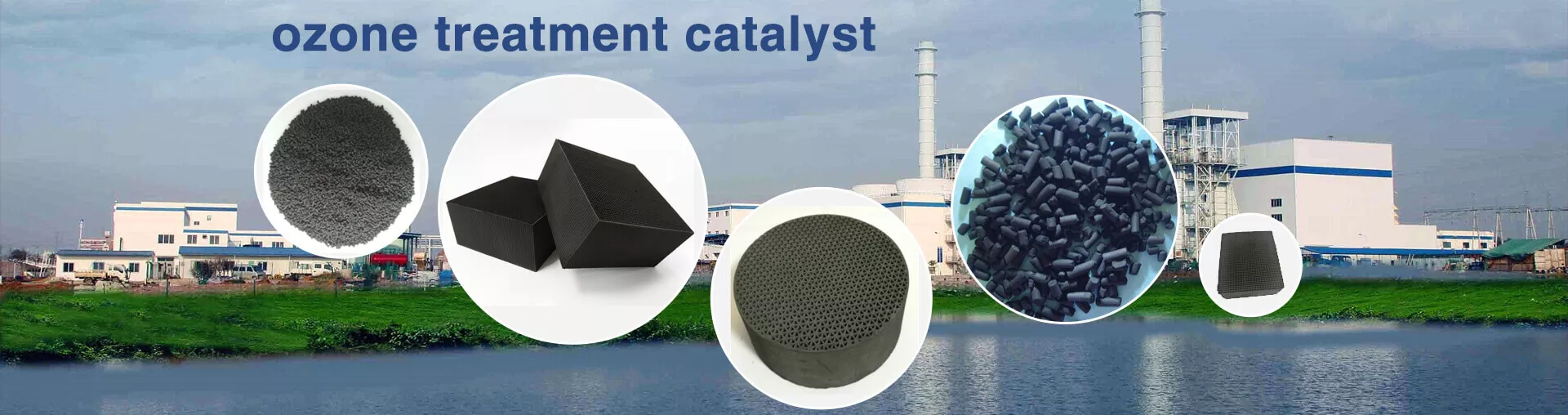
In textile dyeing and printing wastewater treatment systems, ozone decomposition catalysts are typically positioned at the tail gas outlet of the ozone reaction tower, utilizing either a fixed-bed or packed-tower configuration. As the tail gas passes through the catalytic bed, the ozone undergoes rapid decomposition, thereby enabling harmless discharge. Catalytic materials—exemplified by products such as Minstron—have demonstrated superior decomposition efficiency and stability in practical applications, making them well-suited for continuous-operation scenarios.
Operational Optimization and Key Maintenance Points
To ensure the long-term, high-efficiency operation of the ozone decomposition system, attention should be focused on the following aspects:
-
Regular Monitoring: Periodically monitor changes in catalyst activity to prevent deactivation.
-
Environmental Control: Maintain the temperature and humidity of the tail gas within an appropriate range.
-
Contamination Prevention:*Prevent dust or impurities from clogging the catalytic bed.*Load Adjustment:Adjust the gas residence time in accordance with the operational load.
Through standardized operation and maintenance practices, the service life of the catalyst can be significantly extended, while operational costs are simultaneously reduced.
The core value of ozone decomposition catalysts in textile dyeing and printing wastewater treatment lies in safeguarding the safety and integrity of the ozone-based treatment process. By efficiently decomposing ozone in the tail gas, these catalysts enable effective environmental risk control and ensure compliance with discharge standards; as such, they constitute a critical component in the successful engineering implementation of ozone oxidation technology.
author:kaka
date:2026/4/27
 ∷
∷

 minstrong