Ozone Decomposition Catalysts: Common FAQs
In the context of industrial ozone waste gas treatment, the core value of ozone decomposition catalysts lies in their ability to rapidly convert ozone into oxygen at relatively low temperatures, thereby reducing energy consumption and the risk of secondary pollution. However, in practical applications, factors such as ozone concentration, humidity, dust, organic contaminants, and system architecture can all influence catalyst performance. Most instances of declining ozone removal efficiency do not stem solely from the catalyst material itself, but rather result from mismatches with operating conditions, inadequate pre-treatment design, or improper operational maintenance. Therefore, a thorough understanding of the working principles and typical issues associated with ozone decomposition catalysts is crucial for enhancing overall system stability.
What is an ozone decomposition catalyst, and how does it work?
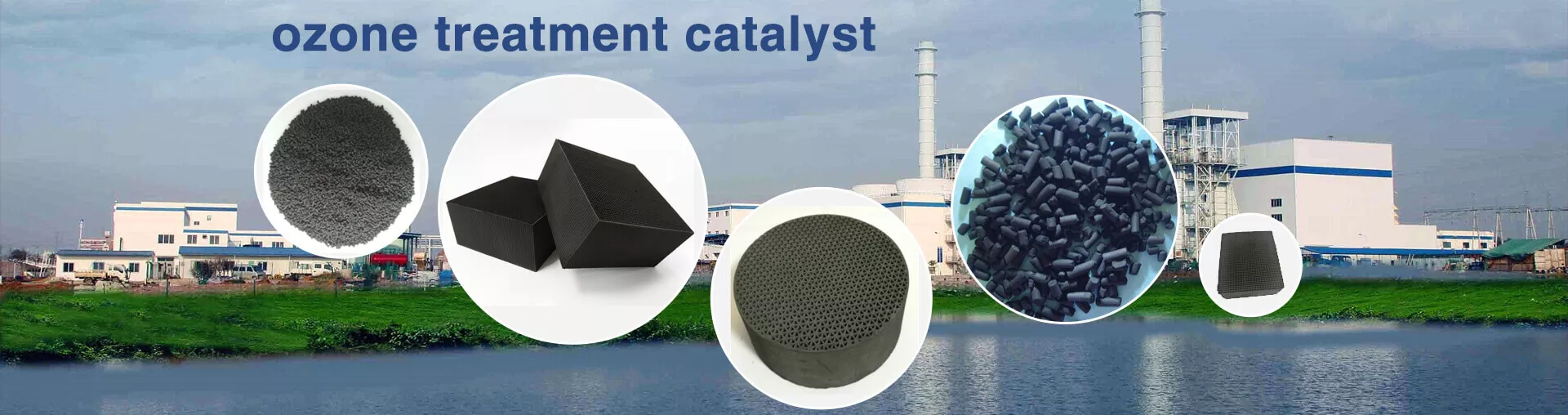
An ozone decomposition catalyst is a type of functional material capable of accelerating the conversion of ozone (O₃) into oxygen (O₂). Common active components found in these catalysts include manganese dioxide (MnO₂) and copper-manganese composite oxides.
The core mechanism involves utilizing active sites on the catalyst's surface to facilitate the adsorption and subsequent decomposition of ozone molecules, thereby lowering the activation energy required for ozone breakdown. Compared to thermal decomposition methods, catalytic decomposition can typically be conducted at ambient or low temperatures, making it a more suitable solution for continuous industrial waste gas treatment systems.
In various industrial settings—such as semiconductor manufacturing, printing, medical sterilization, laser processing, and corona discharge applications—catalytic decomposition technology has emerged as a vital solution for effective ozone control.
Why does ozone decomposition efficiency gradually decline over time? A decline in ozone treatment efficiency is typically associated with the following factors:
Excessive Humidity
In high-humidity environments, the active sites of certain catalysts may become covered by moisture. This prevents ozone from making sufficient contact with the catalytic surface, thereby reducing decomposition efficiency.
Dust Clogging
If the waste gas contains particulate matter, the catalyst's internal pores may become clogged. This leads to increased airflow resistance while simultaneously reducing the effective surface area available for reaction.
Organic Contamination
Certain VOCs (Volatile Organic Compounds) or oil mists may adhere to the catalyst surface, forming a covering layer that hinders the contact between ozone and the active sites.
Long-term Thermal Aging
Under conditions of sustained high temperature, the crystalline structure of the catalyst may undergo changes. This results in a reduction of its specific surface area, ultimately compromising its catalytic activity.
Therefore, industrial systems typically incorporate filtration, dehumidification, or pre-treatment units to enhance catalyst stability.
Does an Ozone Decomposition Catalyst Require Heating?
This depends on the specific operating conditions and the type of catalyst being used.
High-performance ozone decomposition catalysts are typically capable of achieving high conversion rates at ambient temperatures; therefore, in most industrial tail gas treatment applications, no additional heating is required. However, when ozone concentrations are particularly high, humidity levels are elevated, or airflow velocities are rapid, a moderate increase in temperature can help boost reaction efficiency.
For energy-efficient systems, the ability to operate effectively at low—or even room—temperatures is considered one of the key performance indicators for ozone catalysts.
How Can One Determine if a Catalyst Has Failed?
The failure of an ozone decomposition catalyst typically manifests through the following phenomena:
A significant increase in the ozone concentration at the system outlet.
An increase in the system's pressure drop.
An increase in operational energy consumption.
Increased fluctuations in reaction efficiency.
Industrial facilities typically utilize online ozone monitors to continuously track changes in outlet concentrations. If the ozone removal rate shows a persistent decline—and factors related to the equipment or operating conditions have been ruled out—it can be concluded that the catalyst's activity has likely degraded.
It is important to note that some catalysts may not have "completely failed," but rather are experiencing a temporary decline in activity due to contamination. In such cases, their performance may be partially restored through regeneration or cleaning processes.
How to Select the Appropriate Ozone Decomposition Catalyst for an Industrial System?
When selecting an ozone catalyst, particular attention should be paid to the following parameters:
Ozone Concentration Range
Different ozone concentrations correspond to varying requirements for catalytic activity and specific space velocity designs.
Humidity Conditions
High-humidity operating environments necessitate the selection of a catalytic system with superior water resistance. Airflow Volume and Air Velocity
The system's airflow volume determines the dimensions of the catalytic bed and the contact time.
Waste Gas Composition
If the waste gas contains VOCs, acidic gases, or oil mist, the catalyst's resistance to poisoning must be taken into consideration.
Furthermore, the catalyst's physical shape, mechanical strength, and pressure drop characteristics also influence the long-term operational stability of industrial equipment.
Can Ozone Decomposition Catalysts Operate Stably Over the Long Term?
Under conditions involving reasonable operating parameters and comprehensive pre-treatment, ozone decomposition catalysts can typically achieve extended periods of continuous operation.
Actual service life depends not only on the catalyst material itself but is also closely tied to system design, humidity control, pollutant management, and maintenance frequency. In industrial applications, greater emphasis should be placed on long-term stability and resistance to deactivation, rather than focusing solely on initial efficiency.
For continuously operating systems, consistent ozone abatement capability often holds greater engineering value than high conversion rates achieved over short durations.
author:kaka
date:2026/5/8
 ∷
∷

 minstrong