Industry new
Why should ozone generators be used with ozone decomposition catalysts?
Ozone (O₃) is a highly oxidizing gas, making it both a useful tool and a dangerous pollutant. Ozone generators produce this tool, but any production process requires the disposal of byproducts or waste. Using an ozone decomposition catalyst essentially creates a closed-loop safety treatment system for three key reasons:
1. Safety and Health Protection: The First Line of Defense for Protecting Life
This is the primary and most pressing reason. Ozone concentrations exceeding 0.1 ppm (parts per million) begin to irritate and harm the human body.
Direct Health Hazards: Excessive inhalation of ozone can severely irritate the respiratory tract, causing sore throats, coughing, chest tightness, and difficulty breathing. Long-term or high-concentration exposure can permanently damage lung tissue, exacerbate respiratory diseases like asthma, and even lead to neurological problems and vision loss. Direct discharge of ozone-rich exhaust gases in workplaces (such as water plants and food processing plants) poses a serious health threat to workers. Workplace Safety: Installing an ozone decomposition catalyst ensures that all remaining ozone that has not participated in the reaction is completely converted into harmless oxygen before being released into the workplace. This is a fundamental labor protection measure in modern industrial production and complies with occupational health and safety standards.
2. Environmental Protection and Regulatory Compliance: Fulfilling Social Responsibilities and Legal Obligations
Directly emitting ozone is not only irresponsible but also illegal.
Air Pollution: Ozone is a major component of photochemical smog and a significant air pollutant. It participates in photochemical reactions in the atmosphere, causing damage to the ecological environment and crops.
Strict Laws and Regulations: Environmental protection departments in various countries and regions around the world have extremely strict limits on industrial waste gas emissions. Ozone emission concentrations are closely monitored. Directly emitting high-concentration ozone exhaust without treatment will result in severe penalties. Therefore, the use of an efficient decomposition catalyst is a mandatory prerequisite for the legal installation, operation, and environmental acceptance of an ozone generator system.
3. Equipment Protection and Process Stability: Safeguarding Investment and Product Quality
Ozone's strong oxidizing properties are a double-edged sword. While used for disinfection and sterilization, it can also indiscriminately attack the equipment itself.
Equipment Corrosion: Ozone can corrode various metals (such as copper and iron), oxidize rubber seals, degraded plastic piping, and the pins of delicate electronic components. If excess ozone accumulates inside the generator, piping, or reactor, it can significantly shorten the lifespan of the entire system, leading to frequent repairs and replacements and increased operating costs.
Process Interference: In some precision industries, such as wafer cleaning in semiconductor chip manufacturing, ozone must be instantly and thoroughly removed from the chamber after the process is completed. Any residual ozone can react with chemicals or materials in subsequent steps, contaminating the product and reducing yield. Decomposition catalysts ensure a clean and stable process environment.
The Dangers of Untreated Excess Ozone: A Specific List of Risks
Leaving excess ozone untreated can lead to a series of serious consequences:
Health Risks: Acute or chronic respiratory illnesses can occur, leading to mass health incidents and legal disputes.
Environmental Violations: Companies face heavy fines, production suspensions, and reputational damage.
Equipment Failures: Pipeline leaks, sensor failures, and valve seal failures can significantly reduce system reliability.
Production Losses: Huge economic losses due to equipment downtime for maintenance and reduced product yields.
Safety Hazards: High ozone concentrations can accelerate the oxidative degradation of surrounding materials, posing a fire hazard.
Why is manganese dioxide (MnO₂) a mainstream catalyst?
Among many transition metal oxides, manganese dioxide (MnO₂) has become the undisputed leader in ozone decomposition catalysts due to its unparalleled comprehensive advantages:
High catalytic activity: The MnO₂ surface boasts abundant oxygen vacancies and a variety of variable valence states (Mn²⁺, Mn³⁺, and Mn⁴⁺), effectively adsorbing ozone molecules (O₃) and catalyzing their decomposition, ultimately desorbing them as oxygen (O₂). This process can be performed efficiently at room temperature, requiring no additional heating energy, significantly reducing operating costs.
Low cost: Compared to precious metal catalysts such as ruthenium (Ru), platinum (Pt), and palladium (Pd), manganese is an abundant element in the Earth's crust, resulting in extremely low raw material costs, making it ideal for large-scale industrial applications.
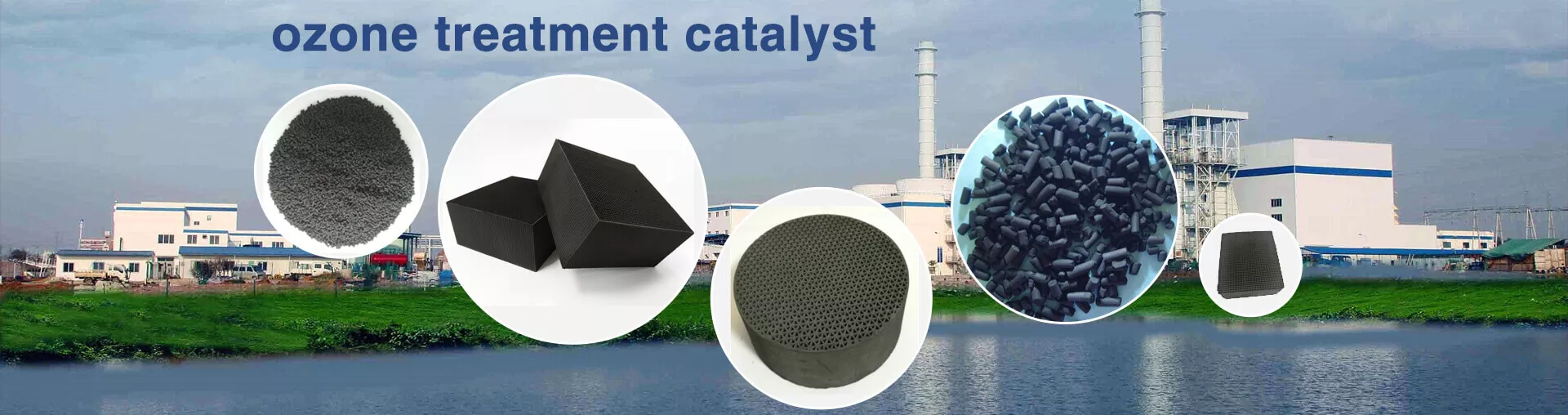
Environmentally friendly and safe: MnO₂ is inherently non-toxic, harmless, and pollution-free, with stable chemical properties. It does not produce any hazardous byproducts during use, conforming to the principles of green chemistry. Mechanical Strength and Stability: In practical applications, MnO₂ is typically loaded onto a honeycomb ceramic or metal alloy carrier, creating a large specific surface area. This structure not only offers low pressure drop, making it suitable for processing large air volumes, but also boasts high mechanical strength, wear resistance, and a long service life.
In short, equipping an ozone generator with a manganese dioxide decomposition catalyst is not an optional option but an essential safety feature. It perfectly resolves the conflict between "utilizing ozone" and "controlling ozone," converting harmful substances into harmless ones, achieving a safe, environmentally friendly, economical, and efficient solution. This demonstrates both the social responsibility of modern industry and the maturity and sophistication of its technical solutions. The design of any ozone application system must adhere to the principle of "who produces, who is responsible for treatment," establishing a complete closed loop from generation to elimination.
 ∷
∷

 minstrong