What is the catalyst for ozone decomposition?
In our efforts to improve indoor and outdoor air quality, ozone (O₃), a typical secondary pollutant, is receiving increasing attention due to its harmful effects. It is not only a major component of photochemical smog but also strongly irritates the human respiratory tract and damages equipment components. How to safely and efficiently remove harmful ozone from the environment has become a significant technological challenge.
What is an ozone decomposition catalyst?

An
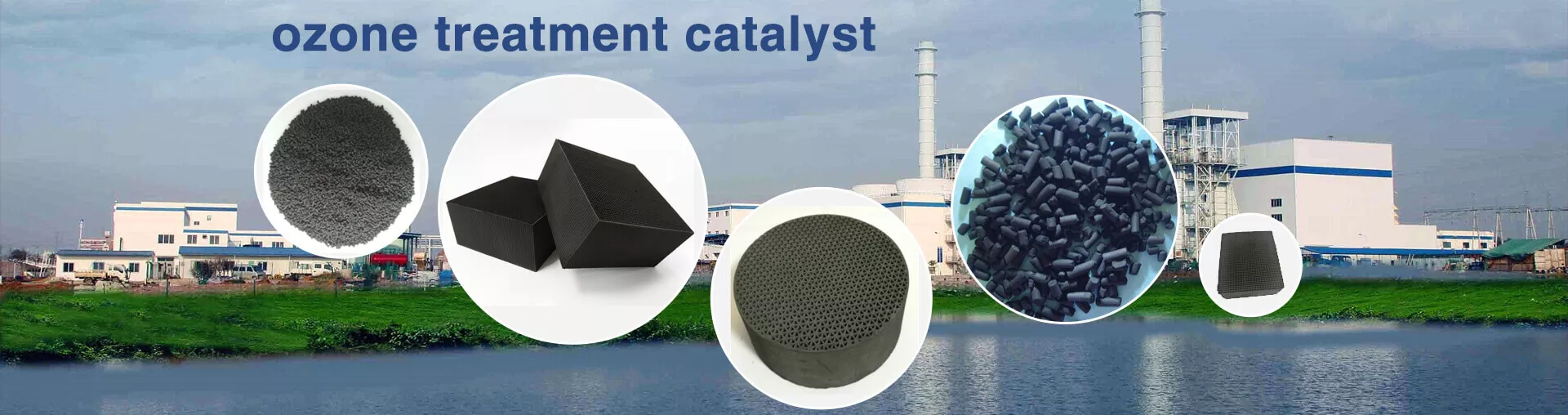
ozone decomposition catalyst is a special material that accelerates the decomposition of ozone into harmless oxygen at room temperature or low temperatures. It does not consume itself, but instead significantly reduces the energy barrier required for the reaction by providing active sites, thus achieving rapid and continuous ozone purification. The core chemical reaction can be simplified to: 2O₃ → 3O₂.
MINSTRONG-B ozone decomposition catalyst is a copper-manganese oxide composite catalyst prepared using a special process. The selection of copper and manganese as core materials stems from their excellent synergistic effect in catalytic science:
High efficiency of manganese (Mn): Manganese dioxide (MnO₂) itself is recognized as one of the best ozone decomposition materials, and its crystal structure can efficiently adsorb and break the chemical bonds in ozone molecules.
Synergistic enhancement of copper (Cu): The introduction of copper oxide (CuO) is not simply a physical mixture. It forms a unique composite structure with manganese oxide, resulting in a "1+1>2" synergistic effect. This structure significantly increases the number of active sites on the catalyst, improves the adsorption capacity for ozone, and enhances the overall stability and resistance to humidity interference of the catalyst.
Comparison with traditional thermal decomposition methods: The overwhelming advantages of the catalytic method
Before the widespread adoption of catalytic technology, industrial treatment of high-concentration ozone typically used thermal decomposition, which involves heating the exhaust gas to above 300℃ to decompose ozone at high temperatures. However, compared with the catalytic method represented by MINSLITE-B, thermal decomposition has many insurmountable disadvantages. Traditional thermal decomposition method: Requires high temperatures above 300℃, resulting in extremely high energy consumption and requiring continuous heating. The equipment is complex, requiring heating furnaces, insulation systems, etc., and poses risks of high-temperature burns and fires. It is limited to large-scale industrial exhaust gas treatment.
Catalytic method: Works efficiently at room temperature (0-40℃), requiring no external energy to drive the decomposition reaction. It can be directly filled into filters or reaction beds, is safe and reliable, and poses no secondary risks. It has a wide range of applications, from industrial exhaust gas treatment to household air purifiers.
The copper-manganese type ozone decomposition catalyst represents a practical achievement in the field of environmental catalysis. With its scientific material design, efficient and energy-saving operation, and wide range of applications, it provides us with a "golden key" to eliminate harmful ozone. As people increasingly value healthy living and environmental safety, this technology will undoubtedly play an increasingly important role in the blueprint for clean air.
 ∷
∷

 minstrong