Industry new
What is ozone purification?
Ozone purification is a technology that utilizes the powerful oxidizing properties of ozone (O₃) molecules to decompose pollutants, kill microorganisms, and eliminate odors. Its core principle lies in the fact that ozone molecules are extremely unstable and easily decompose into a stable oxygen molecule (O₂) and a single atomic oxygen (O) with extremely high energy. This newly formed oxygen atom has extremely strong oxidizing power and can quickly initiate a chain reaction with bacteria, viruses, mold, formaldehyde, benzene, and various odorous molecules (such as smoke and spoiled food), destroying their molecular structures and ultimately breaking them down into harmless substances such as carbon dioxide and water. This eliminates pollution at its source rather than masking it.
This powerful ability makes ozone purification an irreplaceable role in industrial and professional fields. It is widely used for water disinfection in sewage treatment plants, sterilization of workshops in food processing plants, sterilization of sterile rooms in pharmaceutical companies, and terminal disinfection of medical equipment and wards in hospitals. In these applications, ozone demonstrates its immense value with its broad spectrum, high efficiency, and zero residual residue.
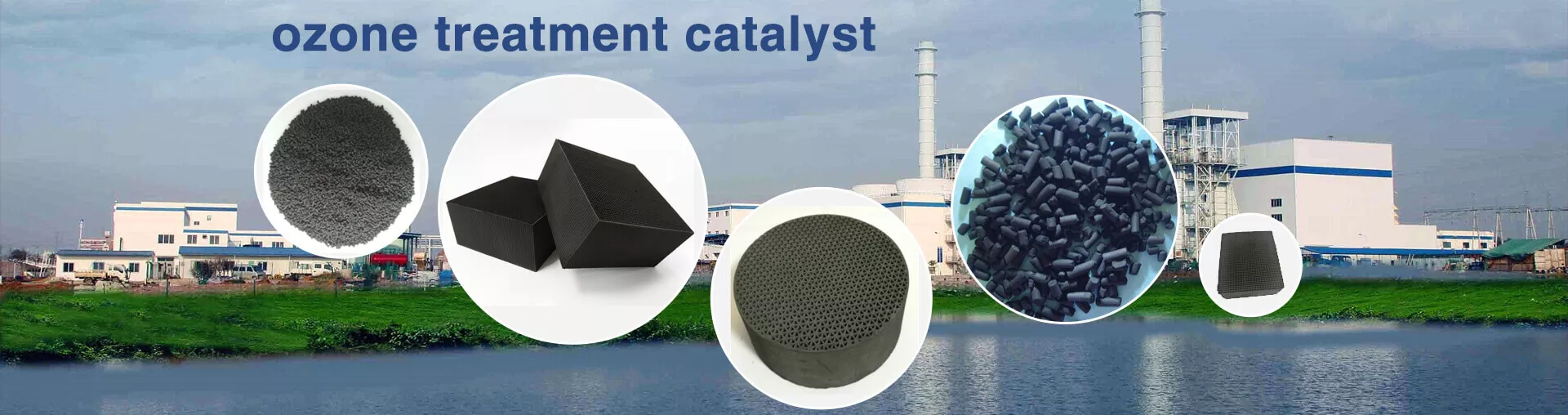
However, due to its strong oxidizing properties, ozone can pose serious health risks if it remains in the environment after completing its purification mission. It can severely irritate the respiratory tract, damage lung tissue, and exacerbate conditions like asthma. Therefore, in industrial applications, the decomposition and treatment of ozone exhaust gas is a crucial and indispensable follow-up step. At the exhaust end of large-scale ozone purification systems (such as those in water plants and food processing plants), ozone decomposition catalysts (usually based on manganese dioxide (MnO₂)) are typically installed. These catalysts significantly reduce the activation energy of ozone decomposition, allowing any remaining ozone to be instantly and efficiently decomposed into harmless oxygen as it passes through the catalytic bed. This ensures that the gas discharged into the atmosphere or workplace is safe and completely eliminates the risk of ozone leakage. This step is a key indicator of the comprehensiveness, environmental friendliness, and safety of an industrial ozone system.
In contrast, ozone purification in the home is a controversial topic. The safety of some commercially available air purifiers or small ozone generators with "ozone modes" relies heavily on proper user operation. These devices must strictly adhere to the principle of "human-machine separation," meaning they operate in a closed, unoccupied space for a short period of time, followed by a long period of thorough ventilation before re-entry. However, since household devices are rarely equipped with expensive catalytic decomposition systems, and it is difficult for ordinary users to control safe concentrations, the potential risks are significant.
In short, ozone purification is a powerful professional technology that must be accompanied by safety measures. In the industrial sector, it is combined with ozone decomposition catalysts to form an efficient and environmentally friendly closed-loop system. However, for ordinary households, it is more like a double-edged sword, and improper use can be harmful.
 ∷
∷

 minstrong