How to ensure stable operation of ozone depletion catalysts under high concentration conditions?
The key to ensuring stable operation of ozone depletion catalysts under high concentration conditions lies in controlling temperature, space velocity, impurities, humidity, and regular regeneration. Optimizing the entire process from selection, pretreatment, operation, and maintenance can significantly extend lifespan and ensure efficiency.
I. Prioritize High-Concentration-Tolerance Catalysts
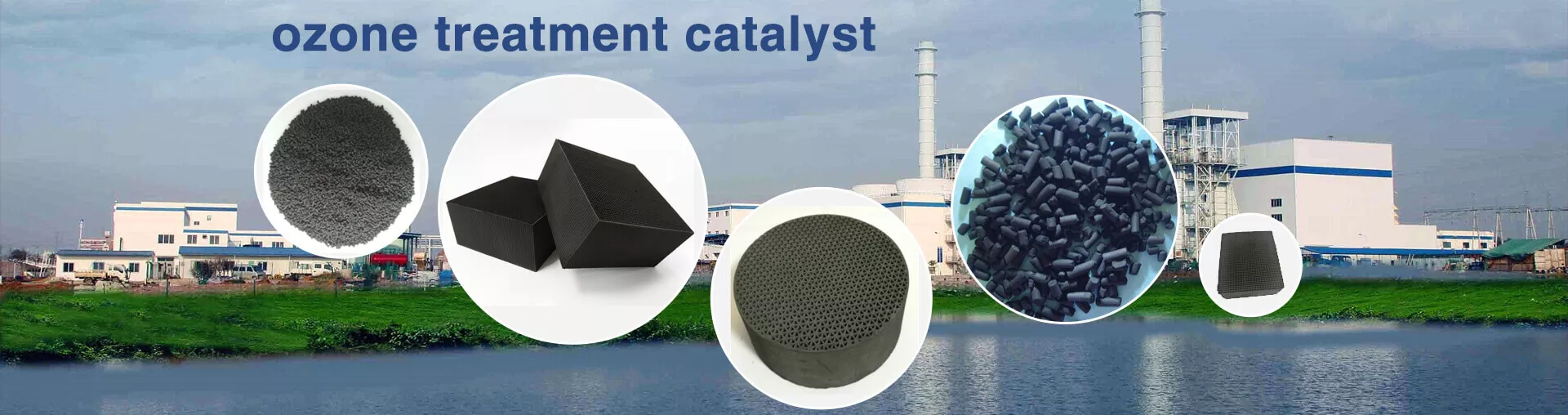
Prioritize catalysts with high specific surface area, strong thermal stability, and resistance to poisoning, such as Mn-based, Ag-Mn composite, and rare-earth-doped catalysts. Use pure silicon Beta zeolite, γ-Al₂O₃, or honeycomb ceramics as supports, avoiding activated carbon supports (easily combustible and prone to pulverization). For high-concentration conditions (≥500ppm), select granular/honeycomb catalysts, controlling the space velocity at 5000–20000 h⁻¹, with lower space velocities at higher concentrations to ensure sufficient contact time and prevent localized overheating.
II. Strict Pretreatment to Prevent Poisoning and Clogging
High concentrations of ozone easily react with impurities to generate toxic substances, necessitating deep pretreatment:
Desulfurization, Halogen Removal, and Heavy Metal Removal: Waste gas/wastewater undergoes desulfurization, dechlorination, and filtration to remove H₂S, halogenated organic compounds, Pb, P, Si, etc., preventing permanent poisoning of active sites and pore clogging.
Dehumidification and Gas-Liquid Separation: In high-humidity conditions, a gas-liquid separator and preheating (40–90℃) are used to reduce water competition for adsorption; wastewater treatment controls suspended solids to prevent clogging of the catalyst bed.
Pre-oxidation/Adsorption: Ozone pre-oxidation or activated carbon adsorption removes large molecular organic matter, reducing the risk of carbon buildup.

III. Precise Temperature Control to Suppress Sintering and Thermal Deactivation
High-concentration ozone decomposition is highly exothermic, easily leading to catalyst sintering and active component agglomeration.
Control reaction temperature: Gas phase 40–90℃, liquid phase 15–35℃. Implement temperature control, heat exchange, and emergency cooling systems; strictly prohibit overheating.
Uniform Gas/Water Distribution: Equip the reactor with a distributor to avoid excessively high local concentrations and hot spots, preventing localized overheating and deactivation.
Gradient Loading/Staged Reaction: Use heat-resistant catalysts in high-concentration sections and high-efficiency catalysts in low-concentration sections, with staged temperature control to reduce thermal shock.
IV. Optimized Operating Parameters to Match High-Concentration Conditions
Ozone Dosing and Mixing: Use jetting and micro/nanobubbles to enhance mass transfer in wastewater, improving utilization and reducing residue; control inlet gas concentration fluctuations in the gas phase to avoid shock.
Bed and Backwashing: Control the loading height and flow rate in a fixed bed, and perform periodic backwashing (1–2 times per week) to remove carbon deposits and suspended solids, restoring permeability. pH and Water Quality: Metal-based catalysts control pH to 5–9, and carbon-based catalysts to 3–10, reducing metal leaching and inhibiting anion (HCO₃⁻, Cl⁻) quenching of OH⁻.
V. Regular Regeneration and Maintenance to Restore Activity
Slight Deactivation: Water washing and backwashing remove suspended solids; heating at 180℃ removes water; ozone oxidation removes carbon deposits.
Moderate Poisoning/Carbon Deposits: Acid washing/alkali washing dissolves toxins and oxidizes carbon deposits; calcination at 300–500℃ (4h) restores activity to over 70% of new catalyst.
Monitoring and Replacement: Real-time monitoring of ozone decomposition rate, bed resistance, and outlet concentration; timely regeneration or replacement if resistance exceeds 50% of initial value or efficiency falls below 60% of design value.
VI. Safety and Long-Term Assurance
Explosion-proof and Pressure Relief: Explosion-proof, pressure relief, and oxygen concentration monitoring are provided for high-concentration operations to prevent ozone accumulation and decomposition exothermic risks.
Inert protection: Dilute with nitrogen if necessary to reduce ozone concentration and mitigate thermal effects.
Long-term management: Establish operation logs, regularly analyze the causes of deactivation, optimize pretreatment and regeneration programs, and achieve long-term stable operation. ∷
∷

 minstrong