What is an ozone destruction catalyst?
What is an ozone destruction catalyst?
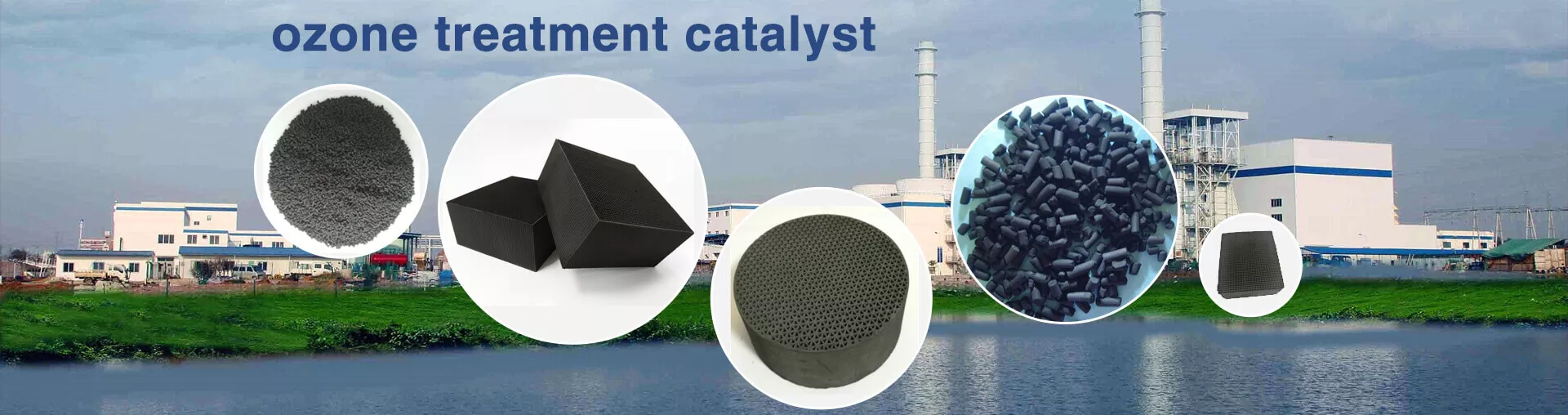
Ozone destruction catalysts are substances that accelerate the decomposition of ozone (O₃) into oxygen (O₂). Their function is to provide an efficient decomposition pathway for ozone molecules at room temperature or low temperatures, rapidly converting them into harmless oxygen. The catalyst itself is not consumed in the reaction and can operate continuously for a long time. This technology is widely used in fields requiring ozone removal.
Why remove ozone?
After ozone is used, a large amount of ozone remains. This residual ozone cannot be directly emitted, otherwise it will damage equipment, harm human health, and damage the environment. Ozone degrades slowly under natural conditions; catalysts are typically used to accelerate its degradation.
Common types of ozone destruction catalysts:
Metal-based catalysts: such as manganese dioxide (MnO₂), copper oxide (CuO), and other metal oxides, which have high catalytic efficiency and low cost.
Precious metal catalysts, such as platinum (Pt) and palladium (Pd), are highly active but expensive, and are mostly used in high-precision purification applications.
Currently, in the field of ozone elimination, copper-manganese ozone destructive catalysts have become the most widely used technical solution, with comprehensive performance far exceeding that of traditional precious metal catalysts.

Its core advantage lies in its extremely high cost-effectiveness. Replacing expensive platinum and palladium with abundant copper and manganese resources significantly reduces costs. More importantly, its superior catalytic activity stems from the synergistic effect between copper (Cu) and manganese (Mn) ions: manganese is responsible for efficiently activating and decomposing ozone molecules, while copper promotes the rapid desorption and regeneration of intermediate reactive oxygen species. This synergistic mechanism results in extremely high ozone decomposition efficiency at room temperature.
Minstrong Technologies, through advanced preparation processes, enables this type of catalyst to form a porous, high specific surface area microstructure, providing abundant active sites for the reaction. Copper-manganese ozone destruction catalysts, with their high activity, high stability, low cost, and environmental friendliness, have become the preferred material in air purification, industrial waste gas treatment, and other fields, perfectly achieving a balance between high efficiency and economy.
 ∷
∷

 minstrong